
DIPLOMA IN AGRICULTURAL SCIENCE
Three-Semester Academic Curriculum
Redefining Education Across Borders: Prioritizing the Discovery, Development, and Exploration of Potential.
3
SEMESTERS
24
LECTURES
3
SECTIONAL EXAMINATIONS
8
LECTURES PER SEMESTER
Mode of Study: Online, Self-Paced and Self-Study
Instructional Approach: Direct Lecturer-to-Student Coaching
Assessment: Assignments, Practical Projects, Review Questions and Sectional Examinations
Academic Examination Authority: EMI International Assignment and Examination Board
PART ONE: ACADEMIC STRUCTURE AND STUDY METHODOLOGY
1. Programme objectives
At the successful completion of this diploma programme, you should be able to:
- Explain the fundamental principles, scope and importance of agricultural science.
- Identify different agricultural systems, resources and production methods.
- Examine soil properties and determine appropriate soil management practices.
- Understand plant growth, development, propagation and crop production.
- Establish and manage crop farms using appropriate agricultural techniques.
- Apply sustainable soil fertility and water management practices.
- Identify agricultural pests and diseases and implement appropriate control measures.
- Understand the fundamentals of livestock production and management.
- Apply appropriate agricultural machinery, tools and technologies.
- Implement environmentally sustainable and climate-resilient farming practices.
- Apply harvesting, processing, preservation and storage techniques.
- Develop agricultural business plans and manage agricultural enterprises.
2. EMI online self-study instructional methodology
Although you will not necessarily participate in physical classroom lectures, every lecture reproduce the experience of receiving direct instruction from a lecturer.
The following instructional arrangement therefore apply.
A. Direct teaching approach
Every lecture addresses you as though the lecturer is personally guiding you.
For example:
- “Let us begin by understanding…”
- “I want you to observe this carefully…”
- “Consider the following agricultural situation…”
- “Now, let us work through an example together…”
- “Before proceeding, pause and answer this question…”
- “Your next practical task is…”
B. Independent learning
You are expected to read and study the entire lecture, follow the recommended videos, conduct the practical activities and complete all assignments independently.
C. Practical demonstrations
Where physical laboratory or farm facilities are unavailable, you may use locally available materials, household containers, small plots, photographs, observation records and documented experiments.
D. Assessment and submission
Every lecture contains:
- Guided review questions.
- A written assignment.
- A practical project.
- Recommended videos and additional reading materials.
You must complete the activities and submit your work to the EMI International Assignment and Examination Board: englishmasterinstitute@gmail.com.
3. Three-semester lecture arrangement
| Academic section | Lectures | Assessment |
|---|---|---|
| Semester One: Foundations of Agricultural Science | 1–8 | Sectional Examination One |
| Semester Two: Crop Production and Agricultural Management | 9–16 | Sectional Examination Two |
| Semester Three: Livestock, Technology and Agribusiness | 17–24 | Sectional Examination Three |
FINAL ACADEMIC EXPECTATIONS
This Diploma in Agricultural Science is intended to develop students who can translate agricultural knowledge into productive action.
Consequently, you should not approach this programme as an exercise in memorizing definitions. You must demonstrate the ability to identify agricultural problems, investigate their causes, propose appropriate solutions and develop practical agricultural enterprises.
By the completion of this three-semester programme, you should possess:
- A completed agricultural science lecture portfolio.
- Three sectional examination submissions.
- A collection of documented practical assignments.
- A crop production plan.
- A soil and nutrient management plan.
- An agricultural pest management report.
- A livestock enterprise feasibility profile.
- An agricultural financial statement.
- A marketing and value addition strategy.
- A comprehensive final agricultural enterprise development proposal.
Final instruction to students
The essence of agricultural science is not merely to understand how food is produced, but to understand the scientific, economic and environmental principles that make agricultural production sustainable, productive and profitable.
You are therefore expected to approach every lecture with intellectual curiosity, practical commitment and a willingness to investigate the agricultural environment around you.
Make observations. Conduct experiments. Ask questions. Examine results. Research further. Apply what you learn.
Your objective is to develop the competence to become an agricultural practitioner, agricultural entrepreneur and contributor to sustainable food production and national development.
Welcome to the Diploma in Agricultural Science at English Master Institute (EMI) Worldwide.
It’s EMI to the World! 🌍🌎

PART TWO: THE 24 LECTURES
SEMESTER ONE
FOUNDATIONS OF AGRICULTURAL SCIENCE
(Section One · Lectures 1–8)
The first semester introduces you to the scientific principles, resources, processes and fundamental concepts that support agricultural production.
LECTURE 1: INTRODUCTION TO AGRICULTURAL SCIENCE
Learning objectives
At the end of this lecture, you should be able to:
- Define agricultural science.
- Explain the origin and development of agriculture.
- Identify the major branches of agriculture.
- Explain the importance of agriculture to society and national development.
- Distinguish between subsistence and commercial agriculture.
1.1 Understanding agriculture
Let us begin with a fundamental question: What is agriculture?
Agriculture is the science, art and business of cultivating land, growing crops, raising animals and managing natural resources to produce food, raw materials and other useful products.
Agriculture is much more than planting seeds and harvesting crops. It involves scientific knowledge, environmental management, financial planning, technology, biological processes and business management.
When you plant maize, for instance, you are applying knowledge of soil preparation, seed selection, planting distance, water requirements, nutrient management, pest control and harvesting.
All these activities form part of agricultural science.
1.2 Major branches of agriculture
Agriculture has several interconnected branches:
- Crop science: the scientific study of crop cultivation and production.
- Soil science: the study of soil composition, fertility and management.
- Animal science: the study of livestock breeding, feeding, health and production.
- Agricultural economics: the financial and economic management of agricultural activities.
- Agricultural engineering: the application of machinery and engineering principles to agriculture.
- Agricultural extension: the communication of agricultural knowledge and innovations to farmers.
- Horticulture: the production of fruits, vegetables, flowers and ornamental plants.
- Forestry: the management and conservation of forest resources.
- Agricultural biotechnology: the application of biological and genetic techniques to agricultural development.
1.3 Types of agricultural systems
Let us examine two important agricultural systems.
Subsistence agriculture involves producing mainly for household consumption.
Commercial agriculture involves producing agricultural goods primarily for sale and profit.
There are also mixed farming, plantation agriculture, intensive farming, extensive farming and integrated farming systems.
1.4 Agriculture and national development
Agriculture contributes to:
- Food security.
- Employment creation.
- Industrial raw materials.
- International trade.
- Rural development.
- Poverty reduction.
- National economic growth.
For most West African countries, agricultural products such as cassava, rice, maize, cocoa, oil palm, poultry and fish represent important production and business opportunities.
Lecturer’s coaching exercise
Imagine that you have access to a small piece of land and wish to establish an agricultural business.
Would you choose crop farming, livestock production or a combination of both?
Consider your available resources, market demand, production costs and personal capabilities. Your decision should be based on practical reasoning rather than assumptions.
Review questions
- Define agricultural science.
- Explain five branches of agriculture.
- Differentiate between subsistence and commercial agriculture.
- Identify five contributions of agriculture to national development.
- Explain the meaning of mixed farming.
Sectional assignment
Write an essay of 800–1,000 words on:
The Importance of Agricultural Science to Economic Development and Food Security in (write the name of your country).
Practical project
Prepare a preliminary agricultural enterprise profile. Identify:
- Your proposed agricultural activity.
- The resources required.
- The intended agricultural products.
- Your potential customers.
- The expected economic benefits.
Recommended video and expanded studies
- FAO Global Farmer Field School – Introduction and educational videos
- FAO Farmer Field School learning approach
LECTURE 2: AGRICULTURAL RESOURCES AND FARM MANAGEMENT
Learning objectives
You should be able to:
- Identify the major resources required for agricultural production.
- Explain land, labour, capital and entrepreneurship.
- Understand farm planning and resource allocation.
- Explain the importance of agricultural management.
2.1 Understanding agricultural resources
Before establishing a farm, you must understand the resources required to operate it.
Let us examine four traditional factors of agricultural production.
Land: This includes the physical area used for cultivation, grazing, livestock housing and other agricultural activities.
Labour: This refers to human effort used in agricultural operations. It may be manual, skilled, managerial or technical.
Capital: This includes money, equipment, buildings, machinery, seeds, livestock and other assets used in production.
Entrepreneurship: This is the ability to identify opportunities, organize resources, make decisions and accept business risks.
2.2 Land as an agricultural resource
Land is not simply an empty space. Its agricultural suitability depends on several factors:
- Soil fertility.
- Soil depth.
- Drainage.
- Topography.
- Water availability.
- Climatic conditions.
- Accessibility.
- Land tenure and ownership arrangements.
For example, land suitable for rice cultivation may not necessarily be the best location for crops that require well-drained soils.
2.3 Farm management
Farm management involves planning, organizing, directing and controlling agricultural resources to achieve production and financial objectives.
A properly managed farm should have:
- Clearly defined production objectives.
- A farm budget.
- A production calendar.
- Records of expenses and income.
- A resource management plan.
- A marketing strategy.
Lecturer’s worked example
Suppose you have $300,000 to establish a small vegetable farm.
You must decide how much to allocate to land preparation, seeds, fertilizers, irrigation, labour, transportation and contingency expenses.
The important lesson is that agricultural production should not begin with spending money indiscriminately. It should begin with a plan.
Review questions
- Identify the four traditional factors of production.
- Explain five factors that determine land suitability.
- What is agricultural capital?
- Explain the importance of farm management.
- Why should farmers maintain financial records?
Sectional assignment
Discuss the importance of resource management in agricultural production.
Practical project
Develop a simple farm establishment budget for a small vegetable farm. Include at least eight expenditure items and estimate the total capital required.
Recommended studies
LECTURE 3: INTRODUCTION TO SOIL SCIENCE
Learning objectives
At the end of this lecture, you should be able to:
- Define soil science.
- Explain the formation of soil.
- Identify the major components of soil.
- Differentiate between soil types.
- Explain the importance of soil properties in agricultural production.
3.1 What is soil?
Soil is the natural upper layer of the earth’s surface that supports plant growth through the provision of physical support, water, air and essential nutrients.
Soil is a living and dynamic system containing mineral particles, organic matter, water, air and microorganisms.
3.2 Formation of soil
Soil develops through a long process involving the breakdown of rocks and the accumulation of organic materials.
The major soil-forming factors include:
- Parent material.
- Climate.
- Living organisms.
- Topography.
- Time.
Weathering occurs through physical, chemical and biological processes.
3.3 Major components of soil
The principal components are:
- Mineral particles.
- Organic matter.
- Soil water.
- Soil air.
- Living organisms.
The relative proportions vary from one soil to another.
3.4 Types of soil
Let us examine three major soil textural classes.
Sandy soil: Contains relatively large particles, drains quickly and generally has limited water and nutrient retention.
Clay soil: Contains very fine particles, generally retains considerable water and nutrients, but may drain poorly and become difficult to cultivate when excessively wet or dry.
Loamy soil: Contains a balanced mixture of sand, silt and clay. Many loamy soils provide favourable conditions for crop production.
Remember that soil suitability depends on more than texture. Soil structure, drainage, pH and nutrient availability also matter.
3.5 Soil profile
A soil profile is a vertical section showing the different soil horizons.
These horizons are commonly identified as O, A, E, B, C and R, although not every soil profile contains all of them.
Lecturer’s practical demonstration
Collect three soil samples from different locations.
Place each sample in a separate transparent container. Add water, shake thoroughly and allow the particles to settle.
Observe the layers that form.
This exercise helps you appreciate differences in soil composition. It is a preliminary observation rather than a complete laboratory soil-texture test.
Review questions
- Define soil science.
- Explain five factors responsible for soil formation.
- Identify five components of soil.
- Differentiate between sandy, clay and loamy soils.
- What is a soil profile?
- Explain the importance of soil organic matter.
Sectional assignment
Write an explanatory essay on the relationship between soil properties and agricultural productivity.
Practical project
Conduct a comparative soil investigation using three samples. Document their colour, texture, drainage characteristics and suitability for selected crops. Include photographs.
Recommended videos and references
LECTURE 4: SOIL FERTILITY AND SOIL MANAGEMENT
Learning objectives
You should be able to:
- Explain soil fertility.
- Identify essential plant nutrients.
- Differentiate between organic and inorganic fertilizers.
- Understand soil pH.
- Explain soil conservation practices.
4.1 Understanding soil fertility
Soil fertility refers to the capacity of soil to supply essential nutrients in appropriate quantities and forms to support plant growth.
A fertile soil should provide the nutrients required by plants while maintaining favourable physical and biological conditions.
4.2 Essential plant nutrients
Plants require several essential nutrients.
The primary macronutrients are:
- Nitrogen (N): supports vegetative growth and chlorophyll formation.
- Phosphorus (P): supports energy transfer, root development and reproductive growth.
- Potassium (K): supports water regulation, enzyme activity and general plant health.
Other essential nutrients include calcium, magnesium, sulphur, iron, zinc, boron, manganese, copper, molybdenum, chlorine and nickel.
4.3 Organic fertilizers
Organic fertilizers originate from plant or animal materials.
Examples include:
- Compost.
- Animal manure.
- Poultry droppings.
- Green manure.
- Plant residues.
They can improve soil organic matter and biological activity.
4.4 Inorganic fertilizers
These are manufactured or processed nutrient materials.
Examples include urea, NPK fertilizers and single-nutrient fertilizers.
The appropriate fertilizer and application rate should be determined by crop requirements, soil conditions and reliable recommendations.
4.5 Soil pH
Soil pH measures the acidity or alkalinity of soil.
It influences nutrient availability and microbial activity. Many common agricultural crops perform well within moderately acidic to near-neutral soil conditions, although crop-specific requirements differ.
4.6 Soil conservation
Soil conservation means protecting soil against degradation.
Important practices include:
- Mulching.
- Cover cropping.
- Crop rotation.
- Contour farming.
- Appropriate tillage.
- Terracing where suitable.
- Maintaining vegetation cover.
Lecturer’s coaching exercise
Imagine that your maize plants are showing yellowing leaves and poor growth.
Would you immediately apply fertilizer?
No. First, investigate possible causes. Nutrient deficiencies are one possibility, but waterlogging, drought, root damage, pests and diseases may also produce similar symptoms.
This is why proper diagnosis and soil testing are important.
Review questions
- Define soil fertility.
- Explain the functions of nitrogen, phosphorus and potassium.
- Differentiate between organic and inorganic fertilizers.
- Explain the importance of soil pH.
- Identify five soil conservation methods.
Sectional assignment
Discuss the importance of sustainable soil fertility management in modern agriculture.
Practical project
Prepare a soil fertility management plan for a proposed maize or vegetable farm. Include soil testing, organic matter management, fertilizer selection and erosion control.
Recommended studies
LECTURE 5: PLANT BIOLOGY AND CROP DEVELOPMENT
Learning objectives
By the end of this lecture, you should be able to:
- Identify the major parts of a plant.
- Explain their functions.
- Describe photosynthesis.
- Explain plant respiration and transpiration.
- Understand the stages of plant growth.
5.1 Introduction to plant biology
Plants are living organisms that form the foundation of most agricultural production systems.
They produce food through photosynthesis and provide essential materials for humans, animals and industries.
5.2 Major plant structures
Let us examine the major structures of a typical flowering plant.
Roots: Anchor the plant and absorb water and mineral nutrients.
Stem: Supports the plant and transports water, minerals and manufactured food.
Leaves: Major sites of photosynthesis and gas exchange.
Flowers: Reproductive structures responsible for sexual reproduction.
Fruits: Develop from the ovary and commonly protect seeds.
Seeds: Contain the embryo and stored food needed for the early development of a new plant.
5.3 Photosynthesis
Photosynthesis is the process through which green plants use light energy to convert carbon dioxide and water into carbohydrates, releasing oxygen.
The simplified equation is:
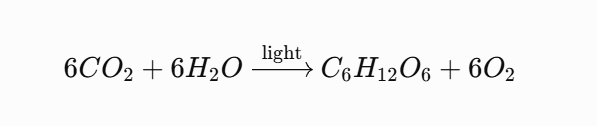
This process is essential because it converts solar energy into chemical energy.
5.4 Plant respiration
Plants also respire. During cellular respiration, stored carbohydrates are broken down to release energy required for growth and other metabolic activities.
5.5 Transpiration
Transpiration is the loss of water vapour from plant surfaces, mainly through leaf stomata.
It contributes to water movement through plants and helps regulate temperature.
5.6 Stages of plant development
Common stages include:
- Germination.
- Seedling establishment.
- Vegetative growth.
- Flowering.
- Fruit or seed development.
- Maturity and senescence.
Different crops have different growth patterns.
Lecturer’s demonstration
Obtain a bean seed and soak it overnight.
Plant it in a small container containing moist soil. Observe the emergence of the radicle, shoot and leaves over subsequent days.
Record the changes and compare your observations with the stages discussed in this lesson.
Review questions
- Identify six major plant structures.
- Explain the functions of roots and stems.
- What is photosynthesis?
- Differentiate between photosynthesis and respiration.
- Explain transpiration.
- Identify the major stages of crop development.
Sectional assignment
Explain the relationship between photosynthesis, water availability and agricultural productivity.
Practical project
Conduct a seven-day seed germination observation using bean or maize seeds. Record daily changes and include photographs and a conclusion.
Recommended studies
LECTURE 6: SEED SCIENCE AND PLANT PROPAGATION
Learning objectives
You should be able to:
- Explain the importance of seeds.
- Identify the characteristics of quality seeds.
- Explain seed germination.
- Differentiate between sexual and asexual propagation.
- Describe nursery establishment.
6.1 Understanding seeds
A seed is a reproductive structure containing an embryo capable of developing into a new plant under suitable conditions.
Good agricultural production begins with appropriate planting materials.
6.2 Characteristics of quality seeds
Quality seeds should generally possess:
- High germination percentage.
- Genetic purity.
- Physical purity.
- Good viability.
- Appropriate moisture content.
- Freedom from serious seed-borne diseases.
6.3 Seed germination
Germination is the process through which a viable seed develops into a seedling.
The major requirements include:
- Water.
- Oxygen.
- Suitable temperature.
- Appropriate conditions for the particular species.
Some seeds also require specific light or dormancy-breaking conditions.
6.4 Seed propagation
Sexual propagation involves growing plants from seeds.
Asexual propagation involves producing new plants from vegetative structures.
Examples include:
- Stem cuttings.
- Root cuttings.
- Grafting.
- Budding.
- Layering.
- Division.
Cassava is commonly propagated using stem cuttings, while maize is established using seeds.
6.5 Nursery management
A nursery is a designated area where seedlings are raised before transplanting.
Important considerations include:
- Site selection.
- Growing medium.
- Water availability.
- Drainage.
- Shade management.
- Seed selection.
- Pest and disease prevention.
Lecturer’s practical demonstration
Let us compare two seed batches.
Place ten seeds from each batch on separate moist paper towels. Maintain suitable moisture and temperature.
Observe how many seeds germinate.
Calculate:

For example, if eight out of ten seeds germinate, the germination percentage is 80%.
Review questions
- Define seed viability.
- Identify five characteristics of quality seeds.
- Explain the conditions required for germination.
- Differentiate between sexual and asexual propagation.
- Explain the importance of nursery management.
Sectional assignment
Discuss the role of quality planting materials in agricultural productivity.
Practical project
Conduct a seed germination test using at least two seed varieties. Record the results, calculate the germination percentages and explain which batch performed better.
Recommended studies
LECTURE 7: AGRICULTURAL CLIMATOLOGY AND ENVIRONMENTAL FACTORS
Learning objectives
You should be able to:
- Explain the meaning of agricultural climatology.
- Identify climatic factors affecting agriculture.
- Explain the relationship between weather and crop production.
- Understand seasonal agricultural planning.
- Discuss climate change and agricultural adaptation.
7.1 Weather and climate
Weather refers to atmospheric conditions over a relatively short period.
Climate refers to the long-term pattern of weather conditions in a particular geographical area.
Agricultural production is strongly influenced by both.
7.2 Major climatic factors
These include:
- Rainfall.
- Temperature.
- Relative humidity.
- Solar radiation.
- Wind.
- Atmospheric pressure.
7.3 Rainfall
Rainfall supplies water for plant growth and replenishes soil moisture.
However, excessive rainfall may cause:
- Flooding.
- Soil erosion.
- Nutrient leaching.
- Root diseases.
- Crop destruction.
Insufficient rainfall may cause drought and reduced crop productivity.
7.4 Temperature
Temperature influences germination, photosynthesis, flowering, fruit formation and crop maturity.
Different crops have different optimum temperature ranges.
7.5 Climate change
Climate change creates agricultural challenges through:
- Irregular rainfall.
- Increased temperatures.
- Extreme weather events.
- Changing pest and disease patterns.
- Water scarcity.
7.6 Climate-smart agricultural practices
Examples include:
- Drought-tolerant crop varieties.
- Water conservation.
- Agroforestry.
- Crop diversification.
- Improved soil management.
- Appropriate planting calendars.
Lecturer’s coaching exercise
Imagine that a farmer traditionally plants maize at the beginning of the rainy season. However, rainfall has become increasingly unpredictable.
Would you recommend abandoning maize cultivation?
Not necessarily. You should first assess rainfall patterns, crop variety, soil conditions, planting dates and available water-management options.
Review questions
- Differentiate between weather and climate.
- Identify six climatic factors affecting agriculture.
- Explain how excessive rainfall affects crop production.
- Discuss the effects of high temperatures on crops.
- Explain four climate-smart agricultural practices.
Sectional assignment
Discuss the effects of climate change on agricultural production in your country.
Practical project
Prepare a seasonal agricultural calendar for a selected crop in your locality. Identify the suitable planting period, rainfall considerations, major production activities and harvesting period.
Recommended studies
LECTURE 8: AGRICULTURAL SYSTEMS, SUSTAINABILITY AND FARM ECOLOGY
Learning objectives
You should be able to:
- Explain agricultural ecosystems.
- Identify different agricultural production systems.
- Explain sustainable agriculture.
- Understand biodiversity and ecological balance.
- Describe integrated farming.
8.1 Agricultural ecosystems
An agricultural ecosystem consists of living organisms and non-living environmental components interacting within a farming environment.
Living components include:
- Crops.
- Livestock.
- Insects.
- Microorganisms.
- Weeds.
Non-living components include:
- Soil.
- Water.
- Air.
- Sunlight.
- Temperature.
8.2 Agricultural production systems
Examples include:
- Monocropping: growing one crop species over a particular field or production cycle.
- Mixed cropping: cultivating two or more crops together.
- Crop rotation: growing different crops in a planned sequence.
- Mixed farming: combining crop production with livestock.
- Agroforestry: integrating trees with crops and/or livestock.
- Integrated farming: combining complementary agricultural enterprises to improve resource use.
8.3 Sustainable agriculture
Sustainable agriculture involves producing food and other agricultural products while maintaining the environmental, economic and social resources needed for long-term production.
The aim is not simply to maximize immediate harvests but to maintain the capacity of agricultural systems to produce over time.
8.4 Biodiversity
Biodiversity refers to the variety of living organisms.
It supports:
- Pollination.
- Natural pest regulation.
- Soil biological activity.
- Nutrient cycling.
- Ecosystem resilience.
8.5 Integrated farming example
Consider a farmer who cultivates maize and vegetables while raising poultry.
Crop residues may be used as suitable animal feed or compost inputs, while properly managed poultry manure may be used to improve soil fertility.
Such integration can improve resource efficiency, although every input must be managed safely and appropriately.
Lecturer’s coaching exercise
Think about the difference between a farmer who cultivates only one crop and a farmer who combines several complementary enterprises.
Which system offers better opportunities for diversification?
Discuss the advantages and limitations of both systems.
Review questions
- Define an agricultural ecosystem.
- Explain monocropping and mixed cropping.
- What is sustainable agriculture?
- Explain the importance of biodiversity.
- Describe five benefits of integrated farming.
Sectional assignment
Write an essay on the importance of sustainable agricultural systems in achieving long-term food security.
Practical project
Design a simple integrated farming model combining at least two agricultural enterprises. Show how the enterprises can support one another economically and environmentally.
Recommended studies
SECTIONAL EXAMINATION ONE
(Examination · End of Semester One)
Course: Diploma in Agricultural Science
Coverage: Lectures 1–8
Examination duration: 3 hours
Total marks: 100
Instructions to students
Answer all questions in Section A and the required number of questions in Section B.
Section A: Objective questions – 20 marks
Answer all 20 questions. Each question carries one mark.
1. Agricultural science primarily concerns the study of:
a. Industrial manufacturing only
b. Crop and animal production and related resources
c. Banking
d. Political administration
2. Which of the following is a factor of agricultural production?
a. Capital
b. Entertainment
c. Fashion
d. Advertising
3. The science of soil is known as:
a. Botany
b. Zoology
c. Pedology
d. Ecology
4. Which soil type generally has the largest particles?
a. Clay
b. Sandy soil
c. Silt
d. Peat
5. Which nutrient is represented by N?
a. Nitrogen
b. Sodium
c. Nickel
d. Neon
6. The green pigment responsible for absorbing light energy is:
a. Haemoglobin
b. Chlorophyll
c. Keratin
d. Melanin
7. The major function of roots is:
a. Flower formation
b. Water and nutrient absorption
c. Fruit ripening
d. Seed dispersal
8. Germination requires:
a. Suitable moisture and oxygen
b. Fertilizer alone
c. Darkness in every species
d. Excessive heat
9. Vegetative propagation is an example of:
a. Asexual propagation
b. Sexual propagation
c. Pollination
d. Fertilization
10. Weather refers to:
a. Long-term climate patterns
b. Short-term atmospheric conditions
c. Soil composition
d. Plant genetics
11. Crop rotation involves:
a. Repeated cultivation of one crop only
b. Growing different crops in a planned sequence
c. Abandoning farmland
d. Removing all vegetation
12. Which is an example of organic fertilizer?
a. Urea
b. Compost
c. NPK
d. Ammonium nitrate
13. Soil pH measures:
a. Soil colour
b. Soil acidity or alkalinity
c. Soil depth
d. Soil temperature
14. Photosynthesis primarily occurs in:
a. Green plant tissues
b. Animal tissues
c. Rocks
d. Dry seeds only
15. Mixed farming combines:
a. Crop production and livestock production
b. Mining and fishing
c. Banking and trade
d. Manufacturing and transportation
16. Biodiversity means:
a. The variety of living organisms
b. The number of machines on a farm
c. The size of farmland
d. The amount of fertilizer used
17. Climate change may result in:
a. Unpredictable rainfall
b. Elimination of all agricultural pests
c. Permanent soil fertility
d. Guaranteed crop yields
18. A nursery is primarily used for:
a. Raising seedlings
b. Storing machinery
c. Selling fertilizers
d. Housing cattle
19. Farm management involves:
a. Planning and organizing agricultural resources
b. Random expenditure
c. Avoiding record keeping
d. Abandoning production plans
20. Sustainable agriculture seeks to:
a. Exhaust natural resources
b. Maintain long-term productive capacity
c. Eliminate biodiversity
d. Increase pollution
Section B: Theory questions – 80 marks
Answer any four questions. Each carries 20 marks.
- Define agricultural science and discuss its major branches and contributions to national development.
- Discuss the factors of agricultural production and explain their importance in farm management.
- Explain soil formation, soil components and the characteristics of the major soil types.
- Discuss the importance of plant nutrients and sustainable soil fertility management.
- Explain photosynthesis, respiration and transpiration and their relevance to agricultural production.
- Discuss the effects of climate change on agriculture and propose appropriate adaptation measures.
Practical assessment – 20 marks
Submit your Semester One practical project portfolio, containing:
- Soil investigation.
- Seed germination experiment.
- Seasonal agricultural calendar.
- Integrated farm design.
The practical portfolio forms part of the sectional assessment. The examination board may apply the programme’s approved marking scheme to the written and practical components.
Submission instruction
Submit your completed Sectional Examination One as a properly formatted PDF or Word document to the EMI International Assignment and Examination Board through:
englishmasterinstitute@gmail.com
Use the email subject:
DIPLOMA IN AGRICULTURAL SCIENCE – SECTIONAL EXAMINATION ONE – STUDENT'S FULL NAME - STUDENT'S ID/MATRICULATION NUMBER
Include your student identification/admission details where applicable.
SEMESTER TWO
CROP PRODUCTION AND AGRICULTURAL MANAGEMENT
(Section Two · Lectures 9–16)
The second semester focuses on the actual processes involved in agricultural crop production, from land preparation to harvesting, including irrigation, pest management and mechanization.
LECTURE 9: PRINCIPLES OF CROP PRODUCTION
Learning objectives
You should be able to:
- Explain crop production.
- Identify the major stages of crop production.
- Understand land preparation.
- Explain planting methods.
- Identify factors affecting crop yield.
9.1 Introduction to crop production
Crop production involves the cultivation and management of plants for food, animal feed, industrial raw materials and commercial purposes.
Examples include:
- Cereals: maize, rice, millet and sorghum.
- Legumes: cowpea, soybean and groundnut.
- Root and tuber crops: cassava, yam and sweet potato.
- Vegetables: tomato, pepper, okra and leafy vegetables.
- Cash crops: cocoa, oil palm and cotton.
9.2 Land preparation
Land preparation is the process of making farmland suitable for planting.
It may involve:
- Clearing.
- Removal of unwanted vegetation.
- Tillage where appropriate.
- Ridging.
- Bed formation.
- Drainage preparation.
The method should be appropriate for the crop, soil type and local environment. Excessive tillage can damage soil structure and increase erosion.
9.3 Planting methods
Common methods include:
- Broadcasting.
- Drilling.
- Dibbling.
- Row planting.
- Transplanting.
9.4 Plant spacing
Plant spacing determines the distance between plants and rows.
Proper spacing helps reduce competition for sunlight, water and nutrients.
Worked example
Suppose maize is planted at a spacing of 75 cm between rows and 25 cm between plants, with one plant per stand.
The approximate plant population per hectare is:

This is an illustrative calculation; actual spacing recommendations depend on the maize variety, environment and production system.
9.5 Crop yield
Crop yield refers to the quantity of harvested crop produced per unit of land.
It is influenced by:
- Variety.
- Soil fertility.
- Rainfall.
- Plant population.
- Pest management.
- Weed management.
- General farm management.
Lecturer’s coaching exercise
Assume you are establishing a one-hectare maize farm.
Before purchasing seeds, identify the appropriate variety, planting period, land requirements, spacing, input requirements and expected market.
Review questions
- Define crop production.
- Identify five categories of crops.
- Explain four methods of planting.
- What is plant spacing?
- Calculate the plant population for a crop planted at 50 cm × 50 cm, assuming one plant per stand.
- Identify six factors affecting crop yield.
Sectional assignment
Discuss the major stages involved in establishing and managing a successful crop farm.
Practical project
Prepare a crop production plan for one hectare of maize or cassava. Include land preparation, variety selection, planting method, spacing, input requirements and harvesting arrangements.
Recommended studies
LECTURE 10: CEREAL, LEGUME AND ROOT CROP PRODUCTION
Learning objectives
You should be able to:
- Identify major food crop groups.
- Explain their agricultural importance.
- Understand their production requirements.
- Compare the cultivation of different crops.
10.1 Cereal crops
Cereals are grasses cultivated primarily for their edible grains.
Examples include:
- Maize.
- Rice.
- Wheat.
- Sorghum.
- Millet.
Maize is important for human food, livestock feed and industrial processing.
Rice is an important staple food, while sorghum and millet are valuable in several drier agricultural environments.
10.2 Leguminous crops
Legumes include:
- Cowpea.
- Soybean.
- Groundnut.
- Common beans.
Many legumes form symbiotic relationships with nitrogen-fixing bacteria, particularly species of Rhizobium and related genera.
This relationship can contribute to soil nitrogen management, although the extent depends on crop variety, inoculation, soil conditions and management.
10.3 Root and tuber crops
Examples include:
- Cassava.
- Yam.
- Sweet potato.
- Cocoyam.
Cassava is particularly important in Nigeria because of its applications in food, flour, starch and industrial processing.
10.4 Comparative crop management
Different crops have different requirements.
For instance:
- Maize is usually established from seeds.
- Cassava is commonly propagated through stem cuttings.
- Yam is generally established using tubers or setts.
- Rice production may involve direct seeding or transplanting, depending on the system.
10.5 Crop selection
When choosing a crop, consider:
- Climate.
- Soil conditions.
- Market demand.
- Production costs.
- Crop maturity period.
- Available labour.
- Access to processing and storage.
Lecturer’s coaching exercise
You have been asked to advise a farmer who wants to establish an agricultural enterprise in a community where cassava, maize and vegetables are commonly cultivated.
How would you determine the most appropriate crop?
Your answer should consider the market and production environment rather than simply choosing the crop with the highest selling price.
Review questions
- Define cereal crops.
- Identify five cereal crops.
- Explain the importance of legumes.
- How do legumes contribute to soil nitrogen management?
- Identify four root and tuber crops.
- Explain five factors involved in crop selection.
Sectional assignment
Compare the agricultural importance, production requirements and economic value of cereals, legumes and root crops.
Practical project
Prepare a comparative production guide for three crops: maize, cassava and cowpea. Include propagation, land requirements, planting methods, management and harvesting.
Recommended studies
LECTURE 11: HORTICULTURE AND VEGETABLE PRODUCTION
Learning objectives
You should be able to:
- Define horticulture.
- Identify major horticultural crops.
- Explain vegetable production techniques.
- Understand fruit production.
- Apply basic nursery and garden management.
11.1 Meaning of horticulture
Horticulture is the branch of agricultural science concerned with the production, improvement, management and utilization of fruits, vegetables, flowers and ornamental plants.
11.2 Major branches of horticulture
- Olericulture: vegetable production.
- Pomology: fruit production.
- Floriculture: flower production.
- Landscape horticulture: management of ornamental landscapes.
11.3 Vegetable production
Vegetables are important sources of vitamins, minerals, fibre and other nutrients.
Examples include:
- Tomato.
- Pepper.
- Okra.
- Cabbage.
- Amaranthus.
- Lettuce.
- Cucumber.
11.4 Establishing a vegetable garden
A successful vegetable garden requires:
- Suitable land.
- Good-quality seeds.
- Appropriate growing medium.
- Reliable water supply.
- Proper spacing.
- Weed control.
- Nutrient management.
- Pest and disease monitoring.
11.5 Fruit production
Fruit production involves cultivating plants such as mango, citrus, pawpaw, pineapple, banana and guava.
Some fruit crops require several years to reach commercial production, while others mature relatively quickly.
Lecturer’s practical demonstration
Select a small area measuring approximately 2 m × 2 m.
Prepare the land and establish a vegetable garden using an appropriate crop.
Record:
- Planting date.
- Seed variety.
- Number of plants.
- Watering frequency.
- Growth observations.
- Pest incidence.
- Harvest information.
Review questions
- Define horticulture.
- Explain four branches of horticulture.
- Identify six vegetable crops.
- Discuss the importance of nursery management.
- Differentiate between vegetable and fruit production.
Sectional assignment
Discuss the economic and nutritional importance of horticultural production in your country.
Practical project
Establish a small vegetable garden or container garden. Submit a project report with photographs, crop selection, planting method, management activities and growth observations.
Recommended studies
LECTURE 12: IRRIGATION AND AGRICULTURAL WATER MANAGEMENT
Learning objectives
You should be able to:
- Explain irrigation.
- Identify different irrigation systems.
- Understand agricultural drainage.
- Explain water conservation.
- Design a simple irrigation arrangement.
12.1 Meaning of irrigation
Irrigation is the artificial application of water to agricultural land to support crop growth when rainfall is insufficient or poorly distributed.
12.2 Types of irrigation
Surface irrigation: Water moves across the field through gravity.
Sprinkler irrigation: Water is distributed through pipes and sprayed over crops.
Drip irrigation: Water is delivered slowly and directly to the root zone through emitters.
Subsurface irrigation: Water is supplied below the soil surface through suitable systems.
12.3 Advantages of irrigation
- Supports dry-season farming.
- Improves water availability.
- Reduces dependence on rainfall.
- Enables multiple cropping cycles.
- Can improve crop productivity.
12.4 Agricultural drainage
Drainage involves removing excess water from agricultural land.
Poor drainage can cause:
- Waterlogging.
- Oxygen deficiency around roots.
- Root diseases.
- Reduced nutrient uptake.
- Crop failure.
12.5 Water conservation
Good water management includes:
- Mulching.
- Drip irrigation.
- Rainwater harvesting.
- Proper irrigation scheduling.
- Soil moisture monitoring.
- Reducing unnecessary water losses.
Lecturer’s coaching exercise
Suppose you have a 100-square-metre vegetable farm.
You need to select an irrigation method.
Would you choose a sprinkler or drip system?
Consider water availability, crop type, initial investment, maintenance and operating costs.
Review questions
- Define irrigation.
- Explain four irrigation methods.
- Identify five advantages of irrigation.
- What is agricultural drainage?
- Explain four water conservation practices.
Sectional assignment
Discuss the importance of irrigation and water management in sustainable agricultural production.
Practical project
Design a simple irrigation system for a small vegetable farm. Include a diagram, water source, delivery method, estimated costs and maintenance plan.
Recommended videos and studies
LECTURE 13: CROP NUTRITION AND FERTILIZER MANAGEMENT
Learning objectives
You should be able to:
- Explain plant nutrition.
- Identify macro- and micronutrients.
- Recognize common nutrient deficiency symptoms.
- Understand fertilizer application methods.
- Develop a nutrient management plan.
13.1 Plant nutrition
Plants require essential mineral elements to complete their life cycles.
These nutrients are obtained from soil, water and, in the case of carbon, hydrogen and oxygen, mainly from air and water.
13.2 Macronutrients and micronutrients
Macronutrients are required in relatively large quantities.
They include nitrogen, phosphorus, potassium, calcium, magnesium and sulphur.
Micronutrients are required in smaller quantities.
Examples include iron, zinc, boron, copper, manganese, molybdenum, chlorine and nickel.
13.3 Nutrient deficiency symptoms
Examples include:
- Nitrogen deficiency: commonly causes older leaves to become pale or yellow.
- Phosphorus deficiency: may produce stunted growth and sometimes dark green or purplish leaves.
- Potassium deficiency: may cause marginal yellowing or scorching of older leaves.
These symptoms are not definitive diagnoses. Other environmental and biological problems may produce similar appearances.
13.4 Fertilizer application methods
Common methods include:
- Broadcasting.
- Band placement.
- Side dressing.
- Foliar application.
- Fertigation.
The appropriate method depends on the fertilizer, crop, soil and production system.
13.5 Integrated nutrient management
Integrated nutrient management combines appropriate use of:
- Organic manure.
- Compost.
- Mineral fertilizers.
- Crop residues.
- Biological nutrient sources.
- Soil testing.
The objective is to maintain nutrient availability while protecting soil and environmental quality.
Lecturer’s worked example
Assume your soil test indicates that your farm requires additional nitrogen.
You must determine the recommended nitrogen rate, the fertilizer’s nutrient concentration and the quantity needed.
For instance, if the recommendation is 60 kg of nitrogen per hectare and the fertilizer is urea containing 46% nitrogen:\[ \frac{60}{0.46}=130.43\text{ kg} \]
Approximately 130.4 kg of urea would supply 60 kg of nitrogen per hectare.
This is a mathematical illustration, not a universal crop fertilizer recommendation.
Review questions
- Explain plant nutrition.
- Differentiate between macronutrients and micronutrients.
- Identify three symptoms of nitrogen deficiency.
- Explain four fertilizer application methods.
- What is integrated nutrient management?
Sectional assignment
Discuss the relationship between fertilizer management, soil fertility and crop productivity.
Practical project
Develop a fertilizer application plan for a selected crop using an assumed or actual soil-test recommendation. Show the calculations and explain the environmental precautions.
Recommended studies
LECTURE 14: AGRICULTURAL PESTS, DISEASES AND WEED MANAGEMENT
Learning objectives
You should be able to:
- Identify common agricultural pests.
- Explain plant diseases.
- Understand the economic effects of weeds.
- Identify pest management methods.
- Explain integrated pest management.
14.1 Agricultural pests
Agricultural pests are organisms that cause damage to crops or interfere with agricultural production.
Examples include:
- Grasshoppers.
- Aphids.
- Caterpillars.
- Stem borers.
- Rodents.
- Certain nematodes.
14.2 Plant diseases
Plant diseases may be caused by fungi, bacteria, viruses, nematodes and other harmful agents.
Common symptoms include:
- Leaf spots.
- Wilting.
- Rotting.
- Yellowing.
- Stunted growth.
- Mosaic patterns.
- Abnormal plant development.
14.3 Weeds
Weeds are unwanted plants growing where they are not desired.
They compete with crops for:
- Sunlight.
- Water.
- Nutrients.
- Growing space.
They may also harbour pests and diseases.
14.4 Pest management methods
There are several methods:
- Cultural control: crop rotation, sanitation and appropriate planting dates.
- Mechanical control: hand removal, traps and physical barriers.
- Biological control: using natural enemies.
- Chemical control: using registered pesticides appropriately.
- Resistant varieties: selecting crops with resistance to specific pests or diseases.
14.5 Integrated Pest Management (IPM)
IPM involves combining suitable pest control methods to reduce crop damage while minimizing risks to humans, animals and the environment.
A good IPM programme involves:
- Regular field monitoring.
- Correct pest identification.
- Understanding pest life cycles.
- Assessing economic damage.
- Selecting appropriate control measures.
- Evaluating results.
Pesticides must only be used according to their registered labels, local regulations and safety instructions. Students should not experiment with hazardous chemical mixtures.
Lecturer’s coaching exercise
Imagine that you observe insects feeding on your vegetable crops.
Your first responsibility is not to rush into pesticide application.
First identify the insect, examine the extent of damage and determine whether the organism is actually harmful.
Then consider suitable control measures.
Review questions
- Define agricultural pests.
- Identify five common agricultural pests.
- Explain the causes of plant diseases.
- Discuss the economic effects of weeds.
- Explain the five major pest management approaches.
- What is integrated pest management?
Sectional assignment
Discuss the importance of integrated pest management in sustainable agricultural production.
Practical project
Conduct a crop health survey in a farm or garden. Identify at least three pests, disease symptoms or weed problems. Record observations, possible causes and recommended management approaches.
Recommended studies and videos
LECTURE 15: AGRICULTURAL TOOLS, MACHINERY AND MECHANIZATION
Learning objectives
You should be able to:
- Identify common agricultural tools.
- Explain agricultural mechanization.
- Understand the use of farm machinery.
- Discuss equipment maintenance.
- Understand the advantages and limitations of mechanization.
15.1 Introduction to agricultural mechanization
Agricultural mechanization involves the use of human-operated tools, animal-powered equipment and mechanical or motorized technologies to perform agricultural operations.
15.2 Hand tools
Examples include:
- Hoes.
- Cutlasses.
- Rakes.
- Spades.
- Shovels.
- Watering cans.
- Secateurs.
15.3 Agricultural machinery
Examples include:
- Tractors.
- Ploughs.
- Harrows.
- Planters.
- Sprayers.
- Harvesters.
- Threshers.
- Irrigation pumps.
15.4 Advantages of mechanization
- Reduces manual labour requirements.
- Improves operational efficiency.
- Enables cultivation of larger areas.
- Can improve the timeliness of farm operations.
- Supports increased production capacity.
15.5 Limitations
- High initial investment.
- Maintenance costs.
- Fuel expenses.
- Limited availability of skilled operators.
- Equipment suitability challenges for small farms.
15.6 Equipment maintenance and safety
Agricultural equipment should be:
- Inspected before use.
- Operated by trained persons.
- Cleaned after use.
- Lubricated where required.
- Stored properly.
- Maintained according to manufacturer instructions.
Never operate machinery without appropriate training and safety precautions.
Lecturer’s coaching exercise
Suppose you have a five-hectare farm and limited capital.
Would you purchase a tractor immediately or hire mechanized services?
Compare the total costs, frequency of use, maintenance responsibilities and expected returns.
Review questions
- Define agricultural mechanization.
- Identify five agricultural hand tools.
- Explain five agricultural machines.
- Discuss four advantages of mechanization.
- Identify five equipment safety measures.
Sectional assignment
Discuss the role of agricultural mechanization in improving productivity among smallholder farmers.
Practical project
Prepare an equipment selection and maintenance plan for a one-hectare crop farm. Include the tools and machinery required, their functions, estimated costs and maintenance arrangements.
Recommended studies
LECTURE 16: CROP HARVESTING, POST-HARVEST HANDLING AND STORAGE
Learning objectives
You should be able to:
- Explain crop maturity.
- Identify appropriate harvesting methods.
- Understand post-harvest handling.
- Explain food preservation and storage.
- Identify causes of post-harvest losses.
16.1 Understanding crop maturity
Crop maturity refers to the stage at which a crop has developed sufficiently for harvesting for its intended purpose.
Harvesting too early may reduce quality and yield. Harvesting too late may increase deterioration, pest attack and field losses.
16.2 Harvesting methods
Different crops require different methods.
Examples include:
- Hand picking.
- Cutting.
- Digging.
- Uprooting.
- Mechanical harvesting.
- Threshing.
16.3 Post-harvest handling
Post-harvest handling refers to activities undertaken after harvesting to maintain product quality and reduce losses.
These activities include:
- Cleaning.
- Sorting.
- Grading.
- Drying.
- Cooling.
- Packaging.
- Transportation.
- Storage.
16.4 Agricultural storage
Proper storage protects agricultural products against:
- Moisture.
- Insects.
- Rodents.
- Fungi.
- Physical damage.
- Contamination.
Grains must be sufficiently dried before long-term storage. The appropriate moisture level depends on the crop, storage duration and conditions.
16.5 Agricultural processing
Processing increases product usability and may add economic value.
Examples include:
- Cassava processing into garri and flour.
- Maize milling.
- Fruit juice production.
- Groundnut oil extraction.
- Vegetable drying.
Lecturer’s coaching exercise
Imagine that you have harvested 20 bags of maize.
You cannot sell all the produce immediately.
What storage arrangements would you make to preserve quality and minimize financial losses?
Consider moisture, ventilation, pest prevention, cleanliness and storage duration.
Review questions
- Define crop maturity.
- Identify five harvesting methods.
- Explain the importance of post-harvest handling.
- Identify six causes of post-harvest losses.
- Explain four agricultural processing methods.
- Why should grains be dried before storage?
Sectional assignment
Discuss the economic importance of post-harvest management in agricultural production.
Practical project
Prepare a post-harvest management plan for maize, cassava or tomatoes. Include harvesting, sorting, drying or cooling, packaging, storage and marketing.
Recommended studies and videos
- FAO Small-Scale Postharvest Handling Practices
- FAO Post-Harvest Loss Reduction Videos
- FAO Harvesting and Storage Guide
SECTIONAL EXAMINATION TWO
(Examination · End of Semester Two)
Course: Diploma in Agricultural Science
Coverage: Lectures 9–16
Duration: 3 hours
Total marks: 100
Section A: Objective questions – 20 marks
Answer all questions.
- Crop production involves the cultivation of plants for useful products. True or false?
- Which is a cereal crop?
a. Maize
b. Cassava
c. Yam
d. Orange
3. Which crop is commonly propagated using stem cuttings?
a. Maize
b. Cassava
c. Rice
d. Cowpea
4. Pomology is concerned with:
a. Fruit production
b. Animal breeding
c. Soil formation
d. Machinery
5. Drip irrigation delivers water primarily to:
a. The crop root zone
b. The entire atmosphere
c. The farm road
d. Storage facilities
6. Which nutrient is represented by P?
a. Potassium
b. Phosphorus
c. Calcium
d. Iron
7. Which is an example of a micronutrient?
a. Nitrogen
b. Potassium
c. Zinc
d. Phosphorus
8. Integrated Pest Management combines:
a. Appropriate pest control methods
b. Fertilizer and marketing only
c. Machinery and harvesting only
d. Irrigation and packaging only
9. Aphids are examples of:
a. Agricultural pests
b. Soil horizons
c. Fertilizers
d. Agricultural tools
10. Which is a farm implement?
a. Harrow
b. Microscope slide
c. Computer keyboard
d. Measuring cup
11. Agricultural mechanization helps to:
a. Improve operational efficiency
b. Eliminate all production costs
c. Guarantee profits
d. Prevent every crop disease
12. Which is a post-harvest activity?
a. Sorting
b. Seed germination
c. Pollination
d. Flower formation
13. Maize should be adequately dried before:
a. Long-term grain storage
b. Germination
c. Pollination
d. Flowering
14. Crop spacing influences:
a. Plant population
b. Political development
c. Market currency
d. Farm ownership
15. Which is an example of a legume?
a. Cowpea
b. Yam
c. Cassava
d. Rice
16. Which irrigation system applies water through emitters?
a. Drip irrigation
b. Flooding only
c. Surface drainage
d. Manual harvesting
17. Weeds compete with crops for:
a. Water and nutrients
b. Packaging materials
c. Transport services
d. Market prices
18. Soil testing helps determine:
a. Soil nutrient status
b. Crop selling price
c. Farm ownership
d. Tractor speed
19. The process of removing excess agricultural water is:
a. Drainage
b. Germination
c. Pollination
d. Threshing
20. Processing cassava into garri is an example of:
a. Value addition
b. Seed propagation
c. Irrigation
d. Soil erosion
Section B: Theory questions – 80 marks
Answer any four questions. Each carries 20 marks.
- Explain the major stages of crop production, from land preparation to harvesting.
- Compare the production requirements of cereal, leguminous and root crops.
- Discuss the principles and economic importance of horticulture.
- Explain irrigation systems and their importance in crop production.
- Discuss integrated nutrient management and fertilizer application techniques.
- Explain integrated pest management and its advantages.
- Discuss agricultural mechanization and its limitations among smallholder farmers.
- Explain post-harvest handling, storage and processing techniques.
Practical assessment – 20 marks
Submit your Month Two practical portfolio containing:
- Crop production plan.
- Comparative crop guide.
- Vegetable garden report.
- Irrigation design.
- Nutrient management plan.
- Pest and disease survey.
- Farm equipment plan.
- Post-harvest management plan.
Submission instruction
Submit your completed Sectional Examination Two in PDF or Word format to:
englishmasterinstitute@gmail.com
Email subject:
DIPLOMA IN AGRICULTURAL SCIENCE – SECTIONAL EXAMINATION TWO – STUDENT'S FULL NAME
Include your practical project portfolio as an attachment or as a clearly labelled accompanying document.
SEMESTER THREE
LIVESTOCK, AGRICULTURAL TECHNOLOGY AND AGRIBUSINESS
(Section Three · Lectures 17–24)
The third semester introduces livestock production, animal health, agricultural economics, farm business development, extension services and the application of modern technology in agriculture.
LECTURE 17: INTRODUCTION TO ANIMAL SCIENCE AND LIVESTOCK PRODUCTION
Learning objectives
You should be able to:
- Define animal science.
- Identify major livestock categories.
- Explain the importance of livestock.
- Understand animal production systems.
- Identify factors influencing livestock productivity.
17.1 Understanding animal science
Animal science is the branch of agricultural science concerned with the study, breeding, feeding, management, health and production of domesticated animals.
17.2 Major livestock categories
These include:
Ruminants: Cattle, sheep and goats.
Non-ruminants: Pigs and rabbits.
Poultry: Chickens, ducks, turkeys and other domesticated birds.
Aquatic animals: Fish and other commercially cultured aquatic organisms.
17.3 Importance of livestock production
Livestock provides:
- Meat.
- Milk.
- Eggs.
- Hides and skins.
- Manure.
- Employment.
- Household income.
- Industrial raw materials.
17.4 Animal production systems
Examples include:
- Extensive production.
- Semi-intensive production.
- Intensive production.
Extensive systems generally involve greater dependence on natural grazing and wider movement.
Intensive systems involve greater confinement and management inputs.
Semi-intensive systems combine elements of both.
17.5 Livestock selection
When selecting animals, consider:
- Breed suitability.
- Adaptation to local conditions.
- Growth performance.
- Reproductive ability.
- Disease resistance.
- Market demand.
- Feed availability.
Lecturer’s coaching exercise
Suppose you want to establish a livestock enterprise with limited capital.
Would you choose poultry, goats or cattle?
Compare their housing requirements, feed needs, production cycles, capital requirements and markets.
Review questions
- Define animal science.
- Identify five livestock categories or examples.
- Explain five benefits of livestock production.
- Differentiate between intensive and extensive production.
- Identify five factors involved in livestock selection.
Sectional assignment
Discuss the contributions of livestock production to food security and economic development in your country.
Practical project
Prepare a livestock enterprise feasibility profile for poultry, goat or rabbit production. Identify the proposed breed, housing, feed, capital, management and target market.
Recommended studies
LECTURE 18: ANIMAL NUTRITION AND FEED MANAGEMENT
Learning objectives
You should be able to:
- Explain animal nutrition.
- Identify major nutrients required by livestock.
- Differentiate between roughages and concentrates.
- Understand feed formulation.
- Explain proper feeding management.
18.1 Introduction to animal nutrition
Animal nutrition involves the study of nutrients required by animals for maintenance, growth, reproduction and production.
18.2 Major nutrients
Animals require:
- Carbohydrates.
- Proteins.
- Fats and oils.
- Vitamins.
- Minerals.
- Water.
Each nutrient performs specific functions.
Carbohydrates: Major energy sources.
Proteins: Important for tissue development, enzymes and other body functions.
Fats: Concentrated sources of energy and essential fatty acids.
Vitamins: Support metabolic processes.
Minerals: Support skeletal development, physiological functions and reproduction.
Water: Essential for digestion, nutrient transport and temperature regulation.
18.3 Types of animal feed
Roughages: Generally high-fibre feeds, such as grasses, hay and silage.
Concentrates: Feeds relatively rich in energy or protein, such as cereal grains and oilseed meals.
18.4 Feed formulation
Feed formulation involves combining feed ingredients in appropriate proportions to meet animal nutritional requirements.
For example, poultry feed formulations may include:
- Maize.
- Soybean meal.
- Groundnut cake.
- Fish meal where appropriate.
- Limestone.
- Mineral and vitamin premixes.
The actual formulation must be appropriate to the species, age and production stage.
18.5 Feeding management
Good feeding management involves:
- Providing clean water.
- Maintaining feed hygiene.
- Avoiding contaminated ingredients.
- Matching feed to animal requirements.
- Monitoring feed intake.
- Preventing unnecessary wastage.
Lecturer’s worked example
A poultry farmer observes poor growth among birds.
Possible causes include poor feed quality, inadequate protein, disease, overcrowding, insufficient water or unsuitable environmental conditions.
You should investigate the problem systematically instead of immediately changing every feed ingredient.
Review questions
- Define animal nutrition.
- Identify six essential nutrient groups.
- Differentiate between roughages and concentrates.
- Explain the importance of protein in animal diets.
- Why is water essential to livestock?
- Explain four principles of good feeding management.
Sectional assignment
Discuss the relationship between animal nutrition, growth, reproduction and productivity.
Practical project
Develop a sample feed management plan for broiler chickens or goats. Identify feed ingredients, feeding stages, water requirements, hygiene procedures and monitoring methods.
Recommended studies
LECTURE 19: ANIMAL HEALTH, DISEASE PREVENTION AND BIOSECURITY
Learning objectives
You should be able to:
- Explain animal health.
- Identify common livestock diseases.
- Recognize basic disease symptoms.
- Understand biosecurity.
- Explain vaccination and veterinary care.
19.1 Understanding animal health
Animal health involves maintaining the physical and physiological well-being of livestock.
Healthy animals generally demonstrate:
- Normal feeding behaviour.
- Appropriate activity.
- Normal breathing.
- Healthy skin, coat or feathers.
- Appropriate growth and production.
19.2 Common livestock diseases
Examples include:
- Newcastle disease in poultry.
- Coccidiosis in poultry.
- African swine fever in pigs.
- Foot-and-mouth disease in susceptible livestock.
- Peste des petits ruminants in sheep and goats.
Disease occurrence and severity vary according to location, animal species and production conditions.
19.3 Common warning signs
These may include:
- Loss of appetite.
- Diarrhoea.
- Abnormal breathing.
- Sudden mortality.
- Lameness.
- Unusual discharge.
- Reduced egg or milk production.
- Abnormal behaviour.
19.4 Biosecurity
Biosecurity refers to procedures designed to prevent the introduction and spread of disease-causing organisms.
Important practices include:
- Restricting unnecessary visitors.
- Cleaning and disinfecting facilities appropriately.
- Quarantining newly introduced animals.
- Isolating sick animals.
- Maintaining clean water and feed.
- Controlling rodents and other disease vectors.
- Proper disposal of dead animals.
19.5 Veterinary care
Farmers should establish relationships with qualified veterinary professionals.
Vaccination, diagnosis, treatment and disease reporting should follow veterinary advice and applicable animal health guidelines.
Do not administer antibiotics or other veterinary medicines indiscriminately.
Lecturer’s coaching exercise
Imagine that several chickens in your poultry farm suddenly become weak and stop feeding.
What should you do?
Your immediate priorities should include isolating affected birds where appropriate, restricting unnecessary movement, notifying a veterinary professional and documenting the symptoms.
Review questions
- Define animal health.
- Identify five signs of disease in livestock.
- Explain biosecurity.
- Identify five farm biosecurity measures.
- Explain the importance of vaccination.
- Why should farmers consult veterinary professionals?
Sectional assignment
Discuss the importance of disease prevention and biosecurity in livestock production.
Practical project
Develop a biosecurity plan for a small poultry or goat farm. Include visitor control, sanitation, animal isolation, vaccination coordination and disease reporting.
Recommended studies
LECTURE 20: POULTRY, RUMINANT AND AQUACULTURE PRODUCTION
Learning objectives
You should be able to:
- Explain poultry production.
- Understand cattle, sheep and goat management.
- Explain basic fish farming.
- Compare livestock production enterprises.
- Develop a basic animal production plan.
20.1 Poultry production
Poultry farming involves raising domesticated birds for meat, eggs and other products.
Common systems include:
- Broiler production.
- Layer production.
- Dual-purpose bird production.
Broilers are primarily raised for meat, while layers are managed mainly for egg production.
Important management considerations include:
- Housing.
- Temperature control.
- Feed.
- Water.
- Stocking density.
- Biosecurity.
- Vaccination.
- Market planning.
20.2 Cattle production
Cattle are raised for meat, milk, hides and other agricultural purposes.
Major considerations include:
- Breed selection.
- Grazing or feeding arrangements.
- Housing.
- Reproduction.
- Disease prevention.
- Water availability.
20.3 Sheep and goat production
Sheep and goats are important livestock enterprises in many Nigerian communities.
They provide meat, income and other useful products.
They can be managed through extensive, semi-intensive or intensive systems.
20.4 Aquaculture
Aquaculture involves the controlled cultivation of aquatic organisms.
Fish farming is an important form of aquaculture.
Commonly farmed fish in Nigeria include:
- African catfish.
- Tilapia.
Important fish farming requirements include:
- Suitable water quality.
- Appropriate stocking density.
- Quality feed.
- Water exchange and management.
- Disease monitoring.
- Harvest planning.
20.5 Comparing enterprises
Before choosing a livestock enterprise, examine the following:
| Factor | Poultry | Goats | Fish |
|---|---|---|---|
| Housing | Poultry house | Pen or shelter | Pond or tank |
| Main feed | Formulated feed | Forage and supplements | Aquaculture feed |
| Water needs | Drinking water | Drinking water | Production environment |
| Main products | Meat/eggs | Meat/milk where suitable | Fish |
| Key management issue | Biosecurity | Feeding and parasites | Water quality |
Lecturer’s coaching exercise
A prospective agricultural entrepreneur wants to invest in poultry and fish farming simultaneously.
Explain how you would assess whether both enterprises can be managed successfully within the available capital, space and technical capacity.
Review questions
- Differentiate between broiler and layer production.
- Explain four requirements for successful poultry production.
- Identify five considerations in cattle management.
- Explain the economic importance of goat farming.
- Define aquaculture.
- Identify five factors affecting fish production.
Sectional assignment
Compare poultry, ruminant and aquaculture production systems and discuss their economic opportunities in your country.
Practical project
Prepare a comparative feasibility study for any two of the following: poultry, goat farming and catfish production. Include estimated establishment costs, operational requirements, risks and market opportunities.
Recommended studies
LECTURE 21: AGRICULTURAL ECONOMICS AND FARM FINANCIAL MANAGEMENT
Learning objectives
You should be able to:
- Explain agricultural economics.
- Understand production costs.
- Differentiate between fixed and variable costs.
- Calculate revenue and profit.
- Prepare simple farm financial records.
21.1 Meaning of agricultural economics
Agricultural economics applies economic principles to the production, distribution, marketing and consumption of agricultural goods and services.
It helps farmers make decisions about scarce resources.
21.2 Fixed costs
Fixed costs are expenses that generally do not change directly with the volume of production over a particular operating period.
Examples include:
- Land rent.
- Depreciation.
- Certain insurance costs.
- Some administrative expenses.
21.3 Variable costs
Variable costs change with the level of production.
Examples include:
- Seeds.
- Fertilizers.
- Feed.
- Packaging.
- Casual labour.
- Some transportation expenses.
21.4 Revenue
Revenue is the income generated from selling agricultural products.

21.5 Profit
Profit is the difference between total revenue and total costs.

Worked example
Suppose a farmer sells 100 bags of maize at ₦45,000 per bag.
Revenue:

Assume total production and selling costs amount to ₦3,200,000.
Profit:

The farmer’s estimated profit is ₦1,300,000 before considering any additional expenses or adjustments omitted from the example.
21.6 Farm records
Important farm records include:
- Production records.
- Sales records.
- Expenditure records.
- Inventory records.
- Labour records.
- Livestock records.
- Equipment maintenance records.
Lecturer’s coaching exercise
Imagine that your farm is producing good harvests but you are unable to determine whether it is profitable.
What information would you need?
You must compare total revenue with all relevant costs. Production volume alone does not establish profitability.
Review questions
- Define agricultural economics.
- Differentiate between fixed and variable costs.
- Define agricultural revenue.
- Explain how profit is calculated.
- Identify six important farm records.
- Why is financial record keeping important?
Sectional assignment
Discuss the importance of agricultural economics and financial management in developing profitable farms.
Practical project
Prepare a simple financial statement for a proposed agricultural enterprise. Include startup costs, operating expenses, projected sales, revenue and estimated profit or loss.
Recommended studies
LECTURE 22: AGRICULTURAL MARKETING, VALUE ADDITION AND ENTREPRENEURSHIP
Learning objectives
You should be able to:
- Explain agricultural marketing.
- Identify agricultural value chains.
- Understand value addition.
- Explain agricultural entrepreneurship.
- Develop a basic agricultural marketing strategy.
22.1 Agricultural marketing
Agricultural marketing involves activities associated with moving agricultural products from producers to consumers.
These activities include:
- Collection.
- Sorting.
- Grading.
- Storage.
- Transportation.
- Processing.
- Packaging.
- Distribution.
- Promotion and selling.
22.2 Agricultural value chains
An agricultural value chain refers to the interconnected activities and participants involved in bringing an agricultural product from production to final consumption.
For example, the cassava value chain may include:
Cassava farmers → Aggregators → Processors → Packaging businesses → Distributors → Retailers → Consumers.
22.3 Value addition
Value addition involves improving an agricultural product to increase its usefulness, quality, market appeal or selling value.
Examples include:
- Processing cassava into garri.
- Producing flour from maize.
- Packaging dried vegetables.
- Processing fruits into juice.
- Extracting oil from groundnuts.
22.4 Agricultural entrepreneurship
Agricultural entrepreneurship involves identifying business opportunities in agriculture and organizing resources to exploit them profitably.
Potential agricultural enterprises include:
- Crop production.
- Livestock farming.
- Fish farming.
- Agricultural input supply.
- Farm equipment rental.
- Food processing.
- Agricultural transportation.
- Storage services.
22.5 Marketing strategy
A good agricultural marketing strategy should consider:
- Product: What are you selling?
- Price: What price is appropriate?
- Place: Where will customers purchase it?
- Promotion: How will customers learn about it?
These are commonly known as the four Ps of marketing.
Lecturer’s coaching exercise
Suppose you cultivate tomatoes.
Selling fresh tomatoes is one option. However, you may also explore processing them into tomato paste or other suitable products.
Which approach would create more value?
To answer, compare processing costs, equipment, food safety requirements, shelf life, packaging, customer demand and distribution expenses.
Review questions
- Define agricultural marketing.
- Explain the meaning of an agricultural value chain.
- What is value addition?
- Identify five agricultural entrepreneurship opportunities.
- Explain the four Ps of marketing.
- Discuss the importance of market research.
Sectional assignment
Discuss how agricultural value addition and entrepreneurship can improve farmers’ income and create employment opportunities.
Practical project
Develop an agricultural business concept. Choose a product, identify your target market, establish a pricing strategy, outline distribution channels and propose a promotional plan.
Recommended studies
LECTURE 23: AGRICULTURAL EXTENSION, RESEARCH AND MODERN AGRICULTURAL TECHNOLOGY
Learning objectives
You should be able to:
- Explain agricultural extension.
- Understand agricultural research.
- Explain technology transfer.
- Identify modern agricultural technologies.
- Understand digital agriculture.
23.1 Agricultural extension
Agricultural extension involves educating and supporting farmers through the communication of useful agricultural knowledge, technologies and management practices.
Extension services help farmers improve their production methods and make informed decisions.
23.2 Roles of agricultural extension officers
Their responsibilities may include:
- Farmer education.
- Demonstration exercises.
- Agricultural advisory services.
- Technology dissemination.
- Farm problem identification.
- Linking farmers to research institutions.
- Supporting agricultural development programmes.
23.3 Agricultural research
Agricultural research involves systematic investigation to develop new knowledge, solve production problems and improve agricultural systems.
Examples include:
- Developing improved crop varieties.
- Investigating livestock diseases.
- Improving soil fertility.
- Developing better irrigation systems.
- Testing pest management methods.
23.4 Modern agricultural technology
Examples include:
- Precision agriculture.
- Agricultural drones.
- Remote sensing.
- Geographic Information Systems (GIS).
- Digital farm records.
- Automated irrigation.
- Improved machinery.
- Agricultural biotechnology.
23.5 Digital agriculture
Digital agriculture uses digital tools and data to improve agricultural decision-making.
Examples include:
- Mobile weather information.
- Digital market platforms.
- Farm management applications.
- Electronic financial records.
- Remote crop monitoring.
23.6 Artificial intelligence in agriculture
AI can support:
- Crop disease identification.
- Weather analysis.
- Agricultural forecasting.
- Irrigation planning.
- Farm resource management.
However, technology-assisted decisions must be verified against actual field conditions and reliable technical advice.
Lecturer’s coaching exercise
Suppose a farmer wants to identify whether a crop is suffering from a disease.
The farmer takes a photograph and uses a digital crop diagnosis application.
Should the farmer immediately apply the recommended treatment?
No. The result should be treated as an initial indication. It should be checked against field symptoms and, where necessary, confirmed by a qualified agricultural professional.
Review questions
- Define agricultural extension.
- Identify five responsibilities of agricultural extension officers.
- Explain agricultural research.
- Identify five modern agricultural technologies.
- Discuss the importance of digital agriculture.
- Explain three applications of AI in agriculture.
Sectional assignment
Discuss how agricultural research, extension services and digital technologies can transform agricultural production in developing countries.
Practical project
Prepare a proposal for a digital agricultural advisory service that could support farmers in your community. Explain its purpose, intended users, technology requirements and expected benefits.
Recommended studies and videos
- FAO Global Farmer Field School Platform
- FAO Farmer Field School Videos
- FAO Digital Agriculture Resources
LECTURE 24: AGRICULTURAL PROJECT DEVELOPMENT, SUSTAINABILITY AND PROFESSIONAL PRACTICE
Learning objectives
At the end of this final lecture, you should be able to:
- Develop an agricultural project proposal.
- Conduct basic feasibility assessment.
- Prepare an agricultural business plan.
- Apply sustainable agricultural practices.
- Demonstrate professional agricultural decision-making.
24.1 Agricultural project development
An agricultural project is a planned activity designed to achieve specific production, business, environmental or community development objectives.
Examples include:
- Establishing a maize farm.
- Starting a poultry business.
- Developing a fish farm.
- Establishing a vegetable production enterprise.
- Setting up a cassava processing facility.
24.2 Stages of project development
A properly structured agricultural project should contain:
- Identification of the agricultural opportunity.
- Definition of the project objectives.
- Market research.
- Technical feasibility assessment.
- Resource assessment.
- Financial planning.
- Risk assessment.
- Implementation plan.
- Monitoring and evaluation.
24.3 Agricultural feasibility study
A feasibility study examines whether a proposed agricultural enterprise can realistically be established and operated.
It should consider:
Technical feasibility: Are the land, equipment, skills, technology and other production requirements available?
Financial feasibility: Is sufficient capital available? Are the projected costs and returns reasonable?
Market feasibility: Is there sufficient demand for the product?
Environmental feasibility: Can the project operate without causing unacceptable environmental damage?
Operational feasibility: Can the business be managed effectively?
24.4 Risk management
Agricultural projects face several risks:
- Weather-related risks.
- Pest and disease outbreaks.
- Market price fluctuations.
- Input shortages.
- Financial difficulties.
- Transportation problems.
- Equipment failure.
Risk management measures may include crop diversification, insurance where available, appropriate storage, biosecurity, financial reserves and market diversification.
24.5 Sustainable agricultural enterprise development
A successful agricultural enterprise should consider long-term profitability and environmental responsibility.
Important practices include:
- Maintaining soil health.
- Conserving water.
- Protecting biodiversity.
- Managing waste.
- Using agricultural inputs responsibly.
- Maintaining farm records.
- Applying appropriate technologies.
24.6 Professional responsibility
Agricultural professionals have responsibilities to farmers, consumers, employees, communities and the environment.
These responsibilities include:
- Promoting food safety.
- Providing accurate agricultural advice.
- Protecting natural resources.
- Maintaining professional integrity.
- Observing applicable agricultural regulations.
- Respecting workers’ safety and welfare.
Lecturer’s final coaching session
You have now studied the major foundations of agricultural science, crop production, livestock management, agricultural technology and agribusiness.
I want you to approach your final project as an agricultural entrepreneur and professional.
Do not simply describe a farm that you would like to establish. Demonstrate that you understand how the farm would operate, what resources it would require, how it would generate revenue, what challenges it might encounter and how you would manage those challenges.
Your final project should demonstrate the ability to apply the knowledge acquired throughout this programme.
Review questions
- Define an agricultural project.
- Explain the major stages of agricultural project development.
- What is a feasibility study?
- Differentiate between technical and financial feasibility.
- Identify six risks associated with agricultural enterprises.
- Explain the importance of sustainability in agriculture.
- Discuss the professional responsibilities of agricultural practitioners.
Sectional assignment
Write an essay on:
The Future of Agricultural Science, Sustainable Farming and Agricultural Entrepreneurship in (add the name of your country).
Major practical project: Final Agricultural Enterprise Development Plan
Prepare a comprehensive agricultural project proposal of approximately 2,500–3,500 words.
Choose ONE agricultural enterprise, such as:
- Maize production.
- Cassava production.
- Vegetable farming.
- Poultry production.
- Goat farming.
- Catfish farming.
- Agricultural processing.
Your project must contain:
- Project title.
- Executive summary.
- Background and justification.
- Project objectives.
- Location and environmental considerations.
- Description of the agricultural enterprise.
- Production methodology.
- Land, labour and equipment requirements.
- Input and operational requirements.
- Financial projections and budget.
- Marketing and distribution strategy.
- Risk assessment and management.
- Environmental sustainability plan.
- Implementation timetable.
- Expected outcomes.
- Conclusion and recommendations.
- References.
Include photographs, diagrams, tables and calculations where necessary.
Recommended studies and references
- FAO Farm Management Extension Guide
- FAO Agroecology Knowledge Hub
- FAO Agricultural Marketing and Value Chains
- FAO Climate-Smart Agriculture Sourcebook
SECTIONAL EXAMINATION THREE
(Final Examination · End of Semester Three)
Course: Diploma in Agricultural Science
Coverage: Lectures 17–24
Duration: 3 hours
Total marks: 100
Section A: Objective questions – 20 marks
Answer all questions.
1. Animal science deals primarily with:
a. Livestock production and management
b. Road construction
c. Banking
d. Political administration
2. Which of the following is a ruminant?
a. Goat
b. Chicken
c. Rabbit
d. Duck
3. Which nutrient is particularly important for tissue growth and development?
a. Protein
b. Sand
c. Plastic
d. Water vapour
4. Hay is an example of:
a. Roughage
b. Machinery
c. Mineral fertilizer
d. Chemical pesticide
5. Biosecurity is primarily concerned with:
a. Preventing the introduction and spread of diseases
b. Increasing farm taxes
c. Selling agricultural equipment
d. Harvesting crops
6. Newcastle disease affects:
a. Poultry
b. Maize
c. Cassava
d. Mango
7. Broilers are primarily raised for:
a. Meat
b. Milk
c. Wool
d. Eggs only
8. Aquaculture involves:
a. Cultivating aquatic organisms
b. Growing only cereal crops
c. Producing fertilizers
d. Manufacturing tractors
9. Which is an example of an aquatic farming species?
a. Catfish
b. Goat
c. Sheep
d. Cattle
10. Agricultural economics concerns:
a. Economic decisions in agriculture
b. Plant anatomy only
c. Animal classification only
d. Soil colour only
11. Which is a fixed cost in a typical farm budget?
a. Land rent under a fixed lease
b. Seeds used per production cycle
c. Fertilizer consumed per hectare
d. Casual harvesting labour
12. Revenue is calculated by:
a. Selling price multiplied by quantity sold
b. Total cost minus quantity
c. Labour divided by rainfall
d. Profit multiplied by machinery
13. Profit is:
a. Revenue minus total costs
b. Total costs plus losses
c. Revenue plus debt
d. Quantity divided by land area
14. Agricultural marketing involves:
a. Activities that move produce to consumers
b. Soil formation only
c. Animal breeding only
d. Seed germination only
15. Processing cassava into flour is:
a. Value addition
b. Soil erosion
c. Irrigation
d. Crop rotation
16. Agricultural extension is concerned with:
a. Educating and advising farmers
b. Manufacturing vehicles
c. Building roads
d. Mining minerals
17. GIS stands for:
a. Geographic Information System
b. General Irrigation Supply
c. Global Industrial Science
d. Genetic Input Storage
18. A feasibility study examines:
a. Whether a proposed project is viable
b. The colour of farm buildings only
c. The number of farm visitors only
d. The age of agricultural machinery only
19. Which is an agricultural risk?
a. Pest outbreak
b. Guaranteed profit
c. Perfect rainfall every year
d. Permanent market stability
20. Sustainable agriculture aims to:
a. Maintain productive capacity over time
b. Exhaust soil resources
c. Encourage pollution
d. Eliminate environmental protection
Section B: Theory questions – 60 marks
Answer any three questions. Each carries 20 marks.
- Explain the importance of animal science and discuss the major livestock production systems.
- Discuss animal nutrition and the importance of appropriate feeding management.
- Explain the principles of animal health management and biosecurity.
- Compare poultry, ruminant and aquaculture production systems.
- Discuss agricultural economics and demonstrate how a farmer can calculate revenue, production costs and profit.
- Explain agricultural marketing, value addition and agricultural entrepreneurship.
- Discuss the importance of agricultural extension, research and digital technology.
- Explain the major stages of developing a sustainable agricultural project.
Section C: Final practical assessment – 20 marks
Submit the final agricultural enterprise development project.
The assessment will consider:
| Assessment area | Marks |
|---|---|
| Project understanding and objectives | 3 |
| Technical production plan | 4 |
| Financial planning and calculations | 4 |
| Marketing and business strategy | 3 |
| Risk and sustainability management | 3 |
| Presentation, references and originality | 3 |
| Total | 20 |
Submission instruction
Submit your completed Sectional Examination Three and final agricultural enterprise development project to the EMI International Assignment and Examination Board.
Official email: englishmasterinstitute@gmail.com
Use the subject:
DIPLOMA IN AGRICULTURAL SCIENCE – SECTIONAL EXAMINATION THREE AND FINAL PROJECT – STUDENT'S FULL NAME - STUDENT'S ID/MATRICULATION NUMBER
Ensure that your examination and final project are clearly labelled and submitted as properly formatted documents.
PART THREE: GENERAL ACADEMIC GUIDELINES AND ASSESSMENT FRAMEWORK
1. Student study schedule
This programme follows the EMI self-paced model. You may organize your individual study periods, provided you complete the lectures, assignments, projects and examinations within the prescribed three-semester programme period.
The following is a recommended study arrangement:
| Week | Lecture coverage | Assessment |
|---|---|---|
| Week 1 | Lectures 1–2 | Assignments and projects |
| Week 2 | Lectures 3–4 | Assignments and projects |
| Week 3 | Lectures 5–6 | Assignments and projects |
| Week 4 | Lectures 7–8 | Sectional Examination One |
| Week 5 | Lectures 9–10 | Assignments and projects |
| Week 6 | Lectures 11–12 | Assignments and projects |
| Week 7 | Lectures 13–14 | Assignments and projects |
| Week 8 | Lectures 15–16 | Sectional Examination Two |
| Week 9 | Lectures 17–18 | Assignments and projects |
| Week 10 | Lectures 19–20 | Assignments and projects |
| Week 11 | Lectures 21–22 | Assignments and projects |
| Week 12 | Lectures 23–24 | Final examination and project |
You should aim to complete approximately two lectures per week, while allowing sufficient time for independent research and practical work.
2. General assignment submission requirements
You must observe the following requirements.
A. Document preparation
Assignments should be prepared using Microsoft Word or an equivalent word-processing application.
The recommended presentation format is:
- Paper size: A4.
- Font: Times New Roman.
- Font size: 12.
- Line spacing: 1.5.
- Alignment: Justified.
- Headings: Clearly numbered.
- Referencing: APA 7th Edition or another consistently applied academic referencing system.
B. Assignment identification
Every submission should contain:
- Student’s full name.
- Student’s ID/Matriculation Number
- Country of Participation
- Programme: Diploma in Agricultural Science.
- Lecture or examination number.
- Assignment or project title.
- Date of submission.
C. Practical project evidence
Where practical projects are required, you should provide:
- Photographs of activities.
- Observational records.
- Calculations.
- Tables and diagrams.
- Explanations of procedures.
- Findings and conclusions.
Where you cannot access a physical farm or laboratory, a properly documented home-based experiment, container-based demonstration or supervised observation may be accepted, provided it meets the learning objectives.
D. Email submission procedure
Official EMI Assignment Submission Channel
EMI International Assignment and Examination Board
Official submission email
englishmasterinstitute@gmail.com
Email subject format
DIPLOMA IN AGRICULTURAL SCIENCE – LECTURE NUMBER – STUDENT'S FULL NAME - STUDENT'S ID/MATRICULATION NUMBER - COUNTRY OF PARTICIPATION
Important: You must attach your completed assignments, practical reports and examination scripts to the email. Where multiple documents are submitted together, each attachment must be properly named and identified.
3. Recommended academic reference library
The following resources are the principal expanded-study library throughout this programme. You are encouraged to consult them continuously rather than relying exclusively on the lecture notes.
1. Food and Agriculture Organization (FAO)
International agricultural research, technical guides and learning resources.
2. International Institute of Tropical Agriculture (IITA)
Tropical crop research and agricultural development, with particular relevance to Africa.
3. USDA Natural Resources Conservation Service
Soil health, nutrient management, conservation and agricultural videos.
4. CGIAR Agricultural Research
Agricultural innovation, food systems, climate resilience and sustainable production.
5. Penn State Extension
Practical agricultural education, crop production and instructional videos.
Selected instructional video libraries
You should make regular use of the following video resources:
- FAO Farmer Field School Videos – practical agricultural learning and demonstrations.
- USDA Soil Health Videos – soil conservation and soil management.
- FAO Post-Harvest Loss Reduction Animations – agricultural storage and food preservation.
- FAO Integrated Pest Management – sustainable pest control.
- Penn State Agricultural Videos – crop production and agricultural demonstrations.
Copyright © 2023 English Master Institute (EMI) Worldwide

