
ENGLISH MASTER INSTITUTE (EMI) WORLDWIDE
BACHELOR’S DEGREE IN AGRIBUSINESS
Four-Semester Academic Programme
Programme Level: Bachelor’s Degree
Programme Duration: Four Semesters
Total Lectures: 32
Lectures Per Semester: 8
Sectional Examinations: 4
Mode of Study: Online, Self-Paced and Self-Study
Instructional Method: Direct Lecturer-to-Student Teaching and Coaching
Assessment Methods: Assignments, Case Studies, Practical Projects, Research Exercises and Semester Examinations.
Academic Examination Authority: EMI International Assignment and Examination Board.
Programme Philosophy
Developing Agricultural Entrepreneurs, Business Strategists and Leaders for Sustainable Agrifood Systems.
PART ONE: PROGRAMME OVERVIEW AND ACADEMIC FRAMEWORK
1. Introduction to the Bachelor’s Degree in Agribusiness
Agribusiness is the application of business, economic, financial, managerial, technological and entrepreneurial principles to agricultural production, processing, distribution, marketing and related services.
It encompasses the entire agricultural value chain, from the supply of agricultural inputs to the final consumption of agricultural products.
Agribusiness is therefore much broader than farming.
For example, consider the journey of cassava from the farm to the consumer.
The process may involve:
- Agricultural input suppliers.
- Cassava farmers.
- Produce aggregators.
- Transportation businesses.
- Processing companies.
- Packaging companies.
- Wholesale distributors.
- Retailers.
- Consumers.
Every participant in this chain represents a potential agribusiness enterprise.
This bachelor’s degree programme is designed to develop students who can identify, establish, manage and expand businesses across these agricultural value chains.
2. Academic progression from Diploma to Bachelor’s Degree
The Diploma in Agricultural Science and Bachelor’s Degree in Agribusiness are complementary but distinct academic programmes.
The diploma provides the scientific and practical foundations of agriculture.
The bachelor’s degree advances into:
- Agricultural economics.
- Commercial enterprise development.
- Business management.
- Financial analysis.
- Agricultural investment.
- Marketing and trade.
- Digital transformation.
- Research and strategic leadership.
The bachelor’s curriculum therefore builds on agricultural knowledge while developing a stronger commercial and managerial orientation.
3. Programme objectives
At the successful completion of this programme, you should be able to:
- Demonstrate advanced understanding of agribusiness principles and practices.
- Apply economic principles to agricultural business decisions.
- Analyse agricultural markets and consumer behaviour.
- Develop and manage agricultural enterprises.
- Conduct agricultural feasibility studies and investment assessments.
- Apply financial management and accounting principles to agribusiness.
- Understand agricultural value chains and supply chain management.
- Develop agricultural marketing and branding strategies.
- Apply entrepreneurial principles to agricultural business development.
- Understand agricultural policies, regulations and institutional frameworks.
- Apply digital technologies and data analytics to agricultural enterprises.
- Understand agricultural trade, export management and international commodity markets.
- Evaluate agricultural risks and develop appropriate management strategies.
- Develop sustainable agricultural investment models.
- Conduct agricultural research and interpret research findings.
- Prepare comprehensive agribusiness development proposals.
- Demonstrate leadership and strategic management capabilities.
- Establish and manage commercially viable and socially responsible agribusiness enterprises.
4. Academic progression
The four semesters follow a progressive learning structure.
| Semester | Academic focus | Lectures | Examination |
|---|---|---|---|
| Semester One | Foundations of Agribusiness, Economics and Business Management | 1–8 | Examination One |
| Semester Two | Agribusiness Operations, Marketing and Value Chain Management | 9–16 | Examination Two |
| Semester Three | Agribusiness Finance, Investment, Policy and Digital Transformation | 17–24 | Examination Three |
| Semester Four | Advanced Agribusiness Strategy, Research, Innovation and Enterprise Development | 25–32 | Examination Four |
| Total | Four semesters | 32 | 4 examinations |
5. EMI direct teaching methodology
This programme retains EMI’s self-study model while adopting a more advanced instructional approach.
Every lecture contains:
A. Direct lecturer-to-student instruction
The lecturer will explain concepts progressively, guide you through examples, introduce practical situations and provide explanations of how the knowledge applies to real business environments.
B. Guided academic analysis
You will be introduced to business situations and encouraged to examine them critically.
C. Worked examples
Financial, economic, managerial and analytical subjects will include worked examples and calculations.
D. Practical application
You will complete activities that require you to apply what you have learned.
E. Independent research
You will consult recommended textbooks, research publications, institutional reports and instructional videos.
F. Continuous assessment
Every lecture will conclude with review questions, an assignment, a practical project and submission instructions.
G. Semester examinations
Each semester will conclude with a compulsory sectional examination covering all eight lectures in that semester.
6. Progressive project assessment
You should submit your practical projects throughout the semester rather than postponing everything until the examination period.
All assignments, projects, and examination should be submitted to EMI International Assignment and Examination Board in the prescribed format: englishmasterinstitute@gmail.com.
FINAL ACADEMIC EXPECTATIONS AND GRADUATE COMPETENCIES
1. Expected graduate competencies
Upon successful completion of the Bachelor’s Degree in Agribusiness, graduates should demonstrate competence in the following areas:
| Competency | Expected ability |
|---|---|
| Agribusiness management | Manage agricultural enterprises |
| Agricultural economics | Analyse economic decisions and market conditions |
| Financial management | Prepare and interpret business financial statements |
| Investment analysis | Evaluate agricultural investment opportunities |
| Marketing | Develop agricultural marketing strategies |
| Value chain management | Analyse and improve agricultural value chains |
| Supply chain management | Manage procurement, logistics and distribution |
| Entrepreneurship | Develop and manage agricultural businesses |
| Research | Conduct independent agribusiness research |
| Digital agriculture | Apply digital technologies to business operations |
| Risk management | Identify and manage agricultural business risks |
| Leadership | Lead agricultural organisations and teams |
| International trade | Understand agricultural export and global markets |
| Sustainability | Develop environmentally and socially responsible enterprises |
2. Expected student academic portfolio
By the completion of the programme, you should have developed a portfolio containing:
Semester One
- Agribusiness opportunity analysis.
- Agricultural market analysis.
- Statistical research exercise.
- Organisational structure.
- Production economics report.
- Financial statements.
- Agricultural supply contract.
- Corporate ethics policy.
Semester Two
- Strategic business plan.
- Marketing strategy.
- Value chain analysis.
- Procurement and logistics plan.
- Agro-processing proposal.
- Agricultural export plan.
- Cooperative development proposal.
- Operations management plan.
Semester Three
- Financial performance analysis.
- Agricultural financing proposal.
- Investment appraisal.
- Risk management plan.
- Agricultural policy review.
- Digital agribusiness model.
- Agricultural technology investment proposal.
- ESG and climate-resilience plan.
Semester Four
- Competitive analysis.
- Agribusiness startup model.
- Research proposal.
- Advanced data analysis.
- Change management plan.
- International expansion strategy.
- Inclusive agribusiness model.
- Final-year agribusiness development and investment proposal.
FINAL MESSAGE TO STUDENTS
Dear Student,
Welcome to the Bachelor’s Degree in Agribusiness at English Master Institute (EMI) Worldwide.
This programme is designed to take you beyond the conventional understanding of agriculture and introduce you to the wider intellectual, economic, managerial and entrepreneurial dimensions of the agricultural industry.
Throughout these four semesters, you will examine how agricultural resources are transformed into economic value, how agricultural enterprises are established and managed, how markets operate, how investments are evaluated and how technology can improve the efficiency and competitiveness of agricultural businesses.
You will also be challenged to think independently, conduct research, analyse business situations and develop practical solutions to agricultural problems.
Do not approach this programme merely as an academic exercise in reading and answering questions.
Approach it as professional preparation for the world of agricultural enterprise and investment.
Study each lecture carefully. Follow the recommended instructional videos. Conduct your research. Complete your assignments. Work through the financial examples. Develop your projects and consistently relate your learning to real agricultural business opportunities.
By the time you complete this programme, you should be able to identify an agricultural business opportunity, develop a viable business model, evaluate its investment potential, mobilise resources and manage its operations towards sustainable profitability.
Your objective is not merely to understand agriculture as an industry, but to develop the intellectual and professional capacity to create, manage and transform agribusiness enterprises.
Welcome to a new dimension of agricultural enterprise development.
ENGLISH MASTER INSTITUTE (EMI) WORLDWIDE
It’s EMI to the World! 🌍🌎

PART TWO: THE FOUR-SEMESTER LECTURE CURRICULUM
SEMESTER ONE
FOUNDATIONS OF AGRIBUSINESS, ECONOMICS AND BUSINESS MANAGEMENT
Lectures 1–8
Semester One Academic Purpose
The first semester establishes the intellectual, economic and managerial foundations of agribusiness.
You will progress beyond understanding agricultural production to examining agriculture as an economic system and a commercial enterprise.
At this stage, you should begin thinking not only as an agricultural practitioner but also as an entrepreneur, business manager and agricultural economist.
LECTURE 1: INTRODUCTION TO AGRIBUSINESS AND THE AGRIFOOD INDUSTRY
Learning objectives
At the end of this lecture, you should be able to:
- Define agribusiness.
- Explain the evolution and scope of agribusiness.
- Differentiate between agriculture and agribusiness.
- Identify the major sectors of the agribusiness industry.
- Explain the agricultural value chain.
- Understand the economic importance of agribusiness.
1.1 Understanding agribusiness
Let us begin with a fundamental question.
What makes agribusiness different from ordinary agricultural production?
Agriculture primarily concerns the cultivation of crops, raising of animals and management of agricultural resources.
Agribusiness incorporates these activities into a broader commercial and economic system.
It includes the businesses, institutions, technologies and commercial relationships involved in producing, processing, transporting, financing, distributing and marketing agricultural products.
In simple terms, agribusiness is agriculture viewed through the lens of enterprise development, commercial management and economic value creation.
1.2 The scope of agribusiness
Agribusiness covers several interconnected sectors.
1. Agricultural input supply
Businesses supplying seeds, fertilizers, pesticides, animal feed, machinery and other production inputs.
2. Primary agricultural production
Businesses involved in crop farming, livestock production, fisheries, forestry and related activities.
3. Agricultural processing
Businesses transforming agricultural products into finished or semi-finished goods.
Examples include cassava processing, rice milling, palm oil production and fruit processing.
4. Agricultural logistics and distribution
Businesses involved in transportation, warehousing, cold-chain management and product distribution.
5. Agricultural marketing and retailing
Businesses involved in promoting, selling and distributing agricultural products.
6. Agricultural financial services
Institutions providing agricultural loans, insurance, investment and other financial services.
7. Agricultural technology
Businesses developing digital platforms, farm management software, agricultural machinery and other technologies.
1.3 Agriculture versus agribusiness
Consider the following comparison.
| Agriculture | Agribusiness |
|---|---|
| Focuses primarily on production and resource management | Encompasses production and the wider commercial system |
| May be household-oriented | Often commercially structured |
| Concentrates on cultivation and livestock | Includes finance, processing, marketing and distribution |
| Measures production performance | Measures production, profitability, competitiveness and value creation |
1.4 The agribusiness value chain
A value chain describes the interconnected activities through which a product moves from its original source to the final consumer.
Let us use maize as an example.
Seed suppliers → Farmers → Aggregators → Transporters → Processors → Wholesalers → Retailers → Consumers.
At every stage, value is created through production, handling, processing, transportation, packaging or marketing.
The business opportunity may therefore exist at any point along the chain.
1.5 Economic importance of agribusiness
Agribusiness contributes to:
- Employment generation.
- Food security.
- Industrial development.
- Rural economic transformation.
- International trade.
- Entrepreneurship.
- Technology development.
- Investment opportunities.
Lecturer’s coaching session
Imagine that you want to establish an agribusiness enterprise.
You have three options:
- Establish a commercial maize farm.
- Establish a maize-processing company.
- Establish a business that purchases maize from farmers and supplies food-processing companies.
Which one represents the best opportunity?
There is no universal answer.
Your decision should depend on capital availability, market demand, production risks, competition, technical competence and expected returns.
The important lesson is that agribusiness opportunities are not restricted to farming itself.
Review questions
- Define agribusiness.
- Explain five major sectors of the agribusiness industry.
- Differentiate between agriculture and agribusiness.
- Explain the concept of an agricultural value chain.
- Identify six economic contributions of agribusiness.
- Explain why agricultural processing is important to economic development.
Sectional assignment
Write an essay of approximately 1,200 words on:
The Role of Agribusiness in Economic Transformation, Employment Generation and Food Security in Developing Countries.
Practical project
Identify five potential agribusiness opportunities in your locality.
For each opportunity, discuss:
- The agricultural product or service.
- The target customers.
- The resources required.
- The business opportunity.
- The potential economic benefits.
Recommended expanded studies
- FAO: Agrifood Economics and Value Chains.
- IITA: Value Chains, Markets and Agribusiness.
- World Bank: Agribusiness Leadership Programme.
LECTURE 2: PRINCIPLES OF MICROECONOMICS AND MACROECONOMICS FOR AGRIBUSINESS
Learning objectives
You should be able to:
- Explain the meaning of economics.
- Differentiate between microeconomics and macroeconomics.
- Understand demand and supply.
- Explain market equilibrium.
- Understand production costs and economic decisions.
- Analyse the effects of inflation, interest rates and exchange rates on agribusiness.
2.1 Understanding economics
Economics is the study of how individuals, businesses and societies allocate scarce resources to satisfy competing needs and wants.
In agribusiness, resources such as land, labour, capital, water and time are limited.
Therefore, business managers must make decisions about how to allocate these resources efficiently.
2.2 Microeconomics
Microeconomics examines the economic behaviour of individual consumers, producers and businesses.
For example, a maize-processing company must decide:
- How much maize to purchase.
- How many employees to employ.
- How much to produce.
- What selling price to charge.
- Whether to expand production.
These are microeconomic decisions.
2.3 Macroeconomics
Macroeconomics examines the wider economy.
It considers:
- Inflation.
- Unemployment.
- National income.
- Economic growth.
- Interest rates.
- Exchange rates.
- Government fiscal and monetary policies.
These factors influence the performance of agribusinesses.
2.4 Demand and supply
Demand refers to the quantity of a product consumers are willing and able to purchase at different prices over a specified period.
Supply refers to the quantity producers are willing and able to offer for sale at different prices over a specified period.
Generally, other things being equal:
- Higher prices tend to reduce quantity demanded.
- Higher prices tend to increase quantity supplied.
2.5 Market equilibrium
Market equilibrium occurs when the quantity demanded equals the quantity supplied.
At this point, the market-clearing price is established under the relevant market conditions.
2.6 Elasticity
Price elasticity of demand measures how responsive quantity demanded is to a change in price.
The formula is:
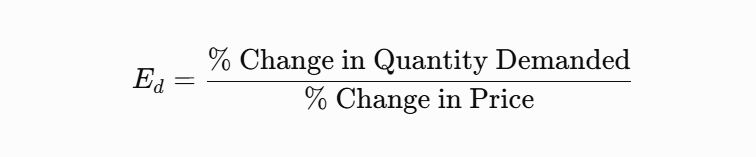
For example, if the price of a particular agricultural product increases by 10% and quantity demanded falls by 20%:

The absolute elasticity is 2, indicating elastic demand.
2.7 Macroeconomic influences on agribusiness
Inflation may increase the cost of fertilizer, machinery, feed and transportation.
High interest rates may make agricultural borrowing more expensive.
Exchange-rate fluctuations may affect imported machinery, agricultural inputs and export earnings.
These are reasons agribusiness managers must understand the wider economy.
Lecturer’s coaching exercise
Imagine that the price of fertilizer increases significantly.
How might this affect a maize farmer?
The farmer may:
- Reduce fertilizer application.
- Search for alternative nutrient sources.
- Increase the selling price.
- Adopt more efficient production techniques.
- Change the crop or production system.
Each decision has economic consequences.
Review questions
- Define economics.
- Differentiate between microeconomics and macroeconomics.
- Explain the laws of demand and supply.
- What is market equilibrium?
- Define price elasticity of demand.
- Explain how inflation affects agricultural businesses.
- Discuss the effects of exchange-rate fluctuations on agribusiness.
Sectional assignment
Discuss the importance of microeconomic and macroeconomic analysis in agricultural business decision-making.
Practical project
Select one agricultural product and conduct a simple market analysis.
Identify:
- Its current market price.
- Factors affecting demand.
- Factors affecting supply.
- Possible causes of price fluctuations.
- The effects of inflation on its production and marketing.
Use actual market observations where possible and clearly state the date and location of your observations.
Recommended expanded studies
- FAO Agrifood Economics and Policy.
- World Bank Food Systems resources.
- IITA Value Chains and Markets Programme.
LECTURE 3: BUSINESS MATHEMATICS, STATISTICS AND QUANTITATIVE METHODS FOR AGRIBUSINESS
Learning objectives
You should be able to:
- Apply mathematical principles to business decisions.
- Calculate percentages, ratios and growth rates.
- Understand descriptive statistics.
- Interpret agricultural data.
- Calculate averages, variance and standard deviation.
- Apply quantitative methods to agricultural business analysis.
3.1 Importance of business mathematics
Agribusiness managers make decisions using numerical information.
For example, you may need to determine:
- The cost of producing one tonne of maize.
- The expected revenue from a poultry farm.
- The percentage increase in fertilizer prices.
- The average monthly sales of a processing company.
- The profitability of a new investment.
These activities require mathematical competence.
3.2 Percentages and ratios
Suppose a farm’s production increases from 500 tonnes to 650 tonnes.
The percentage increase is:

Production therefore increased by 30%.
3.3 Descriptive statistics
Descriptive statistics help organize and summarize data.
Important measures include:
- Mean.
- Median.
- Mode.
- Range.
- Variance.
- Standard deviation.
3.4 Calculating the mean
Suppose a farmer records the following weekly sales:
100, 120, 150, 130 and 200 bags.
The mean is:
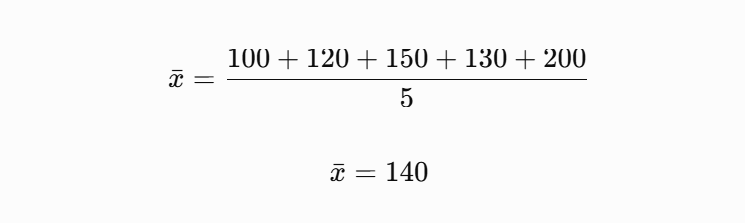
The average weekly sales are 140 bags.
3.5 Variance and standard deviation
Variance measures the dispersion of observations around their mean.
Standard deviation is the square root of variance.
These measures are useful when evaluating the consistency of agricultural production, prices and business performance.
3.6 Data presentation
Agribusiness data may be presented using:
- Tables.
- Bar charts.
- Line graphs.
- Pie charts.
- Histograms.
- Frequency distributions.
3.7 Introduction to quantitative decision-making
Suppose you are comparing two agricultural businesses.
Enterprise A generates an average monthly revenue of ₦2 million.
Enterprise B generates an average monthly revenue of ₦2.5 million.
Can you immediately conclude that B is the better business?
No.
You must also compare their production costs, risks, capital requirements and profit margins.
Lecturer’s coaching exercise
Assume that you are managing a vegetable-processing business.
You have recorded daily production and sales for 30 days.
How would you determine whether your business is improving?
You would examine trends, averages, variations and relationships between production, costs and sales.
Review questions
- Explain the importance of business mathematics in agribusiness.
- Define mean, median and mode.
- Differentiate between variance and standard deviation.
- Calculate the percentage increase from 200 tonnes to 260 tonnes.
- Explain the importance of graphical data presentation.
- Identify five applications of statistics in agribusiness.
Sectional assignment
Discuss the importance of quantitative analysis in agricultural business planning and decision-making.
Practical project
Collect or construct a dataset containing at least 20 observations relating to agricultural prices, production or sales.
Calculate:
- Mean.
- Median.
- Mode.
- Range.
- Standard deviation.
Present the data in a table and at least two graphs.
Explain what your findings suggest about the business or market being studied.
Recommended expanded studies
- OpenStax: Introductory Statistics.
- FAO Agricultural Data and Statistics.
- World Bank Open Data.
LECTURE 4: PRINCIPLES OF BUSINESS MANAGEMENT AND ORGANISATIONAL BEHAVIOUR
Learning objectives
You should be able to:
- Explain business management.
- Understand the functions of management.
- Identify organisational structures.
- Explain leadership and motivation.
- Understand employee management.
- Apply management principles to agribusiness organisations.
4.1 Understanding management
Management is the process of planning, organizing, directing and controlling resources to achieve organizational objectives.
An agribusiness may possess excellent production technology but still fail because of poor management.
Management therefore plays a central role in business success.
4.2 The four major management functions
Planning
Determining objectives and deciding how to achieve them.
Organising
Allocating responsibilities, resources and authority.
Leading
Guiding and motivating employees towards organizational objectives.
Controlling
Monitoring performance and taking corrective action when necessary.
4.3 Organisational structures
Common organisational structures include:
- Functional structure.
- Divisional structure.
- Matrix structure.
- Hierarchical structure.
- Flat organisational structure.
An agricultural processing company may organize its operations into production, finance, marketing, procurement, human resources and logistics departments.
4.4 Leadership in agribusiness
Leadership involves influencing and guiding people towards shared objectives.
Important leadership approaches include:
- Transformational leadership.
- Democratic leadership.
- Autocratic leadership.
- Transactional leadership.
- Servant leadership.
Different circumstances may require different approaches.
4.5 Organisational behaviour
Organisational behaviour examines how individuals and groups behave within organisations.
It includes:
- Motivation.
- Communication.
- Teamwork.
- Conflict management.
- Employee satisfaction.
- Organisational culture.
Lecturer’s coaching exercise
Suppose you manage a food-processing company with 25 employees.
Production is declining because employees are frequently absent, departmental communication is poor and responsibilities are unclear.
What would you do?
Begin by identifying the causes, reviewing the organisational structure, improving communication and establishing clear performance expectations.
Do not assume that every productivity problem is caused by employee laziness.
Review questions
- Define management.
- Explain the four major functions of management.
- Identify five organisational structures or management arrangements.
- Differentiate between leadership and management.
- Explain transformational leadership.
- Discuss the importance of organisational behaviour.
Sectional assignment
Discuss the role of effective management and leadership in developing successful agribusiness organisations.
Practical project
Design an organisational structure for a medium-sized agricultural processing company.
Identify:
- Major departments.
- Management positions.
- Reporting relationships.
- Responsibilities of each department.
- Performance monitoring arrangements.
Recommended expanded studies
- World Bank Agribusiness Leadership Programme.
- OpenStax Principles of Management.
- IITA Agribusiness Capacity Development.
LECTURE 5: AGRICULTURAL PRODUCTION ECONOMICS AND RESOURCE ALLOCATION
Learning objectives
You should be able to:
- Explain production economics.
- Understand production functions.
- Differentiate between fixed and variable inputs.
- Explain marginal and average productivity.
- Understand economies of scale.
- Apply production economics to agricultural businesses.
5.1 Introduction to production economics
Production economics examines how businesses combine available resources to produce goods and services efficiently.
In agribusiness, this involves deciding how much land, labour, capital, machinery, fertilizer and other inputs should be used.
5.2 Production functions
A production function describes the relationship between inputs and outputs.
It may be represented as:

Where:
- Q = Output.
- L = Labour.
- K = Capital.
- T = Land.
- M = Materials and other inputs.
The function demonstrates that production depends on the combination of resources.
5.3 Fixed and variable inputs
Fixed inputs do not change with output in the short run.
Examples include certain buildings and machinery.
Variable inputs change with production levels.
Examples include seeds, fertilizer, feed and casual labour.
5.4 Marginal product
Marginal product measures the additional output resulting from using one additional unit of an input, holding other relevant inputs constant.

Where X represents an input.
For example, if an additional worker increases production from 100 bags to 115 bags:
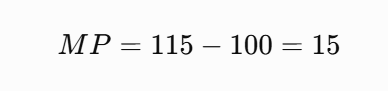
The marginal product of that additional worker is 15 bags.
5.5 Economies of scale
Economies of scale occur when increasing the scale of production reduces average production costs.
For example, a large food-processing company may spread its machinery, administrative and facility costs over a larger volume of output.
However, expansion does not automatically produce economies of scale. Poor management, capacity constraints and rising input costs can create diseconomies of scale.
5.6 Optimal resource allocation
An agribusiness manager must determine the most productive use of limited resources.
The objective is not simply to maximize output but to achieve an economically desirable combination of inputs and outputs.
Lecturer’s coaching exercise
Imagine that you have a limited amount of capital and must choose between expanding farmland, purchasing irrigation equipment or employing additional workers.
Which investment should you make?
Examine the expected additional output, cost savings, production risks and financial returns of each option.
Review questions
- Define production economics.
- Explain a production function.
- Differentiate between fixed and variable inputs.
- Define marginal product.
- Explain economies of scale.
- What are diseconomies of scale?
- Discuss the importance of resource allocation.
Sectional assignment
Explain how production economics can improve efficiency and profitability in agricultural enterprises.
Practical project
Develop a production-input analysis for a maize, cassava or poultry enterprise.
Identify the major inputs, estimate their costs, determine expected output and explain how resource allocation may be improved.
Recommended expanded studies
- FAO Farm Management Resources.
- FAO Agrifood Economics and Policy.
- University agricultural economics learning materials.
LECTURE 6: BUSINESS ACCOUNTING AND FINANCIAL RECORD MANAGEMENT
Learning objectives
You should be able to:
- Explain accounting principles.
- Understand the accounting equation.
- Identify financial statements.
- Differentiate between assets, liabilities and equity.
- Prepare simple income statements.
- Understand cash-flow management.
6.1 Introduction to accounting
Accounting is the systematic process of identifying, recording, classifying, summarising and interpreting financial transactions.
It provides information that helps business owners and managers evaluate financial performance.
6.2 The accounting equation
The basic accounting equation is:

Assets are resources controlled by a business.
Examples include cash, machinery, inventory and buildings.
Liabilities are financial obligations owed to others.
Examples include bank loans and unpaid supplier invoices.
Equity represents the owner’s residual interest in the business.
6.3 Financial statements
Three important financial statements are:
Income statement
Shows revenue, expenses and profit or loss over a specified period.
Statement of financial position
Shows assets, liabilities and equity at a particular date.
Cash-flow statement
Shows cash inflows and cash outflows over a specified period.
6.4 Worked example: Income statement
Assume an agricultural processing business records the following annual figures:
| Item | Amount |
|---|---|
| Sales revenue | ₦12,000,000 |
| Cost of goods sold | ₦7,000,000 |
| Gross profit | ₦5,000,000 |
| Operating expenses | ₦2,500,000 |
| Operating profit | ₦2,500,000 |
The gross profit is:

The operating profit is:

This example excludes financing costs, tax and other possible adjustments.
6.5 Cash-flow management
A profitable business can still experience financial difficulties if it does not have enough cash to meet its immediate obligations.
For example, an agricultural processing company may sell products on credit while having to pay suppliers immediately.
This creates a working-capital challenge.
6.6 Accounting records in agribusiness
Important records include:
- Sales ledger.
- Purchase ledger.
- Cashbook.
- Inventory register.
- Payroll records.
- Accounts receivable.
- Accounts payable.
- Asset register.
Lecturer’s coaching exercise
Imagine that your agricultural enterprise reports a profit of ₦5 million but cannot pay its workers.
How is this possible?
The business may have generated profit through credit sales without receiving sufficient cash.
This demonstrates why accounting profit and cash availability are not identical.
Review questions
- Define accounting.
- Explain the accounting equation.
- Differentiate between assets and liabilities.
- What is an income statement?
- Explain the importance of cash-flow management.
- Differentiate between profit and cash flow.
Sectional assignment
Discuss the importance of accounting and financial record management in agribusiness organisations.
Practical project
Prepare a simplified set of financial records for a proposed agricultural enterprise.
Include:
- Opening capital.
- Assets.
- Liabilities.
- Sales.
- Expenses.
- Income statement.
- Cash-flow summary.
Recommended expanded studies
- OpenStax Financial Accounting.
- World Bank Agribusiness Leadership Programme.
- FAO Farm Management Resources.
LECTURE 7: BUSINESS LAW, CONTRACTS AND REGULATORY FRAMEWORKS IN AGRIBUSINESS
Learning objectives
You should be able to:
- Explain the importance of business law.
- Understand the principles of contracts.
- Identify common agricultural business agreements.
- Understand business registration and compliance.
- Explain food safety and product standards.
- Understand commercial dispute management.
7.1 Understanding business law
Business law regulates the establishment, operation and relationships of commercial enterprises.
Agribusinesses operate within legal frameworks covering business registration, contracts, employment, taxation, consumer protection, environmental management and product standards.
7.2 Contract law
A contract is an agreement that creates legally enforceable obligations between parties.
Important elements commonly associated with contract formation include:
- Offer.
- Acceptance.
- Consideration.
- Intention to create legal relations.
- Capacity.
- Certainty of terms.
- Legality.
The applicable requirements depend on the relevant legal system.
7.3 Agricultural business contracts
Examples include:
- Supply agreements.
- Produce purchase agreements.
- Contract farming agreements.
- Equipment leasing agreements.
- Transportation agreements.
- Distribution agreements.
- Processing agreements.
7.4 Contract farming
Contract farming involves an agreement between agricultural producers and buyers concerning the production and/or supply of agricultural products under agreed conditions.
A contract may specify:
- Product variety.
- Quality requirements.
- Quantity.
- Delivery arrangements.
- Pricing mechanism.
- Payment terms.
- Responsibilities of each party.
Contract farming can improve market access but requires fair contractual terms and effective enforcement.
7.5 Regulatory frameworks in Nigeria
Agribusinesses may encounter regulatory institutions and requirements relating to:
- Corporate registration and business compliance.
- Food and product safety.
- Agricultural inputs.
- Export documentation.
- Environmental protection.
- Taxation.
- Labour and employment.
Examples of relevant Nigerian institutions include:
- Corporate Affairs Commission (CAC).
- National Agency for Food and Drug Administration and Control (NAFDAC).
- Standards Organisation of Nigeria (SON).
- Nigeria Agricultural Quarantine Service (NAQS).
- Federal Ministry of Agriculture and Food Security.
The particular regulatory requirements depend on the business activity and product.
7.6 Commercial dispute management
Disputes may arise from:
- Non-delivery of agricultural products.
- Poor product quality.
- Late payment.
- Breach of supply agreements.
- Transportation losses.
- Pricing disagreements.
Possible resolution mechanisms include negotiation, mediation, arbitration and litigation.
Lecturer’s coaching exercise
Suppose a processing company enters into an agreement with a farmer to purchase 100 tonnes of cassava.
The farmer delivers only 40 tonnes.
What legal and commercial questions should the company examine?
Consider the contract terms, delivery schedule, quality specifications, reasons for non-delivery and available remedies.
Review questions
- Define business law.
- Explain five elements relevant to contract formation.
- What is contract farming?
- Identify five types of agricultural business agreements.
- Explain the importance of regulatory compliance.
- Differentiate between mediation and arbitration.
Sectional assignment
Discuss the importance of business law, contractual relationships and regulatory compliance in agricultural enterprise development.
Practical project
Prepare a sample agricultural produce supply agreement between a farmer and an agricultural processing company.
Include:
- Parties.
- Product description.
- Quantity.
- Quality requirements.
- Price.
- Delivery arrangements.
- Payment terms.
- Dispute resolution.
- Termination provisions.
Clearly identify the document as an academic sample, not a substitute for a lawyer’s review.
Recommended expanded studies
- FAO Responsible Agricultural Investment.
- Nigerian Corporate Affairs Commission.
- NAFDAC regulatory resources.
- Standards Organisation of Nigeria.
LECTURE 8: BUSINESS COMMUNICATION, PROFESSIONAL ETHICS AND CORPORATE GOVERNANCE
Learning objectives
You should be able to:
- Explain business communication.
- Understand professional ethics.
- Explain corporate governance.
- Understand stakeholder management.
- Develop professional business reports.
- Apply ethical decision-making in agribusiness.
8.1 Business communication
Business communication involves exchanging information within and outside an organisation to achieve business objectives.
It may be:
- Written.
- Oral.
- Visual.
- Digital.
- Formal.
- Informal.
8.2 Communication in agribusiness
Effective communication is essential when dealing with:
- Farmers.
- Suppliers.
- Customers.
- Employees.
- Investors.
- Government institutions.
- Financial institutions.
- Business partners.
8.3 Professional ethics
Professional ethics refers to the moral principles and standards guiding professional conduct.
In agribusiness, ethical issues may include:
- Product adulteration.
- False product claims.
- Exploitation of farmers.
- Unfair employee treatment.
- Environmental negligence.
- Misrepresentation of financial records.
- Unsafe food production.
8.4 Corporate governance
Corporate governance concerns the systems through which organisations are directed, managed and held accountable.
It involves:
- Accountability.
- Transparency.
- Responsibility.
- Fairness.
- Risk oversight.
- Ethical leadership.
8.5 Stakeholder management
A stakeholder is an individual or group that can affect or is affected by an organisation’s activities.
Agribusiness stakeholders may include farmers, employees, customers, suppliers, communities, investors and regulators.
Lecturer’s coaching exercise
Imagine that you manage a food-processing company.
You discover that a supplier has delivered agricultural raw materials that do not meet the agreed quality specifications.
The supplier insists that you accept them because of your long-standing relationship.
What should you do?
Your decision should be guided by contractual obligations, product safety, ethical responsibility and the interests of consumers.
Review questions
- Define business communication.
- Identify five forms of business communication.
- Explain professional ethics.
- What is corporate governance?
- Identify six stakeholders in agribusiness.
- Explain the importance of transparency and accountability.
Sectional assignment
Discuss the role of professional ethics and corporate governance in building sustainable agribusiness organisations.
Practical project
Develop a corporate ethics and communication policy for a medium-sized agricultural enterprise.
Include communication procedures, employee conduct, customer relations, supplier relationships and accountability mechanisms.
Recommended expanded studies
- World Bank Agribusiness Leadership Programme.
- FAO Responsible Business Conduct and Agricultural Investment.
- OECD Guidelines for Responsible Business Conduct.
SECTIONAL EXAMINATION ONE
END OF SEMESTER ONE
Programme: Bachelor’s Degree in Agribusiness
Coverage: Lectures 1–8
Duration: 3 Hours
Total Marks: 100
Section A: Objective Questions – 20 Marks
Answer all questions.
- Agribusiness encompasses:
a. Crop cultivation only
b. The wider commercial activities connected with agriculture
c. Animal breeding only
d. Soil science only - The agricultural value chain begins with:
a. Retailing
b. Agricultural inputs and production activities
c. Consumer complaints
d. Advertising - Microeconomics examines:
a. Individual consumers and businesses
b. National economic growth only
c. International diplomacy
d. Global political systems - Market equilibrium occurs when:
a. Supply exceeds demand
b. Demand exceeds supply
c. Quantity demanded equals quantity supplied
d. Prices are permanently fixed - Price elasticity measures:
a. Responsiveness of demand or supply to changes in relevant variables
b. Soil fertility
c. Employee performance
d. Crop maturity - The mean is:
a. The most frequent value
b. The arithmetic average
c. The middle observation
d. The largest observation - Which is a management function?
a. Planning
b. Speculation
c. Adulteration
d. Tax evasion - Transformational leadership focuses on:
a. Inspiring and motivating people towards shared goals
b. Avoiding responsibility
c. Eliminating communication
d. Ignoring employee development - A production function describes:
a. The relationship between inputs and outputs
b. The relationship between advertising and fashion
c. The structure of a legal contract
d. The process of product branding - Marginal product refers to:
a. Additional output from an additional unit of input
b. Total business liabilities
c. Total marketing expenses
d. Annual inflation - The accounting equation is:
a. Assets = Liabilities + Equity
b. Revenue = Assets + Labour
c. Profit = Debt + Equity
d. Assets = Sales + Expenses - An income statement reports:
a. Revenue and expenses
b. Employee attendance only
c. Land ownership only
d. Machinery location - Cash flow concerns:
a. Cash inflows and outflows
b. Product colour
c. Soil structure
d. Crop classification - A contract is:
a. A legally enforceable agreement
b. An informal wish
c. A business advertisement
d. A production forecast - Contract farming involves:
a. Agreed production or supply arrangements
b. Unregulated product disposal
c. Random land allocation
d. Consumer advertising only - CAC in Nigeria is concerned with:
a. Corporate registration
b. Crop harvesting
c. Fish breeding
d. Soil analysis - Corporate governance promotes:
a. Accountability and transparency
b. Financial secrecy
c. Misrepresentation
d. Uncontrolled management - Professional ethics concerns:
a. Standards of responsible conduct
b. Profit maximization at all costs
c. Avoidance of regulation
d. Manipulation of customers - A stakeholder is:
a. A person or group affected by or able to affect an organisation
b. Only the business owner
c. Only the bank
d. Only the government - Business communication supports:
a. Information exchange and coordination
b. Financial concealment
c. Production waste
d. Market manipulation
Section B: Theory Questions – 60 Marks
Answer any three questions. Each carries 20 marks.
- Define agribusiness and discuss its major sectors and contributions to economic development.
- Explain the principles of microeconomics and macroeconomics and their relevance to agribusiness.
- Discuss the importance of quantitative methods and statistical analysis in agricultural business management.
- Explain the major functions of management and discuss their applications in agribusiness.
- Discuss production economics, production functions and economies of scale.
- Explain accounting principles and demonstrate how an agribusiness can prepare basic financial statements.
- Discuss business law, contract farming and regulatory compliance in Nigeria.
- Examine the importance of business communication, ethics and corporate governance.
Section C: Practical Assessment – 20 Marks
Submit a Semester One practical portfolio containing:
- Agribusiness opportunity analysis.
- Agricultural market analysis.
- Quantitative data analysis.
- Organisational structure.
- Production economics report.
- Basic financial statements.
- Sample agricultural supply contract.
- Corporate ethics policy.
Submission instruction
Submit your completed Semester One examination and practical portfolio to the EMI International Assignment and Examination Board.
Official email: englishmasterinstitute@gmail.com
Email subject:
BACHELOR'S DEGREE IN AGRIBUSINESS – SEMESTER ONE EXAMINATION – STUDENT'S FULL NAME - STUDENT'S ID/MATRICULATION NUMBER - COUNTRY OF PARTICIPATION
SEMESTER TWO
AGRIBUSINESS OPERATIONS, MARKETING AND VALUE CHAIN MANAGEMENT
Lectures 9–16
Semester Two Academic Purpose
The second semester concentrates on the practical management of agribusiness organisations and the commercial systems connecting agricultural producers to consumers.
Students will examine agricultural marketing, supply chains, processing, logistics, quality management, international trade and enterprise development.
At this stage, you should be able to think like a business operator responsible for managing an agricultural enterprise from production to market delivery.
LECTURE 9: STRATEGIC AGRIBUSINESS MANAGEMENT AND BUSINESS PLANNING
Learning objectives
You should be able to:
- Explain strategic management.
- Understand business vision and mission.
- Conduct SWOT analysis.
- Understand PESTLE analysis.
- Develop business objectives.
- Prepare strategic agribusiness plans.
9.1 Understanding strategic management
Strategic management is the process of determining an organisation’s long-term direction and developing plans to achieve its objectives.
In agribusiness, strategy helps organisations respond to market competition, changing consumer preferences, technological developments and economic uncertainties.
9.2 Vision and mission
A vision statement describes what an organisation aspires to become.
A mission statement explains its fundamental purpose and activities.
For example:
An agricultural processing company may have a vision of becoming a leading supplier of high-quality cassava-based food products.
Its mission may focus on processing agricultural produce into safe, affordable and marketable products while creating economic opportunities for farmers.
9.3 SWOT analysis
SWOT means:
- Strengths.
- Weaknesses.
- Opportunities.
- Threats.
Strengths and weaknesses are internal factors.
Opportunities and threats are external factors.
9.4 PESTLE analysis
PESTLE examines:
- Political factors.
- Economic factors.
- Social factors.
- Technological factors.
- Legal factors.
- Environmental factors.
9.5 Strategic objectives
Objectives should be specific, measurable, achievable, relevant and time-bound.
For example:
Increase annual cassava flour production from 100 tonnes to 150 tonnes within 12 months, subject to market demand and available capacity.
9.6 Strategic business planning
A business plan should contain:
- Executive summary.
- Business description.
- Market analysis.
- Products and services.
- Operational plan.
- Marketing strategy.
- Management structure.
- Financial projections.
- Risk assessment.
- Implementation timetable.
Lecturer’s coaching exercise
Imagine that you want to establish a commercial rice-processing company.
Before purchasing machinery, you should understand the market, assess competitors, identify suppliers, determine production capacity and establish financial objectives.
This is strategic management in practice.
Review questions
- Define strategic management.
- Differentiate between vision and mission.
- Explain SWOT analysis.
- Identify the components of PESTLE analysis.
- What are SMART objectives?
- Identify ten sections of a business plan.
Sectional assignment
Discuss the importance of strategic management in establishing and expanding agribusiness enterprises.
Practical project
Prepare a strategic business plan for a proposed agricultural enterprise. Include SWOT and PESTLE analyses.
Recommended studies
- World Bank Agribusiness Leadership Programme.
- IITA Agribusiness and Value Chain Development.
- FAO Investment and Value Chain Resources.
LECTURE 10: AGRICULTURAL MARKETING MANAGEMENT AND CONSUMER BEHAVIOUR
Learning objectives
You should be able to:
- Explain agricultural marketing management.
- Understand market segmentation.
- Analyse consumer behaviour.
- Apply marketing principles.
- Develop agricultural marketing strategies.
- Understand product positioning.
10.1 Understanding agricultural marketing management
Agricultural marketing management involves planning and controlling the activities through which agricultural products and services are presented, priced, promoted and distributed to customers.
10.2 Market segmentation
Market segmentation involves dividing a larger market into smaller groups of customers with similar characteristics or needs.
Common approaches include:
- Geographic segmentation.
- Demographic segmentation.
- Psychographic segmentation.
- Behavioural segmentation.
10.3 Consumer behaviour
Consumer behaviour examines how individuals and organisations select, purchase, use and evaluate products.
In agricultural markets, purchasing decisions may depend on:
- Price.
- Quality.
- Nutritional value.
- Product availability.
- Packaging.
- Brand reputation.
- Convenience.
- Consumer preferences.
10.4 The marketing mix
The four Ps are:
Product: What are you offering?
Price: What will customers pay?
Place: Where and how will the product be distributed?
Promotion: How will customers learn about the product?
10.5 Agricultural branding
Branding helps distinguish one product from competing products.
For example, two companies may sell cassava flour, but their packaging, quality standards, brand identity and customer experience may differ.
10.6 Market positioning
Positioning involves establishing a distinctive place for a product in the minds of target consumers.
A company may position its product as affordable, premium, locally sourced, nutritious or convenient.
Lecturer’s coaching exercise
Suppose you produce packaged garri.
You want to sell to two customer groups:
- Low-income households seeking affordability.
- Supermarket customers seeking attractive, hygienically packaged products.
Would you use exactly the same product presentation and pricing strategy?
Not necessarily. Your marketing approach should reflect the needs and purchasing behaviour of each segment.
Review questions
- Define agricultural marketing management.
- Explain market segmentation.
- Identify four bases of market segmentation.
- Explain the four Ps of marketing.
- What is product positioning?
- Discuss five factors influencing consumer behaviour.
Sectional assignment
Examine the role of consumer behaviour and market segmentation in developing successful agricultural brands.
Practical project
Develop a marketing strategy for a packaged agricultural product.
Include target customers, market segmentation, product positioning, pricing, distribution and promotion.
Recommended studies
- FAO Agricultural Marketing Resources.
- IITA Value Chains, Markets and Agribusiness.
- World Bank Agribusiness Leadership Programme.
LECTURE 11: AGRICULTURAL VALUE CHAIN ANALYSIS AND MARKET SYSTEMS
Learning objectives
You should be able to:
- Explain value chain analysis.
- Identify agricultural value chain actors.
- Understand value creation and value distribution.
- Identify value chain constraints.
- Analyse market systems.
- Develop value chain improvement strategies.
11.1 Understanding value chain analysis
Value chain analysis is the systematic examination of activities and relationships involved in producing, processing, distributing and selling a product.
It identifies where value is created, where costs arise and where inefficiencies occur.
11.2 Value chain actors
Actors may include:
- Input suppliers.
- Farmers.
- Aggregators.
- Processors.
- Transporters.
- Wholesalers.
- Retailers.
- Consumers.
11.3 Value chain mapping
Let us examine the rice value chain.
Seed and input suppliers → Rice farmers → Aggregators → Millers → Packaging businesses → Distributors → Retailers → Consumers.
Each stage contributes to the final product.
11.4 Value addition and value distribution
Value addition refers to activities that improve the usefulness or market value of a product.
Value distribution examines how the economic benefits are shared among participants.
A value chain may generate substantial revenue while farmers receive a relatively small proportion of the final consumer price.
This raises questions about bargaining power, market access, contractual arrangements and the cost of intermediaries.
11.5 Value chain constraints
Common constraints include:
- Poor transportation.
- Limited access to finance.
- Inadequate storage.
- Poor product quality.
- Weak market information.
- Inefficient processing.
- Limited market coordination.
11.6 Market systems development
Market systems development examines the wider network of businesses, institutions, policies and supporting services that influence how markets operate.
Lecturer’s coaching exercise
Suppose farmers in a community produce large quantities of tomatoes but frequently experience losses because they cannot reach processing companies.
Would establishing more farms solve the problem?
Not necessarily.
The main constraint may be transportation, storage, market coordination or processing capacity.
An effective agribusiness intervention must address the actual bottleneck.
Review questions
- Define agricultural value chain analysis.
- Identify eight possible value chain actors.
- Differentiate between value addition and value distribution.
- Identify six agricultural value chain constraints.
- Explain market systems development.
- Discuss the importance of market coordination.
Sectional assignment
Analyse the cassava value chain in Nigeria and identify opportunities for improving efficiency, profitability and farmer participation.
Practical project
Prepare a value chain map for one agricultural product.
Identify:
- Major actors.
- Activities at each stage.
- Costs.
- Revenue opportunities.
- Bottlenecks.
- Possible interventions.
Recommended studies
- IITA Value Chains, Markets and Agribusiness.
- FAO Sustainable Markets and Value Chains.
- FAO Agricultural Investment Resources.
LECTURE 12: AGRICULTURAL PROCUREMENT, LOGISTICS AND SUPPLY CHAIN MANAGEMENT
Learning objectives
You should be able to:
- Explain procurement.
- Understand agricultural supply chains.
- Explain inventory management.
- Understand transportation and warehousing.
- Examine cold-chain logistics.
- Develop supply chain improvement strategies.
12.1 Procurement in agribusiness
Procurement is the process of identifying, evaluating and acquiring goods and services required by an organisation.
Agribusiness procurement may involve:
- Seeds.
- Fertilizers.
- Machinery.
- Animal feed.
- Packaging materials.
- Transportation services.
- Agricultural raw materials.
12.2 Supply chain management
Supply chain management involves coordinating the movement of goods, information and resources from suppliers to producers and ultimately to customers.
12.3 Inventory management
Inventory refers to goods and materials held by a business for production or sale.
Agribusiness inventory may include:
- Raw materials.
- Finished products.
- Packaging materials.
- Agricultural inputs.
- Spare parts.
12.4 Inventory control
Important inventory management concepts include:
- Reorder levels.
- Safety stock.
- Economic Order Quantity.
- Stock rotation.
- Inventory turnover.
The Economic Order Quantity model is:\[ EOQ=\sqrt{\frac{2DS}{H}} \]
Where:
- D = Annual demand.
- S = Ordering cost per order.
- H = Annual holding cost per unit.
12.5 Transportation and warehousing
Agricultural products often require special handling.
Grains require moisture-controlled storage.
Fresh vegetables may require cooling and rapid transportation.
Fish, meat and dairy products require appropriate temperature management throughout the supply chain.
12.6 Cold-chain management
Cold-chain management involves maintaining appropriate temperature conditions during storage, handling and transportation of temperature-sensitive products.
It helps preserve quality and reduce spoilage.
Lecturer’s coaching exercise
Imagine that your company purchases fresh tomatoes from several farming communities.
The tomatoes arrive at your processing facility in poor condition.
What should you investigate?
Consider harvesting practices, packaging, loading, transportation time, temperature, handling and storage.
The problem may not originate at the processing facility.
Review questions
- Define procurement.
- Explain supply chain management.
- What is inventory management?
- Explain Economic Order Quantity.
- Discuss the importance of cold-chain logistics.
- Identify five causes of agricultural supply chain inefficiency.
Sectional assignment
Discuss the role of procurement, logistics and supply chain management in improving agribusiness competitiveness.
Practical project
Develop a supply chain management plan for a vegetable-processing company.
Include procurement, supplier selection, transportation, inventory control, storage and distribution.
Recommended studies
- FAO Agricultural Logistics Resources.
- World Bank Food Systems Resources.
- IITA Value Chain Development.
LECTURE 13: AGRO-PROCESSING, PRODUCT DEVELOPMENT AND VALUE ADDITION
Learning objectives
You should be able to:
- Explain agro-processing.
- Identify agricultural processing opportunities.
- Understand product development.
- Explain quality and packaging considerations.
- Evaluate value addition opportunities.
- Understand basic food safety requirements.
13.1 Understanding agro-processing
Agro-processing involves transforming raw agricultural materials into products with improved usefulness, marketability or shelf life.
Examples include:
- Cassava into garri and flour.
- Rice into milled rice.
- Tomatoes into paste.
- Fruits into juice.
- Groundnuts into oil.
- Milk into yoghurt and cheese.
13.2 Importance of agro-processing
Agro-processing can:
- Reduce post-harvest losses.
- Increase product shelf life.
- Create employment.
- Improve market access.
- Increase agricultural income.
- Supply industrial raw materials.
- Expand export opportunities.
13.3 Product development
Product development involves creating or improving products to meet customer needs.
It may include:
- Identifying customer requirements.
- Selecting raw materials.
- Developing formulations.
- Testing product quality.
- Improving packaging.
- Establishing production standards.
13.4 Packaging and branding
Packaging protects agricultural products and communicates product information.
Appropriate packaging should consider:
- Product safety.
- Product durability.
- Shelf life.
- Transportation.
- Customer convenience.
- Regulatory labelling requirements.
13.5 Food safety and quality
Agricultural processing businesses must maintain appropriate hygiene and food safety systems.
Important principles include:
- Good Manufacturing Practices.
- Sanitation.
- Hazard identification.
- Traceability.
- Quality assurance.
- Appropriate storage.
Hazard Analysis and Critical Control Points (HACCP) is a systematic approach to identifying and controlling significant food safety hazards.
Lecturer’s coaching exercise
Suppose you want to establish a business producing packaged cassava flour.
Before launching the product, you should examine raw material quality, processing methods, moisture control, packaging, product testing, labelling and regulatory requirements.
A good product is not simply one that tastes acceptable. It must also be safe, consistent and commercially viable.
Review questions
- Define agro-processing.
- Identify six agricultural products that can be processed.
- Explain five benefits of agro-processing.
- What is product development?
- Discuss the importance of packaging.
- Explain HACCP.
- Identify five elements of a quality assurance system.
Sectional assignment
Discuss the contribution of agro-processing and value addition to agricultural transformation in Nigeria.
Practical project
Develop an agro-processing business concept for one agricultural product.
Include:
- Raw material.
- Processing method.
- Machinery requirements.
- Product description.
- Packaging.
- Quality control.
- Target market.
- Financial considerations.
Recommended studies
- FAO Agro-Industry Resources.
- IITA Agricultural Processing and Value Chain Resources.
- FAO Food Safety and Quality Resources.
LECTURE 14: AGRICULTURAL TRADE, EXPORT MANAGEMENT AND INTERNATIONAL BUSINESS
Learning objectives
You should be able to:
- Explain agricultural international trade.
- Understand export procedures.
- Identify international agricultural markets.
- Understand trade documentation.
- Explain trade barriers.
- Develop agricultural export strategies.
14.1 International agricultural trade
International agricultural trade involves exchanging agricultural goods and services between countries.
Agricultural exports may include:
- Cocoa.
- Cashew nuts.
- Sesame seeds.
- Ginger.
- Palm oil.
- Processed agricultural products.
14.2 Comparative advantage
Comparative advantage refers to the ability of an economy to produce a good or service at a lower opportunity cost than another economy.
This principle helps explain why countries specialize in different products and participate in international trade.
14.3 Export management
Export management involves planning and coordinating the activities required to sell products in foreign markets.
These activities include:
- Market research.
- Buyer identification.
- Product standardization.
- Pricing.
- Documentation.
- Logistics.
- Customs compliance.
- Payment arrangements.
14.4 Export documentation
Depending on the product and destination, export documentation may include:
- Commercial invoice.
- Packing list.
- Certificate of origin.
- Phytosanitary certificate.
- Relevant quality certificates.
- Customs documentation.
- Bill of lading or airway bill.
14.5 International trade barriers
Barriers may include:
- Tariffs.
- Quotas.
- Product standards.
- Sanitary and phytosanitary requirements.
- Customs procedures.
- Transportation costs.
- Currency risks.
14.6 Incoterms
Incoterms are internationally recognized trade terms published by the International Chamber of Commerce.
They help define responsibilities and the allocation of certain costs and risks between buyers and sellers.
Examples include EXW, FOB, CIF and DAP.
Their precise use depends on the transaction, transport mode and contract.
Lecturer’s coaching exercise
Imagine that a Nigerian agribusiness company wants to export processed cashew products.
What must it investigate before accepting an overseas buyer’s order?
Consider market demand, product standards, packaging, export registration, shipping, documentation, payment security and foreign exchange exposure.
Review questions
- Define international agricultural trade.
- Explain comparative advantage.
- Identify six export management activities.
- Explain five common export documents.
- What are Incoterms?
- Identify five barriers to agricultural trade.
Sectional assignment
Examine the opportunities and challenges facing Nigerian agricultural exporters in international markets.
Practical project
Develop an export business plan for one Nigerian agricultural product.
Identify:
- Export product.
- Target country.
- Potential buyers.
- Quality requirements.
- Export documentation.
- Logistics arrangements.
- Pricing strategy.
- Major risks.
Recommended studies
- FAO Trade and Markets.
- International Trade Centre.
- Nigeria Export Promotion Council.
- International Chamber of Commerce.
LECTURE 15: AGRICULTURAL COOPERATIVES, PRODUCER ORGANISATIONS AND INCLUSIVE BUSINESS MODELS
Learning objectives
You should be able to:
- Explain agricultural cooperatives.
- Understand producer organisations.
- Examine cooperative management.
- Understand inclusive business models.
- Explain collective marketing.
- Evaluate the economic importance of farmer organisations.
15.1 Understanding agricultural cooperatives
An agricultural cooperative is an organisation formed by individuals who voluntarily work together to meet common economic, social or business needs through a jointly owned and democratically controlled enterprise.
15.2 Types of agricultural cooperatives
Examples include:
- Marketing cooperatives.
- Production cooperatives.
- Agricultural credit cooperatives.
- Purchasing cooperatives.
- Processing cooperatives.
- Multipurpose cooperatives.
15.3 Economic benefits
Cooperatives may help farmers:
- Purchase inputs collectively.
- Access credit.
- Share equipment.
- Improve bargaining power.
- Access larger markets.
- Reduce transaction costs.
- Obtain training and technical support.
15.4 Cooperative governance
Effective cooperative management requires:
- Clear membership arrangements.
- Democratic decision-making.
- Transparent financial records.
- Responsible leadership.
- Regular reporting.
- Accountability.
- Proper conflict resolution.
15.5 Inclusive business models
Inclusive business models seek to incorporate smallholder farmers and other underserved participants into commercial value chains in ways that create economic opportunities.
Examples include:
- Contract farming.
- Outgrower schemes.
- Farmer aggregation.
- Cooperative processing.
- Digital market platforms.
- Inclusive agricultural financing.
Lecturer’s coaching exercise
Suppose 100 smallholder farmers produce maize independently.
Each farmer has difficulty negotiating with large processors.
What advantages might they gain by forming a producer organisation?
They may improve collective bargaining, aggregation, access to transport, input purchasing and market coordination.
However, they will also need transparent governance and sound management.
Review questions
- Define an agricultural cooperative.
- Identify five types of agricultural cooperatives.
- Explain the economic benefits of collective marketing.
- Discuss the principles of cooperative governance.
- What is an inclusive business model?
- Explain contract farming and outgrower arrangements.
Sectional assignment
Discuss the role of agricultural cooperatives and producer organisations in improving smallholder participation in commercial agricultural markets.
Practical project
Design a proposed agricultural cooperative for a farming community.
Include its objectives, membership structure, governance, economic activities, financing and marketing arrangements.
Recommended studies
- International Cooperative Alliance.
- FAO Inclusive Value Chain Development.
- IITA Inclusive Agribusiness Models.
LECTURE 16: AGRIBUSINESS OPERATIONS MANAGEMENT AND QUALITY ASSURANCE
Learning objectives
You should be able to:
- Explain operations management.
- Understand production planning.
- Examine capacity utilisation.
- Understand productivity measurement.
- Apply quality management principles.
- Develop operational improvement strategies.
16.1 Operations management
Operations management involves planning, organising and controlling the activities required to produce and deliver goods and services.
In agribusiness, it includes procurement, production, processing, inventory management, quality control and distribution.
16.2 Production planning
Production planning determines:
- What to produce.
- How much to produce.
- When to produce.
- What resources are required.
- How production activities will be coordinated.
16.3 Capacity utilisation
Capacity utilisation measures the proportion of available production capacity being used.\[ \text{Capacity Utilisation}= \frac{\text{Actual Output}}{\text{Maximum Production Capacity}}\times100 \]
Suppose a rice mill can process 100 tonnes per month but processes only 75 tonnes.\[ \frac{75}{100}\times100=75\% \]
The mill is operating at 75% of its stated capacity.
16.4 Productivity
Productivity measures the relationship between outputs and inputs.\[ \text{Productivity}=\frac{\text{Output}}{\text{Input}} \]
A business can improve productivity by reducing waste, improving technology, training employees and optimizing production processes.
16.5 Quality management
Quality management ensures that products consistently meet established requirements.
It may involve:
- Quality planning.
- Quality assurance.
- Quality control.
- Continuous improvement.
- Product testing.
- Traceability.
16.6 Operational efficiency
Operational efficiency involves producing the required output with effective use of resources while minimizing unnecessary costs and waste.
Lecturer’s coaching exercise
A cassava processing factory has a monthly capacity of 200 tonnes but processes only 90 tonnes.
Before recommending additional machinery, investigate:
- Raw material availability.
- Labour.
- Equipment downtime.
- Power supply.
- Working capital.
- Market demand.
The problem may not be insufficient machinery.
Review questions
- Define operations management.
- Explain production planning.
- Calculate capacity utilisation.
- Define productivity.
- Differentiate between quality assurance and quality control.
- Identify five methods of improving operational efficiency.
Sectional assignment
Discuss the importance of operations management and quality assurance in agricultural processing enterprises.
Practical project
Prepare an operational management plan for a small agricultural processing facility.
Include production capacity, procurement, labour, equipment, quality assurance, inventory and distribution.
SECTIONAL EXAMINATION TWO
END OF SEMESTER TWO
Programme: Bachelor’s Degree in Agribusiness
Coverage: Lectures 9–16
Duration: 3 Hours
Total Marks: 100
Section A: Objective Questions – 20 Marks
Answer all questions.
- Strategic management concerns:
a. Long-term organisational direction
b. Random expenditure
c. Daily attendance only
d. Product packaging only - SWOT analysis includes:
a. Strengths, Weaknesses, Opportunities and Threats
b. Sales, Wages, Operations and Taxes
c. Supply, Work, Output and Trade
d. Strategy, Wealth, Organisation and Technology - PESTLE analysis examines:
a. Political, Economic, Social, Technological, Legal and Environmental factors
b. Production, Employment, Sales, Tax, Labour and Equipment
c. Packaging, Export, Storage, Trade, Labour and Energy
d. None of the above - Market segmentation involves:
a. Dividing a market into customer groups
b. Dividing farmland
c. Increasing production costs
d. Eliminating competitors - Product positioning concerns:
a. The product’s distinctive market identity
b. Warehouse location only
c. Machinery arrangement
d. Farm ownership - Value chain analysis examines:
a. Activities and relationships involved in creating and delivering value
b. Employee salaries only
c. Agricultural weather only
d. Crop classification - A value chain bottleneck is:
a. A constraint that reduces value chain performance
b. A financial statement
c. A marketing slogan
d. A production target - Procurement involves:
a. Acquiring required goods and services
b. Selling finished goods only
c. Calculating inflation
d. Plant propagation - EOQ means:
a. Economic Order Quantity
b. Export Output Quality
c. Enterprise Operating Quota
d. Estimated Operational Quality - Cold-chain management is important for:
a. Temperature-sensitive agricultural products
b. Dry land preparation only
c. Office administration only
d. Crop classification - Agro-processing involves:
a. Transforming raw agricultural products
b. Removing all agricultural value
c. Storing machinery only
d. Planting seeds only - HACCP concerns:
a. Food safety hazard analysis and control
b. Agricultural taxation
c. Export pricing only
d. Livestock classification - Comparative advantage concerns:
a. Lower opportunity cost
b. Higher wages only
c. Higher taxes only
d. Larger population - A phytosanitary certificate relates to:
a. Plant health requirements
b. Employee salaries
c. Bank transactions only
d. Product advertising - Incoterms are published by:
a. International Chamber of Commerce
b. A local farmer cooperative
c. A retail supermarket
d. A private farm owner - Agricultural cooperatives are based on:
a. Voluntary association and member participation
b. Compulsory private ownership
c. Individual isolation
d. Unregulated management - Collective marketing may improve:
a. Bargaining power
b. Soil acidity
c. Plant germination
d. Rainfall - Capacity utilisation measures:
a. Actual output relative to available capacity
b. Employee age
c. Farm ownership
d. Product branding - Quality assurance focuses on:
a. Systems for achieving required quality
b. Advertising only
c. Product pricing only
d. Labour recruitment only - Productivity is:
a. Output relative to input
b. Total debt
c. Annual inflation
d. Product colour
Section B: Theory Questions – 60 Marks
Answer any three questions. Each carries 20 marks.
- Explain strategic management and discuss the importance of SWOT and PESTLE analysis.
- Discuss agricultural marketing management and the influence of consumer behaviour on product positioning.
- Explain value chain analysis and identify major opportunities for improving agricultural value chains in Nigeria.
- Examine procurement, logistics and inventory management in agribusiness.
- Discuss the economic importance of agro-processing and explain the principles of food quality management.
- Explain agricultural export management and the major challenges facing agricultural exporters.
- Discuss the importance of agricultural cooperatives and inclusive business models.
- Examine the role of operations management and quality assurance in improving agribusiness competitiveness.
Section C: Practical Assessment – 20 Marks
Submit a Semester Two practical portfolio containing:
- Strategic business plan.
- Agricultural marketing strategy.
- Value chain analysis.
- Procurement and logistics plan.
- Agro-processing business concept.
- Agricultural export plan.
- Cooperative development proposal.
- Operations and quality management plan.
Submission instruction
Submit your completed Semester Two examination and practical portfolio to:
englishmasterinstitute@gmail.com
Email subject:
BACHELOR'S DEGREE IN AGRIBUSINESS – SEMESTER TWO EXAMINATION – STUDENT'S FULL NAME
SEMESTER THREE
AGRIBUSINESS FINANCE, INVESTMENT, POLICY AND DIGITAL TRANSFORMATION
Lectures 17–24
Semester Three Academic Purpose
The third semester introduces students to advanced financial management, investment analysis, agricultural risk management, business valuation, public policy, development finance and digital transformation.
Students will learn how to evaluate agricultural investment opportunities, assess financial risks, mobilise capital and make informed strategic decisions.
This semester moves students closer to professional agribusiness consultancy and investment management.
LECTURE 17: ADVANCED AGRIBUSINESS FINANCIAL MANAGEMENT
Learning objectives
You should be able to:
- Explain financial management.
- Understand working capital.
- Analyse liquidity and profitability.
- Calculate financial ratios.
- Understand capital budgeting.
- Evaluate the financial performance of agribusinesses.
17.1 Understanding financial management
Financial management involves planning, acquiring, allocating and controlling financial resources to achieve business objectives.
Agribusiness managers must make decisions concerning:
- Investment.
- Financing.
- Working capital.
- Cash management.
- Profitability.
- Financial risk.
17.2 Working capital management
Working capital is commonly calculated as:\[ Working\ Capital=Current\ Assets-Current\ Liabilities \]
Suppose an agricultural business has:
Current assets = ₦10 million.
Current liabilities = ₦6 million.
Therefore:\[ 10,000,000-6,000,000=₦4,000,000 \]
The business has ₦4 million in positive working capital.
17.3 Financial ratios
Important ratios include:
Current ratio\[ \frac{Current\ Assets}{Current\ Liabilities} \]
Gross profit margin\[ \frac{Gross\ Profit}{Revenue}\times100 \]
Net profit margin\[ \frac{Net\ Profit}{Revenue}\times100 \]
Debt-to-equity ratio\[ \frac{Total\ Debt}{Total\ Equity} \]
These ratios provide information about liquidity, profitability and financial structure.
17.4 Capital budgeting
Capital budgeting involves evaluating long-term investment decisions.
Examples include:
- Purchasing processing machinery.
- Establishing a poultry farm.
- Constructing storage facilities.
- Acquiring agricultural land.
- Establishing irrigation infrastructure.
17.5 Financial decision-making
Financial decisions should consider:
- Expected returns.
- Investment costs.
- Cash-flow timing.
- Financing costs.
- Risk.
- Project lifespan.
- Business objectives.
Lecturer’s coaching exercise
Suppose you have two investment options.
Option A requires ₦10 million and generates estimated annual cash flows of ₦3 million.
Option B requires ₦12 million and generates estimated annual cash flows of ₦4 million.
Which is better?
You cannot determine this by comparing annual cash flow alone. You must consider the timing, duration, operating risks, financing and investment evaluation measures.
Review questions
- Define financial management.
- Explain working capital.
- Calculate the current ratio for a business with current assets of ₦12 million and current liabilities of ₦4 million.
- Explain four financial ratios.
- What is capital budgeting?
- Discuss five factors influencing investment decisions.
Sectional assignment
Discuss the role of advanced financial management in improving the financial sustainability of agribusiness organisations.
Practical project
Prepare a financial performance analysis for an agricultural enterprise.
Include:
- Income statement.
- Working capital calculation.
- Current ratio.
- Gross profit margin.
- Net profit margin.
- Debt-to-equity ratio.
- Financial recommendations.
Recommended studies
- World Bank Agribusiness Leadership Programme.
- FAO Agricultural Investment Resources.
- OpenStax Financial Accounting.
LECTURE 18: AGRICULTURAL FINANCING, CREDIT AND INVESTMENT MOBILISATION
Learning objectives
You should be able to:
- Explain agricultural finance.
- Identify sources of agricultural capital.
- Understand agricultural credit.
- Examine collateral and credit risk.
- Understand blended finance.
- Develop agricultural financing proposals.
18.1 Understanding agricultural finance
Agricultural finance concerns the provision and management of financial resources required for agricultural production, processing, distribution and other agribusiness activities.
18.2 Sources of agricultural finance
These include:
- Personal savings.
- Commercial banks.
- Microfinance institutions.
- Development finance institutions.
- Agricultural cooperatives.
- Private investors.
- Venture capital.
- Impact investment funds.
- Government-supported financing programmes.
- Development partners.
18.3 Agricultural credit
Agricultural credit involves borrowing money or obtaining financing to support agricultural activities.
Credit may be used for:
- Seeds and fertilizer.
- Machinery.
- Farm expansion.
- Processing facilities.
- Storage.
- Transportation.
- Working capital.
18.4 Challenges of agricultural lending
Agricultural lending may be affected by:
- Seasonal income.
- Weather uncertainty.
- Limited collateral.
- Price volatility.
- Production risks.
- Weak financial records.
- Long investment cycles.
18.5 Blended finance
Blended finance involves strategically combining concessional or development finance with commercial capital to mobilise investment for development objectives.
In agribusiness, it may help address investment barriers and attract private-sector participation.
18.6 Investment mobilisation
Investment mobilisation involves identifying prospective investors, preparing business proposals, demonstrating viability and negotiating appropriate financing arrangements.
Lecturer’s coaching exercise
Suppose you want to establish a ₦50 million agricultural processing business but have only ₦10 million.
What options are available?
You may consider equity partners, commercial financing, development finance, equipment leasing, cooperative investment or a phased business model.
Your financing strategy should be appropriate to the business’s cash-flow capacity.
Review questions
- Define agricultural finance.
- Identify eight sources of agricultural financing.
- Explain agricultural credit.
- Discuss five challenges affecting agricultural lending.
- What is blended finance?
- Explain the importance of investment mobilisation.
Sectional assignment
Examine the challenges of financing agribusiness enterprises in developing economies and propose practical solutions.
Practical project
Prepare an agricultural financing proposal for a proposed business.
Include:
- Business description.
- Capital requirements.
- Proposed financing structure.
- Sources of funds.
- Repayment plan, where applicable.
- Financial projections.
- Risk management.
Recommended studies
- FAO Resource Mobilisation and Investment.
- World Bank Agribusiness Leadership Programme.
- International Finance Corporation.
LECTURE 19: AGRIBUSINESS INVESTMENT ANALYSIS AND PROJECT APPRAISAL
Learning objectives
You should be able to:
- Explain investment analysis.
- Understand project appraisal.
- Calculate Net Present Value.
- Calculate Internal Rate of Return.
- Understand payback period.
- Conduct cost-benefit analysis.
19.1 Understanding investment analysis
Investment analysis involves examining the financial and economic attractiveness of committing resources to a proposed business project.
19.2 Project appraisal
Project appraisal examines whether a proposed investment is technically, commercially, financially, economically and environmentally viable.
19.3 Net Present Value
Net Present Value (NPV) measures the present value of expected future cash flows minus the initial investment.\[ NPV=\sum_{t=1}^{n}\frac{CF_t}{(1+r)^t}-I_0 \]
Where:
- CF = Cash flow.
- r = Discount rate.
- t = Period.
- I₀ = Initial investment.
A positive NPV generally indicates that the project is expected to generate value at the selected discount rate, subject to the accuracy of the assumptions.
19.4 Internal Rate of Return
Internal Rate of Return (IRR) is the discount rate at which the NPV of a project equals zero.
It is commonly used to assess investment attractiveness.
19.5 Payback period
The payback period measures how long it takes for an investment to recover its initial cost from its cash inflows.
For projects with uneven cash flows, the payback period should be calculated cumulatively.
19.6 Cost-benefit analysis
Cost-benefit analysis compares the expected economic benefits of a project with its costs.
It can incorporate financial, social and environmental considerations.
Lecturer’s worked example
Assume an agricultural processing project requires an initial investment of ₦5 million and is expected to generate annual net cash flows of ₦2 million for three years.
At a discount rate of 10%:\[ NPV= \frac{2,000,000}{1.1} + \frac{2,000,000}{1.1^2} + \frac{2,000,000}{1.1^3} -5,000,000 \]
The approximate NPV is:\[ NPV=₦-26,296 \]
Under these assumptions, the project has a slightly negative NPV.
This means the projected cash flows do not quite meet the required 10% return.
Review questions
- Define investment analysis.
- Explain project appraisal.
- What is NPV?
- Define IRR.
- Explain the payback period.
- Differentiate between financial and economic appraisal.
- Discuss the limitations of investment analysis.
Sectional assignment
Discuss the importance of project appraisal in preventing poor investment decisions in agribusiness.
Practical project
Conduct a financial appraisal of a proposed agricultural enterprise.
Calculate:
- Initial investment.
- Annual cash flows.
- Payback period.
- NPV.
- Estimated IRR.
Explain your assumptions and conclude whether the project appears financially attractive.
Recommended studies
- FAO Agricultural Investment Resources.
- World Bank Project Appraisal Resources.
- FAO Cost-Benefit Analysis Materials.
LECTURE 20: AGRICULTURAL RISK MANAGEMENT, INSURANCE AND BUSINESS RESILIENCE
Learning objectives
You should be able to:
- Explain agricultural business risks.
- Identify categories of agricultural risk.
- Conduct risk assessment.
- Understand agricultural insurance.
- Examine risk mitigation strategies.
- Develop business continuity plans.
20.1 Understanding agricultural risk
Risk refers to the possibility that actual business outcomes may differ from expected outcomes.
Agribusinesses face several forms of uncertainty.
20.2 Categories of agricultural risk
Production risks
Drought, flooding, pests, diseases and equipment failure.
Market risks
Price fluctuations, demand changes and competition.
Financial risks
Interest-rate increases, credit shortages and cash-flow problems.
Institutional risks
Regulatory changes and policy uncertainty.
Operational risks
Supply chain interruptions, labour shortages and transportation challenges.
20.3 Risk assessment
Risk assessment involves:
- Identifying potential risks.
- Evaluating their likelihood.
- Estimating their possible consequences.
- Prioritising significant risks.
- Developing appropriate responses.
- Monitoring changing risk conditions.
20.4 Risk management strategies
Common strategies include:
- Avoidance.
- Reduction.
- Transfer.
- Acceptance.
20.5 Agricultural insurance
Agricultural insurance provides financial protection against specified risks.
Types include:
- Crop insurance.
- Livestock insurance.
- Agricultural asset insurance.
- Weather-index insurance.
- Revenue protection products.
Coverage, exclusions and claims requirements vary by policy.
20.6 Business resilience
Business resilience is the ability of an organisation to anticipate, withstand, adapt to and recover from disruptions.
Lecturer’s coaching exercise
Imagine that your company depends on one farming community for its entire cassava supply.
A major flood destroys the community’s production.
What would happen to your processing business?
This situation demonstrates the danger of relying on one source of supply.
Diversification, supplier networks, storage and contingency arrangements can improve resilience.
Review questions
- Define agricultural risk.
- Identify five categories of agricultural risk.
- Explain risk assessment.
- Discuss four risk management strategies.
- What is agricultural insurance?
- Explain business resilience.
Sectional assignment
Discuss the importance of agricultural risk management and insurance in developing sustainable agribusiness enterprises.
Practical project
Prepare a comprehensive risk management plan for a proposed agricultural business.
Include a risk register showing:
- Identified risk.
- Likelihood.
- Potential impact.
- Risk priority.
- Mitigation strategy.
- Responsible person.
Recommended studies
- FAO Agricultural Risk Management.
- World Bank Climate-Smart Agriculture.
- International Fund for Agricultural Development (IFAD).
LECTURE 21: AGRICULTURAL ECONOMIC POLICY AND DEVELOPMENT STRATEGIES
Learning objectives
You should be able to:
- Explain agricultural policy.
- Understand agricultural development strategies.
- Analyse government intervention in agriculture.
- Examine agricultural subsidies and incentives.
- Understand food security policies.
- Evaluate the relationship between policy and agribusiness performance.
21.1 Understanding agricultural policy
Agricultural policy refers to government decisions, laws, programmes and institutional arrangements designed to influence agricultural production, trade, investment and development.
21.2 Objectives of agricultural policy
These may include:
- Food security.
- Rural development.
- Agricultural productivity.
- Employment creation.
- Export promotion.
- Agricultural investment.
- Natural resource conservation.
21.3 Government intervention
Government may influence agricultural markets through:
- Agricultural subsidies.
- Credit programmes.
- Research funding.
- Infrastructure development.
- Import and export policies.
- Price support arrangements.
- Extension services.
21.4 Agricultural subsidies
Subsidies are government-supported financial or economic benefits designed to reduce costs or encourage particular activities.
Examples include input support and certain forms of agricultural credit assistance.
Subsidies may encourage production but can also create inefficiencies when poorly designed.
21.5 Agricultural development strategies
Strategies may include:
- Irrigation development.
- Agricultural mechanisation.
- Improved seed systems.
- Agro-processing development.
- Rural infrastructure.
- Agricultural research.
- Digital agriculture.
- Private-sector investment.
21.6 Policy analysis
Policy analysis involves evaluating the objectives, implementation, costs, benefits and outcomes of government interventions.
Lecturer’s coaching exercise
Suppose the government introduces a fertilizer subsidy.
Will this automatically increase agricultural productivity?
Not necessarily.
You must consider the availability of fertilizer, distribution systems, quality, timing, farmer access and the broader production environment.
Review questions
- Define agricultural policy.
- Identify six objectives of agricultural policy.
- Explain government intervention in agriculture.
- Discuss the advantages and disadvantages of subsidies.
- What is agricultural policy analysis?
- Explain five strategies for agricultural development.
Sectional assignment
Examine the role of agricultural policy in promoting agribusiness investment and food security in Nigeria.
Practical project
Conduct a policy review of one agricultural development programme in Nigeria.
Discuss its:
- Objectives.
- Target beneficiaries.
- Implementation structure.
- Financing arrangements.
- Expected benefits.
- Challenges.
- Recommendations.
Recommended studies
- FAO Agricultural Policy Resources.
- World Bank Agriculture and Food Policy.
- Federal Ministry of Agriculture and Food Security, Nigeria.
LECTURE 22: DIGITAL AGRIBUSINESS, FINTECH AND E-COMMERCE
Learning objectives
You should be able to:
- Explain digital agribusiness.
- Understand agricultural e-commerce.
- Examine digital financial services.
- Understand online agricultural marketplaces.
- Identify digital marketing tools.
- Develop a digital agribusiness model.
22.1 Understanding digital agribusiness
Digital agribusiness involves applying digital technologies to agricultural business activities.
It may include digital production management, online marketplaces, financial technology, supply chain tracking and electronic customer engagement.
22.2 Agricultural e-commerce
Agricultural e-commerce involves buying and selling agricultural products through electronic platforms.
It may connect:
- Farmers.
- Input suppliers.
- Processors.
- Wholesalers.
- Retailers.
- Consumers.
22.3 Financial technology in agriculture
Financial technology can support:
- Digital payments.
- Mobile banking.
- Digital lending.
- Electronic bookkeeping.
- Agricultural insurance.
- Financial inclusion.
22.4 Digital marketing
Digital marketing uses online channels to reach and engage customers.
Examples include:
- Websites.
- Social media.
- Email marketing.
- Search engine marketing.
- Online advertising.
- Content marketing.
22.5 Agricultural data management
Digital platforms can help businesses record:
- Production.
- Inventory.
- Sales.
- Purchases.
- Customer information.
- Supplier performance.
- Financial transactions.
22.6 Digital business models
Examples include:
- Online agricultural marketplaces.
- Farm input e-commerce.
- Digital produce aggregation.
- Agricultural subscription services.
- Digital extension platforms.
- Agricultural logistics platforms.
Lecturer’s coaching exercise
Imagine that you want to establish an online platform connecting farmers with bulk buyers.
How would the platform generate revenue?
Possible models include transaction commissions, subscription charges, logistics fees, premium services or advertising.
However, you must first solve the practical challenges of trust, product quality, payment security and logistics.
Review questions
- Define digital agribusiness.
- Explain agricultural e-commerce.
- Identify five applications of fintech in agriculture.
- Discuss digital marketing channels.
- Explain the importance of digital record keeping.
- Identify five possible digital agribusiness models.
Sectional assignment
Discuss how digital technologies and financial innovation can improve agricultural market access and business performance.
Practical project
Design a digital agribusiness platform.
Include:
- Platform purpose.
- Intended users.
- Services.
- Revenue model.
- Technology requirements.
- Marketing strategy.
- Data protection considerations.
- Implementation plan.
Recommended studies
- World Bank Digital Agriculture Resources.
- FAO Digital Agriculture.
- IITA Digital Agribusiness and Market Systems.
LECTURE 23: AGRICULTURAL TECHNOLOGY, PRECISION AGRICULTURE AND ARTIFICIAL INTELLIGENCE
Learning objectives
You should be able to:
- Explain agricultural technology.
- Understand precision agriculture.
- Examine remote sensing and GIS.
- Understand agricultural automation.
- Identify AI applications in agriculture.
- Evaluate technology investment opportunities.
23.1 Agricultural technology
Agricultural technology involves the application of scientific and technological innovations to improve agricultural production, management, processing and distribution.
23.2 Precision agriculture
Precision agriculture involves using data and technology to manage agricultural activities according to variations in field conditions and crop requirements.
It may use:
- GPS.
- Sensors.
- Satellite imagery.
- Drones.
- Geographic Information Systems.
- Automated irrigation.
- Digital monitoring platforms.
23.3 Geographic Information Systems
GIS is used to capture, store, analyse and present geographically referenced information.
In agribusiness, GIS can support:
- Land suitability analysis.
- Farm mapping.
- Irrigation planning.
- Agricultural logistics.
- Environmental monitoring.
23.4 Remote sensing
Remote sensing involves collecting information about objects or areas without direct physical contact, commonly through satellites or aerial sensors.
It can support crop monitoring, land-use assessment and environmental analysis.
23.5 Artificial intelligence
AI can support agricultural decision-making through:
- Crop disease detection.
- Yield forecasting.
- Weather prediction.
- Market analysis.
- Irrigation recommendations.
- Supply chain optimisation.
- Agricultural advisory services.
23.6 Commercial opportunities
Technology itself can become an agribusiness.
Examples include:
- Drone-as-a-service.
- Agricultural software.
- Farm monitoring subscriptions.
- Precision irrigation services.
- Digital soil testing platforms.
- AI-powered agricultural advisory businesses.
Lecturer’s coaching exercise
Suppose you want to establish a business providing drone-based crop monitoring services.
Who would your customers be?
Potential customers may include large farms, agricultural cooperatives, insurers, government agricultural programmes and research organisations.
You must assess the regulatory requirements, equipment costs, technical skills and willingness of customers to pay.
Review questions
- Define precision agriculture.
- Explain GIS.
- What is remote sensing?
- Identify six applications of AI in agriculture.
- Explain five commercial opportunities in agricultural technology.
- Discuss the limitations of agricultural automation.
Sectional assignment
Discuss the potential of precision agriculture, artificial intelligence and digital technologies to transform agribusiness in Africa.
Practical project
Develop a technology investment proposal for an agricultural enterprise.
Select one technology and examine its:
- Purpose.
- Technical requirements.
- Acquisition cost.
- Operational cost.
- Expected benefits.
- Risks.
- Financial viability.
Recommended studies
- World Bank: Harnessing Artificial Intelligence for Agricultural Transformation.
- FAO Digital Agriculture.
- IITA Agricultural Technology Programmes.
LECTURE 24: CLIMATE-SMART AGRIBUSINESS, ENVIRONMENTAL ECONOMICS AND ESG MANAGEMENT
Learning objectives
You should be able to:
- Explain climate-smart agriculture.
- Understand environmental economics.
- Examine environmental risks.
- Understand ESG principles.
- Develop sustainable agribusiness strategies.
- Evaluate environmental performance.
24.1 Climate-smart agriculture
Climate-smart agriculture involves approaches that seek to:
- Improve agricultural productivity and incomes.
- Strengthen resilience and adaptation to climate change.
- Reduce or remove greenhouse gas emissions where possible.
These objectives are often described as the three pillars of climate-smart agriculture.
24.2 Environmental economics
Environmental economics examines the relationship between economic activities and environmental resources.
In agribusiness, it considers issues such as:
- Soil degradation.
- Water pollution.
- Deforestation.
- Biodiversity loss.
- Waste disposal.
- Greenhouse gas emissions.
24.3 Environmental externalities
An externality occurs when an economic activity creates costs or benefits affecting parties not fully reflected in the market transaction.
For example, a processing factory that discharges untreated wastewater may impose environmental costs on surrounding communities.
24.4 ESG management
ESG means:
- Environmental.
- Social.
- Governance.
Environmental considerations include resource use, emissions and waste management.
Social considerations include labour conditions, community relations, health and safety.
Governance concerns accountability, transparency and ethical business conduct.
24.5 Sustainable agribusiness models
Examples include:
- Circular agriculture.
- Regenerative agriculture.
- Agroforestry enterprises.
- Waste-to-value businesses.
- Renewable-energy-powered processing.
- Sustainable agricultural supply chains.
24.6 Circular economy
A circular economy seeks to reduce waste and improve resource efficiency through reuse, recycling, recovery and regeneration.
For example, agricultural residues may be converted into compost, animal feed, bioenergy or other useful products where technically and safely appropriate.
Lecturer’s coaching exercise
Imagine that your processing company generates large quantities of agricultural waste.
Instead of treating all the waste as something to dispose of, investigate whether some of it can become an additional commercial product.
This is an example of combining environmental responsibility with business innovation.
Review questions
- Define climate-smart agriculture.
- Explain the three pillars of climate-smart agriculture.
- What is environmental economics?
- Define an environmental externality.
- Explain ESG.
- Discuss five circular economy opportunities in agribusiness.
Sectional assignment
Examine the relationship between environmental sustainability, ESG management and long-term agribusiness profitability.
Practical project
Develop an ESG and climate-resilience plan for an agricultural processing enterprise.
Include environmental management, worker welfare, governance, resource efficiency and climate adaptation.
SECTIONAL EXAMINATION THREE
END OF SEMESTER THREE
Programme: Bachelor’s Degree in Agribusiness
Coverage: Lectures 17–24
Duration: 3 Hours
Total Marks: 100
Section A: Objective Questions – 20 Marks
Answer all questions.
- Financial management involves:
a. Planning and controlling financial resources
b. Planting crops only
c. Marketing alone
d. Employee recruitment only - Working capital is:
a. Current assets minus current liabilities
b. Total sales plus debt
c. Land value minus labour
d. Revenue divided by expenses - The current ratio measures:
a. Short-term liquidity
b. Crop maturity
c. Employee performance
d. Product quality - Agricultural finance includes:
a. Financial resources for agricultural activities
b. Soil classification only
c. Crop breeding only
d. Product packaging only - Blended finance combines:
a. Development or concessional finance with commercial capital
b. Labour and machinery only
c. Sales and advertising only
d. Taxes and wages only - NPV stands for:
a. Net Present Value
b. National Production Volume
c. New Project Verification
d. Net Product Variation - IRR stands for:
a. Internal Rate of Return
b. Investment Revenue Ratio
c. International Retail Rate
d. Internal Risk Record - A positive NPV generally indicates:
a. Expected value creation at the chosen discount rate
b. Guaranteed business success
c. No investment risk
d. Zero operating costs - Agricultural risk may arise from:
a. Weather uncertainty
b. Guaranteed demand
c. Permanent market stability
d. Perfect production conditions - Agricultural insurance provides:
a. Financial protection against specified risks
b. Guaranteed profits
c. Free machinery
d. Guaranteed rainfall - Agricultural policy is concerned with:
a. Government decisions affecting agriculture
b. Personal preferences only
c. Product packaging only
d. Employee attendance - Subsidies are:
a. Government-supported economic benefits
b. Private debts only
c. Export invoices
d. Market advertisements - Digital agribusiness involves:
a. Applying digital technology to agricultural business activities
b. Eliminating business records
c. Avoiding financial technology
d. Restricting market information - E-commerce refers to:
a. Electronic buying and selling
b. Physical farming only
c. Land preparation
d. Animal breeding - Precision agriculture uses:
a. Data and technology for targeted agricultural management
b. Random production decisions
c. Manual labour exclusively
d. Unplanned irrigation - GIS means:
a. Geographic Information System
b. General Investment Strategy
c. Global Irrigation Service
d. Government Information Supply - ESG includes:
a. Environmental, Social and Governance
b. Economic, Sales and Growth
c. Employment, Supply and Goods
d. Energy, Storage and Grain - Climate-smart agriculture seeks to:
a. Improve productivity, resilience and climate mitigation
b. Eliminate all agricultural investment
c. Increase resource degradation
d. Prevent technological innovation - An externality occurs when:
a. An economic activity affects third parties outside the transaction
b. A company records its sales
c. A farmer harvests crops
d. A business purchases machinery - A circular economy promotes:
a. Resource efficiency and waste reduction
b. Uncontrolled disposal
c. Resource depletion
d. Environmental neglect
Section B: Theory Questions – 60 Marks
Answer any three questions. Each carries 20 marks.
- Discuss the importance of financial management and financial ratio analysis in agribusiness.
- Examine the sources of agricultural finance and the challenges of agricultural credit.
- Explain NPV, IRR and payback period as investment appraisal techniques.
- Discuss agricultural risk management and the role of agricultural insurance.
- Examine the role of agricultural policy in promoting agribusiness investment and development.
- Discuss the applications of fintech and e-commerce in modern agribusiness.
- Explain precision agriculture, GIS, remote sensing and AI applications in agriculture.
- Discuss climate-smart agribusiness, environmental economics and ESG management.
Section C: Practical Assessment – 20 Marks
Submit a Semester Three portfolio containing:
- Agribusiness financial analysis.
- Agricultural financing proposal.
- Investment appraisal report.
- Risk management plan.
- Agricultural policy review.
- Digital agribusiness model.
- Agricultural technology investment proposal.
- ESG and climate-resilience plan.
Submission instruction
Submit your completed Semester Three examination and practical portfolio to:
englishmasterinstitute@gmail.com
Email subject:
BACHELOR'S DEGREE IN AGRIBUSINESS – SEMESTER THREE EXAMINATION – STUDENT'S FULL NAME
SEMESTER FOUR
ADVANCED AGRIBUSINESS STRATEGY, RESEARCH, INNOVATION AND ENTERPRISE DEVELOPMENT
Lectures 25–32
Semester Four Academic Purpose
The fourth semester is the culminating academic stage of the programme.
It integrates the knowledge acquired in the preceding semesters and develops students’ ability to conduct research, formulate advanced business strategies, lead agribusiness organisations, commercialise agricultural innovations and establish sustainable agricultural enterprises.
Students will also undertake a comprehensive final-year agribusiness research and development project.
The expectation at this level is that students should demonstrate the ability to think and operate as emerging agribusiness professionals.
LECTURE 25: ADVANCED AGRIBUSINESS STRATEGY AND COMPETITIVE ANALYSIS
Learning objectives
You should be able to:
- Explain competitive strategy.
- Analyse industry competition.
- Understand competitive advantage.
- Apply Porter’s Five Forces.
- Develop strategic positioning.
- Evaluate business growth strategies.
25.1 Understanding competitive strategy
Competitive strategy involves developing approaches that enable an organisation to achieve and sustain a favourable position in its market.
Agribusinesses compete through:
- Price.
- Quality.
- Innovation.
- Distribution.
- Customer service.
- Brand reputation.
- Operational efficiency.
25.2 Competitive advantage
Competitive advantage exists when an organisation possesses capabilities or resources that enable it to deliver superior value compared with competitors.
Examples include:
- Lower production costs.
- Superior product quality.
- Strong supplier relationships.
- Efficient logistics.
- Advanced technology.
- Recognised branding.
25.3 Porter’s Five Forces
Michael Porter’s Five Forces framework examines industry competition through five dimensions:
- Threat of new entrants.
- Bargaining power of suppliers.
- Bargaining power of buyers.
- Threat of substitute products.
- Rivalry among existing competitors.
25.4 Strategic positioning
An agribusiness may adopt:
Cost leadership: Competing through lower operating costs.
Differentiation: Offering distinctive products or services.
Focus strategy: Serving a specific market segment.
25.5 Business growth strategies
Growth strategies may include:
- Market penetration.
- Market development.
- Product development.
- Diversification.
- Strategic partnerships.
- Mergers and acquisitions.
Lecturer’s coaching exercise
Suppose you operate a packaged rice brand competing against several established companies.
You cannot simply assume that reducing your price will guarantee success.
You must examine production costs, customer preferences, quality, packaging, distribution and competitors’ strategies.
Review questions
- Define competitive strategy.
- Explain competitive advantage.
- Identify Porter’s Five Forces.
- Differentiate between cost leadership and differentiation.
- Explain market penetration and market development.
- Discuss five sources of competitive advantage.
Sectional assignment
Discuss how agribusiness organisations can develop sustainable competitive advantages in increasingly competitive agricultural markets.
Practical project
Conduct a competitive analysis of an existing agricultural business or product.
Use Porter’s Five Forces and recommend an appropriate competitive strategy.
Recommended studies
- Harvard Business School: Competitive Strategy learning resources.
- IITA Value Chains and Market Systems.
- FAO Agribusiness Development.
LECTURE 26: AGRIBUSINESS ENTREPRENEURSHIP, INNOVATION AND VENTURE DEVELOPMENT
Learning objectives
You should be able to:
- Explain advanced entrepreneurship.
- Identify agricultural business opportunities.
- Understand innovation management.
- Develop business models.
- Understand startup development.
- Prepare investment-ready agribusiness concepts.
26.1 Understanding agribusiness entrepreneurship
Agribusiness entrepreneurship involves identifying opportunities in agricultural markets and organising resources to create sustainable commercial ventures.
An entrepreneur does not merely identify problems. The entrepreneur develops commercially viable solutions.
26.2 Opportunity identification
Agricultural opportunities may emerge from:
- Market shortages.
- Post-harvest losses.
- High transportation costs.
- Limited access to agricultural inputs.
- Processing inefficiencies.
- Unmet consumer needs.
- New agricultural technologies.
26.3 Innovation in agribusiness
Innovation involves introducing new or significantly improved products, processes, services or business models.
Examples include:
- Solar-powered cold storage.
- Digital farmer marketplaces.
- Improved agricultural packaging.
- Waste-to-feed enterprises.
- Automated irrigation.
- Agricultural finance platforms.
26.4 Business model development
A business model explains how an organisation creates, delivers and captures value.
The Business Model Canvas provides nine major components:
- Customer segments.
- Value propositions.
- Channels.
- Customer relationships.
- Revenue streams.
- Key resources.
- Key activities.
- Key partnerships.
- Cost structure.
26.5 Startup development
A startup may progress through:
- Opportunity identification.
- Concept development.
- Market validation.
- Business model development.
- Prototype or pilot.
- Financing.
- Market entry.
- Growth and expansion.
26.6 Scaling an agribusiness
Scaling involves expanding the reach or capacity of a business while maintaining operational and financial sustainability.
Growth may involve new markets, new products, additional production facilities or strategic partnerships.
Lecturer’s coaching exercise
Suppose farmers in a particular community lose substantial quantities of tomatoes because they lack access to affordable preservation facilities.
You identify an opportunity to establish a solar-powered cold-storage business.
Before investing, investigate:
- The size of the market.
- Customer willingness to pay.
- Technology requirements.
- Operating costs.
- Energy reliability.
- Maintenance.
- Revenue model.
- Competitors.
This is how entrepreneurial opportunities are transformed into business proposals.
Review questions
- Define agribusiness entrepreneurship.
- Identify six agricultural business opportunities.
- Explain innovation management.
- What is a business model?
- Identify the nine components of the Business Model Canvas.
- Explain the stages of startup development.
- Discuss the challenges of scaling agribusinesses.
Sectional assignment
Discuss the role of entrepreneurship and innovation in transforming agricultural challenges into commercially viable business opportunities.
Practical project
Develop a complete business model for an innovative agribusiness startup using the Business Model Canvas.
Recommended studies
- IITA Agribusiness Capacity Development.
- World Bank Agribusiness Leadership Programme.
- International Finance Corporation SME resources.
LECTURE 27: AGRICULTURAL RESEARCH METHODS AND ACADEMIC INVESTIGATION
Learning objectives
You should be able to:
- Explain research methodology.
- Identify research problems.
- Develop research questions.
- Formulate research objectives and hypotheses.
- Differentiate between qualitative and quantitative research.
- Understand sampling and data collection.
- Prepare academic research proposals.
27.1 Understanding research
Research is a systematic process of investigating a subject to generate knowledge, examine relationships, answer questions or solve identified problems.
Agribusiness research may investigate:
- Agricultural market performance.
- Farmer profitability.
- Consumer preferences.
- Agricultural financing.
- Value chain efficiency.
- Agricultural technology adoption.
- Business sustainability.
27.2 Identifying a research problem
A research problem is an issue or knowledge gap that requires systematic investigation.
For example:
Why do smallholder cassava farmers experience difficulties accessing formal agricultural markets?
This question can lead to an investigation of market information, transportation, aggregation, contractual arrangements and financing.
27.3 Research objectives
Research objectives describe what the study intends to achieve.
They should be clear, specific and measurable.
27.4 Research questions
Research questions guide the investigation.
For example:
- What are the major marketing challenges facing cassava farmers?
- How does transportation affect market access?
- What role do farmer cooperatives play in market participation?
27.5 Research hypotheses
A hypothesis is a testable proposition about a relationship or difference.
Example:
H₀: Access to agricultural credit has no statistically significant relationship with the business performance of selected smallholder farmers.
H₁: Access to agricultural credit has a statistically significant relationship with the business performance of selected smallholder farmers.
27.6 Research approaches
Quantitative research
Uses numerical data and statistical analysis.
Qualitative research
Uses non-numerical information, such as interviews, observations and documentary analysis.
Mixed-method research
Combines quantitative and qualitative approaches.
27.7 Sampling
Sampling involves selecting a subset of a population for investigation.
Common methods include:
- Simple random sampling.
- Systematic sampling.
- Stratified sampling.
- Cluster sampling.
- Purposive sampling.
- Convenience sampling.
The choice depends on the research question, population and available resources.
27.8 Data collection
Sources may include:
Primary data: Questionnaires, interviews, observations and experiments.
Secondary data: Published reports, government statistics, academic publications and institutional databases.
Lecturer’s coaching exercise
Suppose you want to investigate the relationship between access to agricultural finance and the growth of small agribusiness enterprises.
What information would you collect?
You might collect data on:
- Business age.
- Capital invested.
- Access to credit.
- Annual revenue.
- Employment.
- Production capacity.
- Business expansion.
You would then select an appropriate research design and analytical method.
Review questions
- Define research methodology.
- Explain the characteristics of a research problem.
- Differentiate between research objectives and research questions.
- Explain hypotheses.
- Differentiate between qualitative and quantitative research.
- Identify five sampling techniques.
- Differentiate between primary and secondary data.
Sectional assignment
Discuss the importance of research methodology in producing reliable knowledge for agribusiness decision-making.
Practical project
Prepare a research proposal on one of the following:
- The impact of agricultural credit on small agribusiness performance.
- The role of digital technology in agricultural marketing.
- The economic contribution of cassava processing enterprises.
- The effects of transportation costs on agricultural profitability.
- The role of cooperatives in improving farmers’ market access.
Your proposal should contain:
- Title.
- Background.
- Problem statement.
- Research objectives.
- Research questions.
- Research hypotheses, where applicable.
- Significance.
- Scope.
- Brief literature review.
- Proposed methodology.
- References.
Recommended studies
- FAO Agricultural Research Resources.
- World Bank Research and Data.
- OpenStax Research Methods learning materials.
LECTURE 28: ADVANCED DATA ANALYSIS, ECONOMETRICS AND BUSINESS FORECASTING
Learning objectives
You should be able to:
- Understand inferential statistics.
- Explain correlation and regression.
- Interpret regression results.
- Understand time-series data.
- Apply forecasting methods.
- Use data to support agribusiness decisions.
28.1 Advanced data analysis
Advanced data analysis involves applying statistical and mathematical techniques to examine patterns, relationships and trends in data.
28.2 Inferential statistics
Inferential statistics uses sample data to draw conclusions about a larger population.
It involves concepts such as:
- Estimation.
- Confidence intervals.
- Hypothesis testing.
- Statistical significance.
28.3 Correlation
Correlation measures the strength and direction of association between two variables.
The correlation coefficient generally ranges from -1 to +1.
- +1 indicates perfect positive linear association.
- -1 indicates perfect negative linear association.
- 0 indicates no linear correlation.
Correlation does not automatically establish causation.
28.4 Regression analysis
Regression analysis examines how a dependent variable relates to one or more explanatory variables.
A simple linear regression model is:\[ Y=a+bX+\varepsilon \]
Where:
- Y = Dependent variable.
- a = Intercept.
- b = Regression coefficient.
- X = Explanatory variable.
- ε = Error term.
For example, a researcher may investigate how agricultural credit relates to agribusiness revenue.
28.5 Time-series analysis
Time-series analysis examines data collected over successive periods.
Agribusiness applications include:
- Agricultural price forecasting.
- Seasonal demand analysis.
- Production forecasting.
- Revenue projections.
- Commodity market analysis.
28.6 Business forecasting
Forecasting involves estimating future business conditions based on historical data, market information and relevant assumptions.
Forecasting methods include:
- Moving averages.
- Exponential smoothing.
- Trend analysis.
- Regression-based forecasting.
- Scenario analysis.
28.7 Interpreting analytical results
A business manager should not rely solely on statistical output.
The results must be considered alongside the economic context, quality of the data and limitations of the research design.
Lecturer’s coaching exercise
Suppose you discover a positive correlation between fertilizer expenditure and maize output.
Can you conclude that increasing fertilizer expenditure will always increase output?
No.
You must consider soil conditions, rainfall, crop variety, application timing, farm size and other relevant factors.
Review questions
- Define inferential statistics.
- Explain correlation.
- Differentiate between correlation and causation.
- Explain regression analysis.
- Identify the components of a simple linear regression model.
- What is time-series analysis?
- Discuss five forecasting techniques.
Sectional assignment
Discuss the applications of econometrics and business forecasting in agricultural investment and market decision-making.
Practical project
Obtain or construct a dataset containing at least 30 observations relating to agricultural prices, output, investment or revenue.
Conduct:
- Descriptive statistical analysis.
- Correlation analysis.
- A simple regression analysis.
- A trend analysis.
Interpret your findings and identify their implications for agribusiness management.
Students may use Microsoft Excel or another suitable statistical application.
Recommended studies
- OpenStax Statistics.
- World Bank DataBank.
- FAOSTAT.
- R Project for Statistical Computing.
LECTURE 29: AGRIBUSINESS LEADERSHIP, CORPORATE STRATEGY AND CHANGE MANAGEMENT
Learning objectives
You should be able to:
- Explain strategic leadership.
- Understand organisational transformation.
- Examine change management.
- Develop leadership strategies.
- Understand negotiation and stakeholder relationships.
- Apply strategic decision-making principles.
29.1 Strategic leadership
Strategic leadership involves guiding an organisation towards long-term objectives through vision, informed decision-making, resource mobilisation and organisational development.
29.2 Leadership and organisational performance
Effective agribusiness leaders must understand:
- Financial performance.
- Market dynamics.
- Employee development.
- Technology.
- Innovation.
- Risk management.
- Organisational culture.
29.3 Change management
Change management involves preparing, supporting and guiding individuals and organisations through transitions.
Agribusinesses may need to change because of:
- New technologies.
- Market competition.
- Regulatory requirements.
- Financial difficulties.
- Expansion.
- Environmental pressures.
29.4 Organisational transformation
Transformation may involve:
- Restructuring departments.
- Introducing digital systems.
- Improving operational processes.
- Developing new products.
- Expanding markets.
- Changing management practices.
29.5 Negotiation
Agribusiness leaders negotiate with:
- Suppliers.
- Farmers.
- Buyers.
- Investors.
- Financial institutions.
- Employees.
- Government agencies.
Effective negotiation requires preparation, communication, understanding of interests and clear agreements.
29.6 Strategic decision-making
Strategic decisions often involve uncertainty and long-term consequences.
Leaders must evaluate alternatives using available information, financial analysis and organisational objectives.
Lecturer’s coaching exercise
Suppose an agricultural processing company has operated manually for ten years.
Management proposes introducing automated processing equipment.
Some employees resist the change because they fear losing their jobs.
How should management approach the situation?
It should communicate the purpose of the change, assess workforce implications, provide training and develop a responsible implementation strategy.
Review questions
- Define strategic leadership.
- Explain change management.
- Identify five causes of organisational change.
- Discuss the importance of stakeholder communication.
- Explain the stages of organisational transformation.
- Identify five characteristics of effective agribusiness leaders.
Sectional assignment
Discuss the role of strategic leadership in transforming traditional agricultural enterprises into competitive modern agribusiness organisations.
Practical project
Prepare a change management plan for an agricultural business introducing new technology or expanding its operations.
Include objectives, stakeholders, expected challenges, communication strategy, implementation timetable and performance indicators.
Recommended studies
- World Bank Agribusiness Leadership Programme.
- Harvard Business Review leadership resources.
- FAO Agricultural Enterprise Development.
LECTURE 30: INTERNATIONAL AGRIBUSINESS, GLOBAL VALUE CHAINS AND TRADE COMPETITIVENESS
Learning objectives
You should be able to:
- Understand global agribusiness systems.
- Examine international value chains.
- Analyse global agricultural competitiveness.
- Understand international market entry.
- Examine foreign investment.
- Develop international expansion strategies.
30.1 Global agribusiness
Global agribusiness involves agricultural production, processing, investment, trade and distribution across national boundaries.
Agricultural businesses may source raw materials from one country, process them in another and distribute finished products internationally.
30.2 Global value chains
Global value chains connect businesses and institutions across countries through production, processing, distribution and consumption activities.
30.3 International competitiveness
Competitiveness depends on:
- Product quality.
- Production costs.
- Technology.
- Logistics.
- Market access.
- Trade compliance.
- Innovation.
- Brand reputation.
30.4 International market entry strategies
Businesses may enter foreign markets through:
- Direct exporting.
- Indirect exporting.
- Licensing.
- Franchising.
- Joint ventures.
- Strategic partnerships.
- Foreign direct investment.
30.5 Foreign direct investment
Foreign direct investment involves investment in business operations or productive assets in another country with a lasting interest or influence.
Agribusiness investment may involve processing facilities, agricultural logistics, input manufacturing and commercial farming.
30.6 International competitiveness of African agribusiness
African agribusinesses have opportunities in:
- Processed foods.
- Cocoa products.
- Cashew products.
- Sesame.
- Horticultural exports.
- Specialty agricultural products.
- Agricultural technology services.
However, competitiveness depends on quality standards, infrastructure, finance, logistics and regulatory compliance.
Lecturer’s coaching exercise
Suppose your Nigerian food-processing company wants to establish distribution arrangements in Ghana and Côte d’Ivoire.
What should you investigate?
Consider:
- Consumer preferences.
- Product standards.
- Import regulations.
- Distribution partners.
- Currency exposure.
- Logistics.
- Market competition.
- Pricing.
Review questions
- Define global agribusiness.
- Explain global value chains.
- Identify six factors affecting international competitiveness.
- Explain five international market entry strategies.
- Define foreign direct investment.
- Discuss the opportunities and challenges of African agribusiness in global markets.
Sectional assignment
Examine the opportunities and constraints affecting the competitiveness of African agribusiness enterprises in international markets.
Practical project
Develop an international expansion strategy for a Nigerian agricultural processing company entering one African or international market.
Include market research, entry strategy, product adaptation, regulation, logistics, financing and risk assessment.
Recommended studies
- FAO Trade and Markets.
- International Trade Centre.
- African Continental Free Trade Area Secretariat.
- World Bank Global Value Chain Resources.
LECTURE 31: AGRIBUSINESS DEVELOPMENT, SOCIAL IMPACT AND SUSTAINABLE ENTERPRISE MODELS
Learning objectives
You should be able to:
- Understand agricultural enterprise development.
- Examine social entrepreneurship.
- Evaluate agricultural development impact.
- Understand inclusive agribusiness.
- Develop impact measurement frameworks.
- Design sustainable business models.
31.1 Agribusiness development
Agribusiness development involves establishing and strengthening enterprises that create economic value through agricultural activities.
It may involve:
- Business incubation.
- Enterprise financing.
- Technical assistance.
- Market development.
- Institutional partnerships.
- Technology commercialisation.
31.2 Social entrepreneurship in agriculture
Social entrepreneurship involves developing commercially sustainable solutions to social or environmental challenges.
Examples include:
- Agricultural enterprises supporting rural women.
- Youth-led agricultural businesses.
- Affordable food distribution.
- Waste-to-value enterprises.
- Smallholder market access platforms.
31.3 Inclusive agribusiness
Inclusive agribusiness seeks to create opportunities for groups that may face barriers to participating in commercial markets.
These may include:
- Smallholder farmers.
- Women.
- Young entrepreneurs.
- Rural communities.
- Small agricultural enterprises.
31.4 Measuring social impact
Social impact indicators may include:
- Employment created.
- Farmers reached.
- Household income changes.
- Women and youth participation.
- Market access improvements.
- Reduction in post-harvest losses.
- Access to technology.
31.5 Sustainable business models
A sustainable agribusiness should balance:
- Financial viability.
- Social responsibility.
- Environmental protection.
- Long-term operational capacity.
31.6 Impact assessment
Impact assessment examines the extent to which an intervention produces intended or unintended outcomes.
It may use baseline studies, performance indicators, surveys and comparative analysis.
Lecturer’s coaching exercise
Imagine that you establish an agricultural processing business that purchases produce from 200 smallholder farmers.
How would you demonstrate that the business is contributing to community development?
You might examine changes in farmer income, employment, market access, production volumes and participation.
However, you must distinguish between results that the business directly caused and changes that may have occurred for other reasons.
Review questions
- Define agribusiness development.
- Explain social entrepreneurship.
- What is inclusive agribusiness?
- Identify six agricultural social impact indicators.
- Discuss the importance of impact assessment.
- Explain the relationship between profitability and social responsibility.
Sectional assignment
Discuss the role of inclusive agribusiness and social entrepreneurship in sustainable rural economic development.
Practical project
Design a socially responsible agribusiness model that creates economic opportunities for smallholder farmers, women or young entrepreneurs.
Include business objectives, beneficiaries, revenue model, implementation plan and social impact indicators.
Recommended studies
- FAO Inclusive Value Chain Development.
- IITA Gender, Youth and Social Inclusion.
- IFAD Rural Development and Enterprise Resources.
- World Bank Food Systems 2030.
LECTURE 32: FINAL AGRIBUSINESS PROJECT DEVELOPMENT, CONSULTANCY AND PROFESSIONAL PRACTICE
Learning objectives
At the end of this final lecture, you should be able to:
- Integrate the knowledge acquired throughout the programme.
- Conduct comprehensive agribusiness feasibility studies.
- Develop investment-ready business plans.
- Apply professional consultancy principles.
- Prepare strategic business proposals.
- Demonstrate advanced agribusiness competence.
32.1 Understanding agribusiness project development
An agribusiness project is a structured commercial undertaking designed to create value through agricultural production, processing, marketing, distribution or related services.
At bachelor’s degree level, you should be capable of developing projects that are commercially realistic, technically sound and financially sustainable.
32.2 Project identification
The first step is identifying a business opportunity.
Examples include:
- Commercial rice processing.
- Cassava flour production.
- Poultry feed manufacturing.
- Agricultural input distribution.
- Cold-chain logistics.
- Digital agricultural marketplaces.
- Commercial fish farming.
- Agricultural export enterprises.
32.3 Market feasibility
Market feasibility examines whether there is sufficient demand for the proposed product or service.
It should investigate:
- Target market.
- Customer preferences.
- Market size.
- Competitors.
- Pricing.
- Distribution channels.
- Market risks.
32.4 Technical feasibility
Technical feasibility examines the resources and technologies required to establish and operate the business.
These may include:
- Land.
- Machinery.
- Raw materials.
- Production technology.
- Skilled labour.
- Infrastructure.
- Utilities.
32.5 Financial feasibility
Financial feasibility examines:
- Initial investment.
- Operating costs.
- Revenue projections.
- Working capital.
- Cash flow.
- Profitability.
- Investment returns.
- Financing requirements.
32.6 Environmental and social feasibility
The project must also examine its environmental and social implications.
Consider:
- Waste management.
- Resource use.
- Worker welfare.
- Community relations.
- Environmental compliance.
- Climate resilience.
32.7 Professional agribusiness consultancy
Agribusiness consultants help businesses identify problems, evaluate opportunities and develop practical solutions.
Their work may involve:
- Market research.
- Business planning.
- Financial analysis.
- Value chain assessment.
- Investment appraisal.
- Operational improvement.
- Strategic development.
32.8 Professional standards
Agribusiness professionals should demonstrate:
- Integrity.
- Competence.
- Accountability.
- Analytical ability.
- Professional communication.
- Responsible decision-making.
- Commitment to continuous learning.
Lecturer’s final coaching session
You have now progressed through the major academic dimensions of agribusiness.
You have studied economics, management, accounting, marketing, operations, finance, investment, technology, research, international trade and sustainable enterprise development.
Your final responsibility is to demonstrate that you can integrate these areas into a coherent business proposition.
I do not want your final project to be merely a description of an agricultural business.
I want you to demonstrate that you understand:
- Why the business should exist.
- What market opportunity it addresses.
- How it will operate.
- What resources it requires.
- How it will generate revenue.
- How it will manage risks.
- How it will remain competitive.
- How it will contribute to sustainable development.
This is the difference between possessing agricultural knowledge and demonstrating professional agribusiness competence.
Review questions
- Define agribusiness project development.
- Explain the stages of project identification.
- Differentiate between market and technical feasibility.
- Explain financial feasibility.
- Discuss the importance of environmental and social assessment.
- Identify six responsibilities of agribusiness consultants.
- Explain the professional qualities expected of an agribusiness practitioner.
Sectional assignment
Write an academic essay of approximately 1,500 words on:
The Future of Agribusiness in Africa: Entrepreneurship, Investment, Technology and Sustainable Economic Transformation.
Major practical project: Final-Year Agribusiness Development and Investment Proposal
Prepare a comprehensive business and investment proposal of approximately 4,000–6,000 words.
Choose ONE major agribusiness enterprise.
Suggested options:
- Commercial rice production and processing.
- Cassava production and industrial processing.
- Commercial poultry production and feed manufacturing.
- Integrated fish farming and processing.
- Agricultural input distribution.
- Agricultural storage and cold-chain logistics.
- Digital agricultural marketplace.
- Commercial vegetable production and distribution.
- Agricultural export and international trade.
- Agricultural waste recycling and value addition.
Your final project must contain the following:
Chapter One: Introduction
- Project title.
- Executive summary.
- Background of the proposed business.
- Statement of the business problem or opportunity.
- Business justification.
- Project objectives.
- Scope of the business.
Chapter Two: Market and Industry Analysis
- Industry overview.
- Market size and potential.
- Target customers.
- Consumer analysis.
- Competitor analysis.
- Market segmentation.
- Demand and supply assessment.
- Marketing strategy.
Chapter Three: Technical and Operational Plan
- Business location.
- Land and infrastructure.
- Machinery and equipment.
- Raw material requirements.
- Production processes.
- Staffing.
- Procurement.
- Operations management.
- Quality assurance.
- Distribution arrangements.
Chapter Four: Management and Organisational Structure
- Ownership structure.
- Management structure.
- Organisational chart.
- Departmental responsibilities.
- Human resource requirements.
- Governance and accountability.
Chapter Five: Financial and Investment Analysis
- Startup capital.
- Fixed assets.
- Working capital.
- Operating expenses.
- Revenue projections.
- Projected income statement.
- Projected cash-flow statement.
- Projected statement of financial position.
- Break-even analysis.
- NPV.
- IRR.
- Payback period.
- Proposed financing structure.
Chapter Six: Risk Management and Sustainability
- Production risks.
- Financial risks.
- Market risks.
- Operational risks.
- Environmental risks.
- Risk mitigation.
- ESG management.
- Climate-resilience strategy.
Chapter Seven: Implementation and Evaluation
- Implementation timetable.
- Key performance indicators.
- Monitoring and evaluation.
- Expected economic benefits.
- Expected social benefits.
- Expected environmental benefits.
- Conclusion.
- Recommendations.
References and Appendices
Include properly cited academic references, market information, calculations, financial tables, diagrams and supporting evidence.
Recommended expanded studies
- FAO Agrifood Economics and Policy.
- IITA Value Chains, Markets and Agribusiness.
- World Bank Agribusiness Leadership Programme.
- World Bank Digital Agriculture.
- IFAD Rural Development Resources.
SECTIONAL EXAMINATION FOUR
END OF SEMESTER FOUR
FINAL BACHELOR’S DEGREE EXAMINATION
Programme: Bachelor’s Degree in Agribusiness
Coverage: Lectures 25–32
Duration: 3 Hours
Total Marks: 100
Section A: Objective Questions – 20 Marks
Answer all questions.
- Competitive advantage refers to:
a. A business’s ability to create superior value relative to competitors
b. Increased debt only
c. Higher employee numbers only
d. Increased taxes - Porter’s Five Forces examines:
a. Industry competition
b. Soil fertility
c. Crop propagation
d. Animal breeding - Cost leadership focuses on:
a. Achieving a competitive cost position
b. Increasing production waste
c. Eliminating customers
d. Avoiding financial records - Agribusiness entrepreneurship involves:
a. Identifying and commercialising agricultural opportunities
b. Avoiding market research
c. Eliminating business innovation
d. Restricting enterprise development - The Business Model Canvas contains:
a. Nine components
b. Three components
c. Five components
d. Fifteen components - Research is:
a. Systematic investigation
b. Random speculation
c. Informal guessing
d. Unstructured discussion only - A research hypothesis is:
a. A testable proposition
b. A financial statement
c. A marketing slogan
d. An organisational chart - Quantitative research primarily involves:
a. Numerical data
b. Personal opinions only
c. Photographs only
d. Unstructured stories only - Simple random sampling is:
a. A probability sampling method
b. A business financing method
c. A marketing technique
d. A production system - Correlation measures:
a. Association between variables
b. Business ownership
c. Agricultural tax
d. Machinery depreciation only - Regression analysis examines:
a. Relationships between dependent and explanatory variables
b. Product packaging only
c. Land ownership only
d. Employee attendance only - Time-series analysis uses:
a. Data collected over time
b. One isolated opinion
c. Product labels
d. Employee photographs - Change management concerns:
a. Organisational transition
b. Agricultural harvesting only
c. Product pricing only
d. Land acquisition only - Global value chains involve:
a. Commercial activities across national boundaries
b. Local farming only
c. Domestic marketing only
d. Individual household production - Foreign direct investment involves:
a. Investment in business operations in another country
b. Personal savings only
c. Domestic consumption only
d. Agricultural taxation - Social entrepreneurship combines:
a. Entrepreneurial activities with social objectives
b. Financial speculation only
c. Unregulated production
d. Market manipulation - Impact assessment examines:
a. The outcomes and effects of an intervention
b. Employee attendance only
c. Product colour only
d. Business advertising only - A feasibility study examines:
a. The viability of a proposed project
b. The age of a business owner
c. The colour of machinery
d. The number of competitors only - Market feasibility concerns:
a. Customer demand and commercial opportunities
b. Soil acidity only
c. Machinery maintenance only
d. Employee uniforms - Professional agribusiness practice requires:
a. Integrity, competence and accountability
b. Financial misrepresentation
c. Regulatory avoidance
d. Unethical competition
Section B: Theory Questions – 60 Marks
Answer any three questions. Each carries 20 marks.
- Explain advanced competitive strategy and discuss Porter’s Five Forces in agribusiness.
- Discuss the role of entrepreneurship, innovation and business model development in agricultural enterprise creation.
- Explain research methodology and discuss the major stages involved in developing an agribusiness research proposal.
- Discuss the applications of econometrics, correlation, regression and forecasting in agribusiness.
- Examine the role of strategic leadership and change management in organisational transformation.
- Discuss global agricultural value chains and international competitiveness.
- Explain the importance of inclusive agribusiness, social entrepreneurship and impact assessment.
- Discuss the major components of a comprehensive agribusiness feasibility and investment proposal.
Section C: Final-Year Practical Assessment – 20 Marks
Submit your comprehensive final-year agribusiness development and investment proposal.
Assessment criteria:
| Assessment component | Marks |
|---|---|
| Business concept and justification | 3 |
| Market and industry analysis | 3 |
| Technical and operational plan | 3 |
| Financial and investment analysis | 4 |
| Risk and sustainability management | 3 |
| Research quality, presentation and references | 4 |
| Total | 20 |
Submission instruction
Submit your completed Semester Four examination and final-year agribusiness project to the EMI International Assignment and Examination Board.
Official email: englishmasterinstitute@gmail.com
Email subject:
BACHELOR'S DEGREE IN AGRIBUSINESS – SEMESTER FOUR FINAL EXAMINATION AND PROJECT – STUDENT'S FULL NAME
PART THREE: GENERAL ACADEMIC AND ADMINISTRATIVE FRAMEWORK
1. Recommended semester study arrangement
The EMI self-paced system allows students to organize their study periods independently while adhering to the prescribed academic schedule.
For administrative purposes, the following is a recommended 16-week arrangement for each semester.
| Week | Academic activity |
|---|---|
| Week 1 | Lectures 1–2 |
| Week 2 | Assignments and practical activities |
| Week 3 | Lectures 3–4 |
| Week 4 | Assignments and practical activities |
| Week 5 | Lectures 5–6 |
| Week 6 | Assignments and practical activities |
| Week 7 | Lecture 7 |
| Week 8 | Assignment and practical activities |
| Week 9 | Lecture 8 |
| Week 10 | Revision and project completion |
| Week 11 | Sectional examination preparation |
| Week 12 | Sectional examination |
| Week 13 | Examination corrections or outstanding submissions |
| Week 14 | Independent research and academic enrichment |
| Week 15 | Practical portfolio completion |
| Week 16 | Academic assessment review and semester closure |
The schedule is a recommended academic framework rather than a restriction on the self-paced nature of the EMI programme.
2. Assignment submission guidelines
Every lecture assignment and practical project must be submitted progressively.
Students should not wait until the end of a semester to submit all their lecture assignments.
Document preparation
The following academic presentation standards are recommended:
| Requirement | Standard |
|---|---|
| Paper size | A4 |
| Font | Times New Roman |
| Font size | 12 |
| Line spacing | 1.5 |
| Alignment | Justified |
| Heading style | Numbered headings |
| Referencing | APA 7th Edition |
| Submission format | PDF or Microsoft Word |
Student identification
Every submitted document must contain:
- Student’s full name.
- Programme: Bachelor’s Degree in Agribusiness.
- Semester.
- Lecture number or examination number.
- Assignment/project title.
- Date of submission.
Academic integrity
Students are expected to submit original academic work.
External materials, including textbooks, journal articles, institutional reports and websites, must be appropriately acknowledged.
Students should not submit copied materials as their original work.
Where digital tools or AI-assisted applications are used, students remain responsible for verifying the accuracy of information, acknowledging assistance where required and demonstrating their own understanding.
Practical project evidence
Practical submissions should contain appropriate evidence, such as:
- Photographs.
- Business calculations.
- Market observations.
- Research findings.
- Financial tables.
- Diagrams.
- Charts.
- Case studies.
- Supporting documents.
Where physical fieldwork is not possible, students may undertake appropriate desk-based research, simulated business exercises or digital projects.
PART FOUR: PROPOSED BACHELOR’S DEGREE ASSESSMENT FRAMEWORK
I recommend adopting a continuous assessment structure that rewards students for demonstrating both theoretical understanding and practical business competence.
The following is a proposed 100% assessment model.
| Assessment component | Weight |
|---|---|
| Lecture assignments and academic exercises | 15% |
| Semester practical projects and case studies | 20% |
| Semester One Examination | 15% |
| Semester Two Examination | 15% |
| Semester Three Examination | 15% |
| Semester Four Examination | 10% |
| Final-Year Agribusiness Development Project | 10% |
| Total | 100% |
This model is a proposed EMI assessment framework and should be approved by the appropriate academic authority before implementation.
Final-year project assessment
The final-year project should be evaluated based on:
- Originality and relevance of the business concept.
- Quality of market research.
- Technical and operational feasibility.
- Financial analysis and investment appraisal.
- Risk management.
- Environmental and social sustainability.
- Research quality and academic presentation.
PART FIVE: RECOMMENDED ACADEMIC REFERENCE AND VIDEO LIBRARY
The following institutions and educational resources should serve as the expanded-study library for the Bachelor’s Degree in Agribusiness.
They are particularly useful because they provide research materials, agricultural business resources, technical publications, case studies and professional learning content.
1. Food and Agriculture Organization (FAO)
Food and Agriculture Organization of the United Nations
FAO should serve as one of the principal academic reference institutions for the programme.
Its resources cover:
- Agricultural economics.
- Agribusiness development.
- Value chain management.
- Agricultural investment.
- Food security.
- Agricultural policies.
- Climate-smart agriculture.
- Agricultural marketing.
Official learning and research resources:
- FAO Official Website
- FAO Agrifood Economics and Value Chains
- FAO Agricultural Investment and Value Chains
- FAO Digital Agriculture
2. International Institute of Tropical Agriculture (IITA)
International Institute of Tropical Agriculture
IITA is particularly important for African agribusiness studies.
Its research and programmes address:
- Agricultural value chains.
- Market development.
- Agribusiness competitiveness.
- Agricultural technology commercialisation.
- Inclusive business models.
- Smallholder farmer integration.
- Agricultural entrepreneurship.
Recommended resources:
- IITA Value Chains, Markets and Agribusiness Programme
- IITA Training and Capacity Building
- IITA Research for Development Programmes
3. World Bank
World Bank Group
The World Bank provides advanced learning and research materials on agribusiness investment, agricultural finance, digital transformation and food systems.
Recommended resources:
- World Bank Agribusiness Leadership Programme
- World Bank Artificial Intelligence for Agricultural Transformation
- World Bank Climate-Smart Agriculture
- World Bank Food Systems 2030
4. International Fund for Agricultural Development (IFAD)
International Fund for Agricultural Development
IFAD provides resources on rural enterprise development, agricultural financing, smallholder market participation and inclusive agribusiness.
5. International Trade Centre (ITC)
International Trade Centre
ITC is particularly relevant to Semesters Two and Four.
Its resources support:
- International trade.
- Export development.
- Market intelligence.
- Trade competitiveness.
- Small business development.
- International Trade Centre Official Website
6. International Finance Corporation (IFC)
International Finance Corporation
IFC provides useful materials on private-sector investment, agribusiness financing, SME management and business sustainability.
7. CGIAR
CGIAR
CGIAR provides research on agricultural innovation, sustainable food systems, climate resilience and agricultural development.
8. FAOSTAT
FAOSTAT is particularly important for the research and quantitative analysis components of this programme.
It provides agricultural statistics and information that students can use for market research, production analysis and academic investigations.
Recommended instructional video resources
Students should regularly consult the following:
- IITA Training and Capacity Building – agricultural entrepreneurship, capacity development and practical agricultural learning.
- FAO Farmer Field School Videos – agricultural production and practical demonstrations.
- World Bank Agribusiness Leadership Programme – business management, financial management, sustainability and marketing.
- FAO Agricultural Investment and Value Chains – value chain analysis and agricultural investment.
- World Bank Artificial Intelligence for Agricultural Transformation – advanced agricultural technology and AI applications.

